


Ukraine’s Evolving Air Defense Against Drone Threats
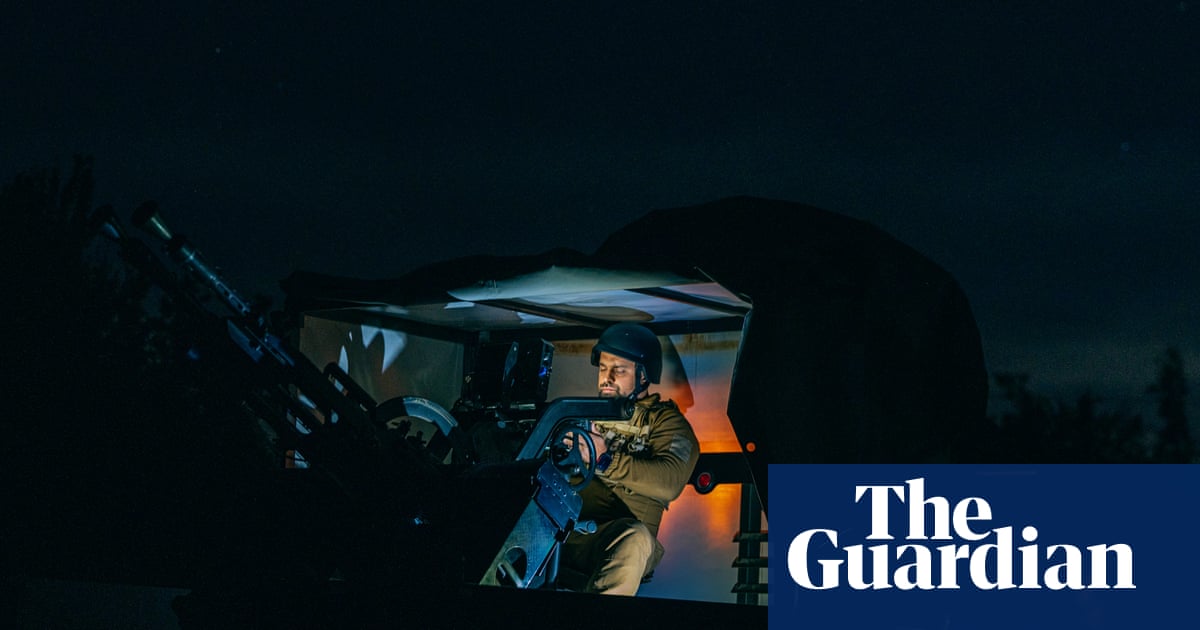
As nighttime descends over Kyiv, the capital often falls silent under the weight of a strict curfew. However, vigilance remains high among the city’s air defense units. From rooftops and remote fields, volunteers, equipped with machine guns, are on alert, scanning the horizon for the unmistakable buzz of approaching drones.
Adapting to New Threats
Previously, the sound of a drone would trigger immediate action among these defenders. Today, however, they rely on advanced monitoring systems to assess the speed and altitude of incoming threats. The scene was evident recently when a swift, jet-powered Russian drone appeared, soaring at substantial heights and velocities far surpassing those of earlier drone models. “They’re so fast, it’s extremely difficult to hit them,” explained Sensei, the commander of one of these units. “Our weapons simply can’t reach them.”
The Role of Volunteer Defenders
In the context of the ongoing conflict, volunteer air-defense formations, like Mriya, have emerged as crucial components of Ukraine’s broader air defense strategy. Formed after Russia’s full-scale invasion began, these groups consist of ordinary citizens who have taken up arms to protect their city. Relying on primarily Soviet-era weaponry, these volunteers have faced a formidable challenge: Russia’s introduction of sophisticated, fast-moving attack drones, which have escalated the severity of air assaults on Ukrainian cities.
One volunteer, Oleksandr, a lawyer by day, stated, “We live a double life. During the day, I deal with paperwork. At night, I shoot down drones.” Despite their efforts, these volunteers have found it increasingly difficult to hit the new jet drones, which can cruise at speeds of around 600 km/h (373 mph) and fly at altitudes of up to 10 km (6 miles). The interception rate against these modern threats hovers only between 50% and 60%.
Challenges on the Frontline
While volunteers have seen some success against older drone models, their effectiveness has waned against the new jet-powered drones introduced by Russia. As Artem, a 63-year-old military veteran, noted, “Now, our unit had managed to shoot down just one jet drone after it slowed enough to come within range of our guns.” The adaptation of weaponry to tackle faster targets has lagged behind the innovation of the attacking forces, presenting a significant challenge for Ukraine’s air defenses.
- Current interception methods primarily include fighter aircraft, such as F-16s, which come at a high operational cost.
- Russia’s intensified aerial campaign aims to disrupt life in Kyiv, straining the resources of Ukrainian defenders.
Community Response and Volunteer Efforts
The spirit of the volunteers reflects the resilient character of Kyiv itself. Mriya’s members range from advertising creatives to educators, all united by a shared purpose: protecting their homes. The military supplies them with vital equipment, but the volunteers often bear the cost of vehicles and operational expenses.
One member, Ivan, who joined after a drone attack damaged his property, said, “If we let a drone through, that means it flies to the city and can kill our families.” In addition to defending their city, many volunteers find a sense of agency through their participation, contrasting the feeling of helplessness many experience in daily life.
Looking Ahead: Innovations in Air Defense
With the situation evolving, Ukrainian authorities are racing to develop new interceptor drones capable of keeping pace with their adversaries. As enhancements unfold, Artem pointed out the arrival of new high-speed interceptors designed to effectively engage Russian drones. He demonstrated this by showcasing successful interceptions on a live map displayed on his tablet, illustrating the continuous battle for aerial supremacy.
Despite the pressing need for innovation, challenges remain, particularly in the production of necessary components, which are critical for developing interceptors in large quantities. Stanislav Hryshyn of General Cherry, a leading drone manufacturer in Ukraine, emphasized the urgency of addressing these production deficits, stating, “We have to admit that we were caught sleeping by these jet-powered Shaheds.”
A Conclusion to the Current Crisis
As Russia’s drone tactics adapt, Ukraine’s defenses must also evolve. Both sides are engaged in a relentless competition to gain the upper hand—a dynamic underscored by Artem’s statement that it is a “constant race over who gets there first.” The future of air defense in Ukraine will depend on ingenuity, rapid innovation, and the unwavering commitment of its defenders to protect against threats that loom ever closer.