


Court Rules Pandemic Spending Law Unconstitutional
A federal appeals court has determined that a significant spending law enacted during President Joe Biden’s administration is unconstitutional. The ruling emerged from concerns regarding the delegation of voting rights among lawmakers who were absent during the vote.
Background on the Pandemic-Era Law
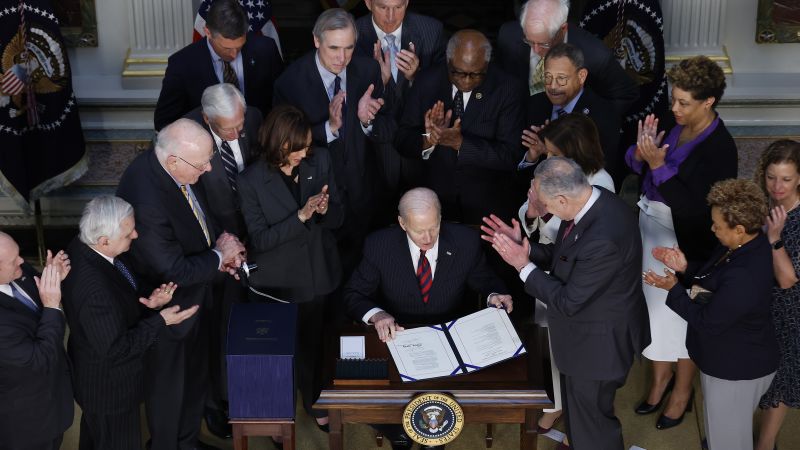
The controversial law, a $1.7 trillion omnibus spending package, was passed by Congress in 2022 with provisions allowing members to vote by proxy as a health precaution during the pandemic. This temporary measure was introduced to limit the risk of virus transmission among lawmakers.
Key Court Ruling Details
In a closely contested 9-8 decision, the appellate court contended that proxy votes should not be counted when determining a quorum—a threshold necessary for Congress to conduct its business—under the U.S. Constitution. A lower court had made a similar ruling previously in 2022.
- The omnibus bill was adopted by a vote of 225 to 201 in the House, with one member voting present.
- Proxy voting involved 226 lawmakers participating without being physically present.
- The majority opinion, authored by Judge Cory Wilson, highlighted the lack of evidence supporting an “existence of an emergency” at the time proxy voting was authorized.
Implications of the Ruling
Legal analysts have voiced concerns that this decision might set a precedent impacting other legislation enacted through proxy voting. Nonetheless, the court emphasized that its decision applies specifically to the enforcement of a provision in Texas regarding workplace conditions for pregnant women, thereby limiting its broader implications.
Case Background
The case was initiated by Texas Attorney General Ken Paxton, who sought to block the enforcement of the Pregnant Workers Fairness Act, which mandates accommodations for pregnant employees. The court’s ruling favors Paxton’s request, effectively halting the law’s implementation in Texas.
Dissenting Opinion
Judge James Graves Jr., appointed by former President Barack Obama, expressed dissenting views in the ruling. He argued that although less than a majority of lawmakers were physically present during the voting, no objections were raised regarding the quorum count. He criticized the majority’s interpretation of the “Quorum Clause,” suggesting that a requirement for physical presence misinterprets the constitutional mandate.
Significance of the Spending Bill
Beyond the issues of legality, the 2022 spending bill played a crucial role in sustaining federal government operations. It allocated substantial funding, including:
- Approximately $45 billion in emergency assistance to Ukraine and NATO allies.
- About $40 billion designated for natural disaster relief efforts.
This ruling not only raises questions about the constitutional validity of past legislative actions during the pandemic but also underscores the ongoing debate regarding the legislative process and the implications of proxy voting in Congress.
