


Recent Fuel Price Decline and Market Implications
Fuel Price Decline Due to Russian Supply Agreement
The recent decline in fuel prices is attributed to President Donald Trump’s announcement that the U.S. has secured an agreement with Russia for the supply of 300,000 metric tons of diesel fuel. This agreement opens the avenues for both international and domestic markets and signifies a partial easing of U.S. sanctions on Russian oil imports.
Interestingly, while Trump described this agreement as part of an “energy ceasefire” between Russia and Ukraine, Ukrainian officials reported they were not part of the consultation. Despite this assertion, military strikes on Ukraine’s energy infrastructure have reportedly persisted.
Market Concerns: ETF Outflows Watching
In addition to developments in fuel, analysts have expressed growing concerns regarding exchange-traded funds (ETFs) related to Bitcoin. Notably, U.S.-listed spot Bitcoin ETFs experienced significant outflows amounting to $681 million last week, marking the largest withdrawal since June. Most of these outflows occurred on October 7 and 8, indicating a shift in institutional investment sentiment.
“ETF flows remain volatile. US spot Bitcoin ETFs saw heavy outflows on October 7 and 8, signaling cautious institutional sentiment,” said Vikram Subburaj, CEO of Giottus Exchange.
Further emphasizing this trend, Mashru highlighted the challenging global macroeconomic backdrop, pointing out that U.S. Treasury yields had climbed to a 24-year high during the week ending October 9.
Looking Ahead: Key Indicators and Support Levels
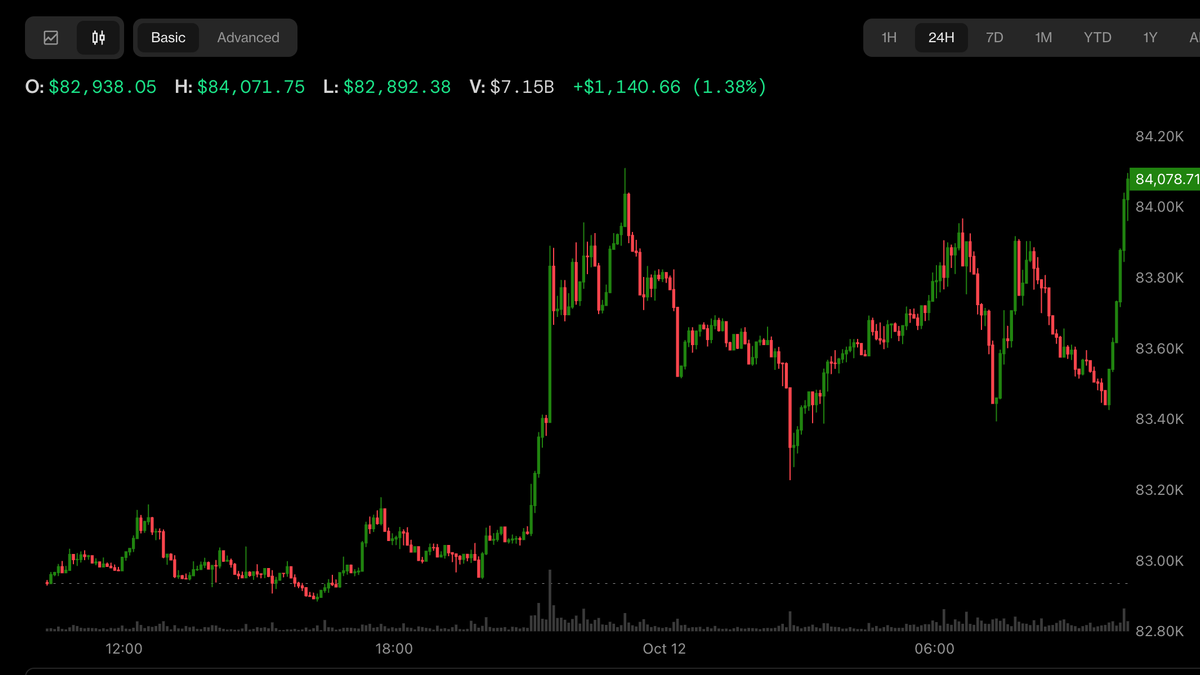
Both Subburaj and Mashru identified a critical support level of $82,000 for Bitcoin, underscoring the importance of this figure for market bulls in order to prevent further losses. Additionally, investors are closely monitoring the upcoming U.S. inflation data scheduled for October 14, which could serve as a significant macroeconomic catalyst influencing market dynamics.
