


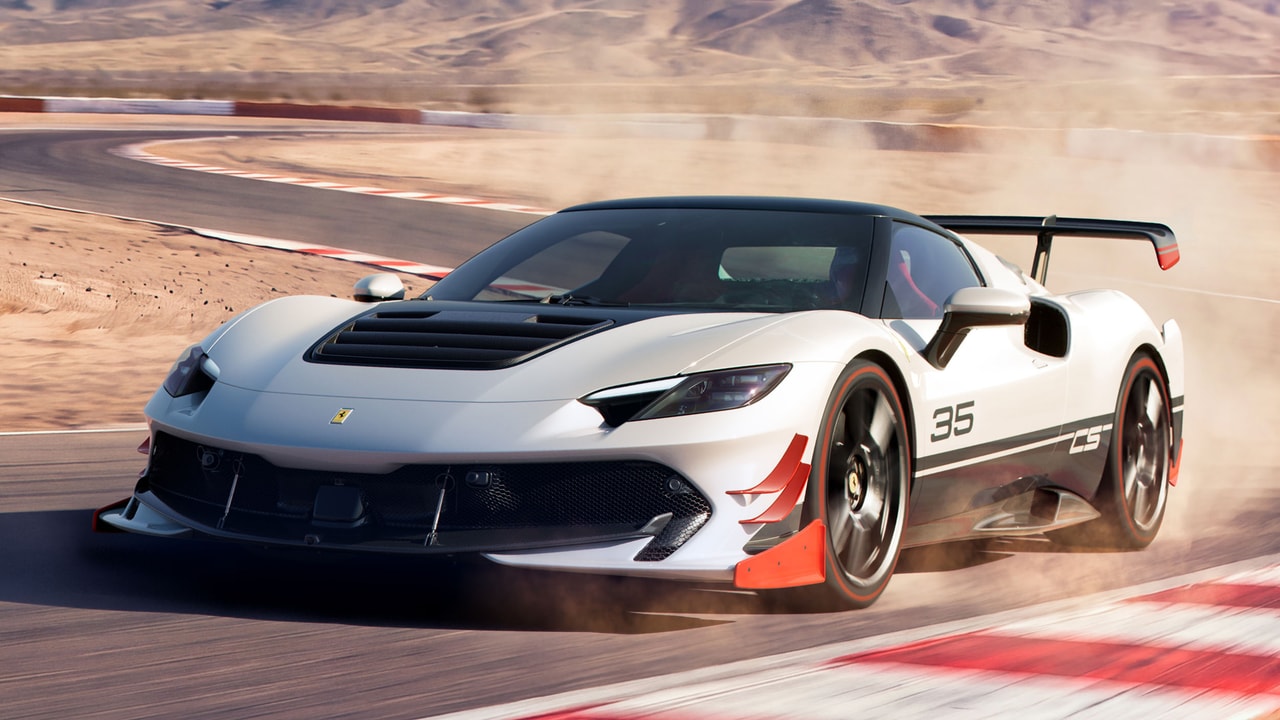
The Ferrari 296 Challenge Stradale: Redefining Performance Standards
The Ferrari 296 Challenge Stradale marks a notable evolution in the brand’s performance lineup, showcasing a commitment to pure driving dynamics. Unlike many modern supercars that incorporate hybrid technology, this model is entirely combustion-powered, improving speed and handling by shedding unnecessary weight and complexity.
Performance Engineering: Stripped to Maximize Speed
Ferrari has executed a significant overhaul by removing both the electric motors and the battery systems found in its hybrid counterparts. This decision has resulted in a weight reduction of 140kg and a decrease in total power by approximately 200bhp, leading to a highly responsive vehicle with a total output of 670bhp.
Full Production Model with Competitive Pricing
Unlike many previous high-performance variants, the Challenge Stradale is not a limited edition. Instead, it will have a full production run at a price point that aligns closely with the entry-level 296 GTB, estimated at £260,000. This pricing strategy represents a shift back to an era when lighter options were more accessible to enthusiasts.
Design Changes for Enhanced Aerodynamics
Significant visual changes accompany the performance upgrades, notably the addition of aggressive aerodynamic elements such as bolt-on winglets and a not-so-subtle rear wing that generates 270kg of downforce. The adjustments prioritize functionality over aesthetics, with the overall design compromising some elegance for performance enhancement.
Specifications and Usability Considerations
The car maintains a front storage compartment, albeit reduced to 67 liters, allowing some level of practicality compared to competitors. The challenge towards usability highlights Ferrari’s attempt to mitigate previous missteps with models like the SF90, which lacked storage.
Engine and Exhaust Innovations
The Challenge Stradale employs an upgraded variant of the Speciale’s engine, featuring titanium conrods and a nitrided steel crankshaft. With power output slightly increased to 670bhp, the new exhaust system aims to enhance sound dynamics, promising a thrilling auditory experience while driving.
Performance Metrics Comparison
In terms of acceleration, the Challenge Stradale is claimed to reach 62mph in just 2.8 seconds, with a 124mph benchmark achievable in 7.9 seconds. Comparatively, the Porsche’s GT3 RS takes slightly longer times—3.2 seconds for 62mph and 10.6 seconds for 124mph. However, these figures shift regarding track performance; the Challenge Stradale excels on twisty circuits, while the Speciale may have the advantage on high-speed tracks.
“At Fiorano and other twistier tracks the Challenge Stradale is faster,” said Matteo Turconi, the Challenge Stradale’s senior product manager. “At high speed circuits like Monza, the Speciale is faster.”
Suspension and Handling Capabilities
The enhanced suspension system features substantially stiffer primary springs, complemented by softer helper springs for improved handling, a technique carried over from Ferrari’s Challenge Evo race car. Two distinct bumpy road settings have been introduced, providing drivers with greater adaptability while navigating different terrains.
Driver Experience and Comfort Features
In terms of driver engagement, the Challenge Stradale offers a more challenging drive, featuring firmer brake pedals and a stiffer throttle response. Inside, carbon fiber components reduce weight and enhance the racing aesthetic, while essential comfort and safety features, such as adaptive cruise control and lane-keeping technology, remain intact.
A Strategic Shift for Ferrari
The introduction of the Challenge Stradale indicates a thoughtful diversification in Ferrari’s lineup, echoing aspects of Porsche’s successful 911 series. By positioning the Speciale more closely to the turbocharged 911 and the Challenge Stradale akin to the GT3, Ferrari aims to cater to varied preferences among performance enthusiasts.
With this model, Ferrari seeks to address recent challenges, including slowing sales of the 296 GTB, by re-engaging its audience with a compelling offering that combines performance, usability, and an affordable price point.
