


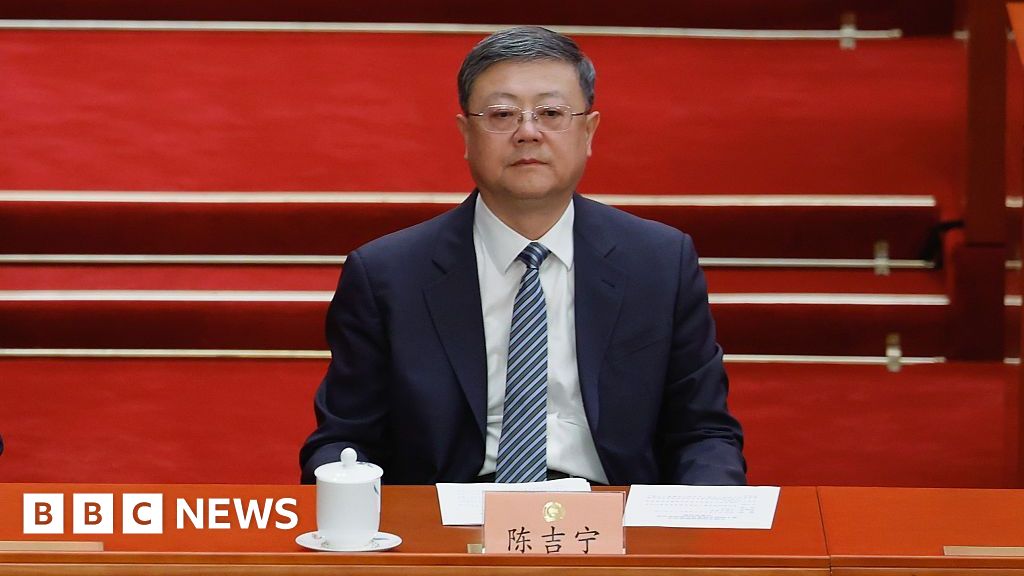
Xi Jinping’s Anti-Corruption Campaign: The Investigation of Chen Jining
In a significant development within China’s political landscape, Chen Jining, the Shanghai party chief, has come under investigation for corruption. This marks a pivotal moment as Xi Jinping’s ongoing anti-corruption initiative continues to reshape the hierarchy of the Chinese Communist Party (CCP).
Background of the Investigation
Chen Jining’s elevation to prominence as a member of the Politburo has been swift. However, his recent inclusion in a corruption probe underscores the risks associated with political ascent in China. The investigation was announced amidst mounting scrutiny of high-ranking officials, reflecting Xi’s unwavering commitment to rooting out corruption within the party.
Reactions from Shanghai Leadership
In response to Chen’s investigation, Shanghai’s political leadership has expressed steadfast loyalty to Beijing. This display of allegiance highlights the delicate balance local officials must maintain while navigating the complexities of party politics.
The Scope of Xi Jinping’s Anti-Corruption Campaign
Xi Jinping’s anti-corruption campaign is noted for its far-reaching scope and significant impact on the political landscape. It aims not only to address endemic corruption but also to consolidate Xi’s power by eliminating potential rivals within the party. The ongoing investigations have led to the purging of numerous officials, reinforcing the message that no one is above accountability.
Implications for Shanghai and Beyond
The investigation into Chen Jining raises questions about the future of Shanghai’s political landscape and its implications for governance at a national level. Analysts suggest that this development could lead to a reconfiguration of powerful alliances within the CCP as wary officials adjust to the shifting dynamics of Xi’s regime.
Conclusion
The inquiry into Chen Jining exemplifies the relentless nature of Xi Jinping’s anti-corruption campaign, illustrating how it serves both as a tool for governance and as a mechanism for power consolidation. As this investigation unfolds, it will be crucial to observe how it impacts the broader political climate in China and what it means for the future of the Communist Party’s structure.