


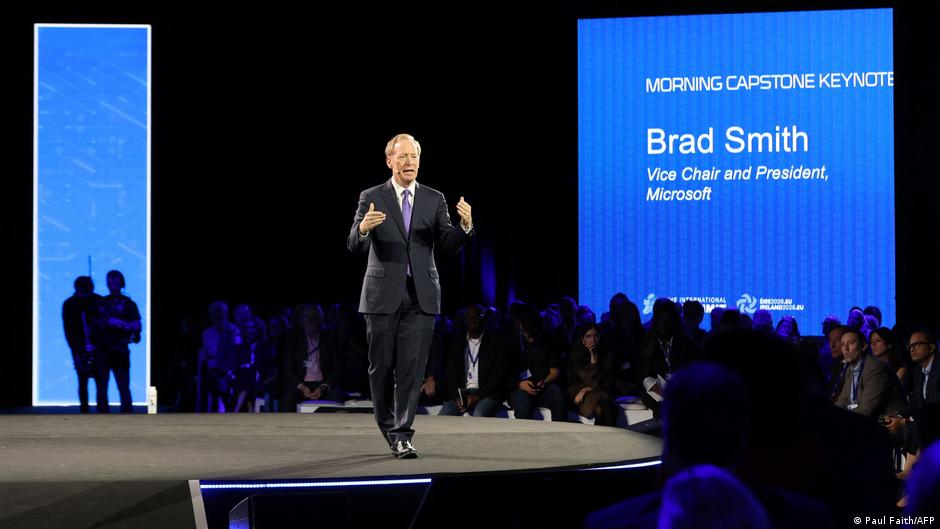
International AI Summit: Europe’s Path to Innovation and Regulation
The grand setting of the International AI Summit, held in Dublin, captured the attention of over 1,500 attendees, including influential tech leaders and policymakers. With a mix of cultural performances and a commitment to innovation, the summit aimed to position Europe at the forefront of the artificial intelligence revolution.
Recognizing Europe’s Economic Aspirations
The driving narrative at the summit centered on how AI could reinvigorate Europe’s economy, stimulate innovation, and enhance the region’s global competitiveness against powerhouses like the United States and China.
Notable speakers included Demis Hassabis, co-founder of Google DeepMind, and Brad Smith, president of Microsoft, alongside top European Union officials. The event marked a defining moment in Ireland’s presidency of the EU Council, yet it also faced criticism for the lack of dissenting voices to balance the overwhelming enthusiasm surrounding AI.
Economic Influence and AI Investments
Ireland’s strategic importance in this discussion is underscored by its status as the European base for numerous major tech firms. The country’s economy heavily benefits from taxes collected from multinational corporations, which contributed €28.8 billion in corporate taxes in 2025, representing 87% of the total corporate tax revenue.
Despite the promising outlook for AI, Europe significantly lags behind the U.S. in private investment. Reports from Stanford University’s AI Index indicate that the U.S. AI sector attracted $286 billion in investment in 2025, while Europe managed only $21 billion.
Addressing Regulatory Challenges
During the summit, EU representatives emphasized the importance of establishing regulations to harness the potential of AI while minimizing its associated risks. The implementation of the AI Act aims to address sensitive applications of AI with stricter guidelines and oversight.
Michael McGrath, the Irish commissioner responsible for democracy and consumer protection, discussed the necessity of balancing innovation with regulatory measures designed to foster public trust. However, critics warn that regulatory efforts are being rushed due to the pressure of competing with faster-moving economies.
Voices of Concern Amidst Enthusiasm
Outside the summit venue, protesters expressed skepticism regarding the promises made by tech leaders and politicians. Paul Murphy, a member of the Irish legislature from the People Before Profit party, articulated concerns over the potential for deregulation and its implications for societal welfare.
Fionnuala Ní Bhrógáin, a union representative, raised questions about who truly benefits from productivity enhancements driven by AI, hinting at the pressure it may exert on workers.
Environmental Considerations of AI Deployment
In Ireland, discussions also highlighted the environmental impact of data centers, which consumed 23% of the nation’s electricity in 2025. Murphy challenged the sustainability of expanding data infrastructure, asserting that it threatens both household expenses and Ireland’s climate commitments.
Looking Ahead: The Future of AI Regulation and Innovation
In concluding remarks, industry leaders recognized the urgent need for regulatory frameworks in light of recent security breaches involving AI systems. Demis Hassabis referred to these incidents as “early warning shots” and called for international oversight, while Microsoft’s Brad Smith affirmed the necessity of law and regulation in the tech industry.
As Europe strives to balance the innovative potentials of AI with necessary regulatory measures, the path forward will require careful navigation to ensure that the benefits of technology are equitably shared while maintaining public trust.
In summary, the International AI Summit served not only as a platform for celebration but also a crucial forum for addressing the intricate relationship between technological advancement and societal responsibility. The challenges identified throughout the discussions highlight a critical juncture for Europe’s AI ambitions as it endeavors to lead while safeguarding its core values.
