


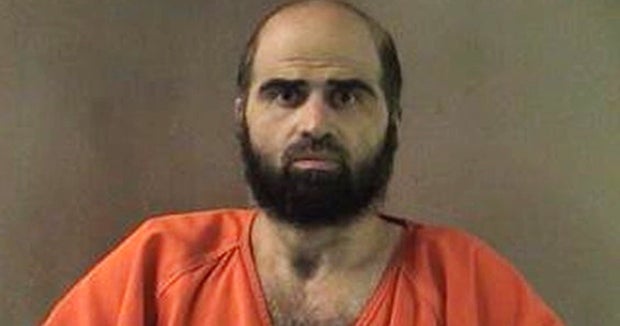
Execution of Nidal Hasan Approved by Trump Administration
The Trump administration has confirmed plans to execute former Army Major Nidal Hasan, who was responsible for the 2009 Fort Hood shooting that resulted in the deaths of 13 individuals. Chief Pentagon spokesman Sean Parnell announced the decision, specifying that the execution will be carried out by firing squad.
Details of the Execution
According to Parnell, the execution method was recommended by Defense Secretary Pete Hegseth and subsequently approved by President Trump. “The Secretary of the Army will set the time and place of the execution. Judgement day for Hasan has finally come,” Parnell stated via social media.
Following an email obtained by CBS News Texas, families of the victims were informed that the execution is scheduled for December 3. Communications from Fort Hood directed inquiries to Army headquarters for further details.
Background on Nidal Hasan
Hasan, a former psychiatrist for the Army, was convicted during a court-martial in 2013 for the mass shooting at Fort Hood. He admitted to the charges, expressing that his actions were intended to protect Islamic insurgents from U.S. military forces. He received a death sentence as a result of his convictions.
This case could signify the military’s first execution of an American service member since 1961, when a soldier was hanged for crimes against an 11-year-old girl.
Firing Squad Method and Legal Developments
The firing squad, although rare, was utilized in South Carolina three times last year, marking a revival of this form of execution since 2010. Generally, the federal government employs lethal injection in civilian death penalty situations; however, earlier in the year, the Justice Department indicated that alternative methods—including firing squads—may be reconsidered.
Hegseth’s decision to move forward with Hasan’s execution follows an extended appeals process. Notably, Hasan represented himself during the trial and had contentious interactions with court-appointed standby attorneys, who suspected he was deliberately pursuing the death penalty.
Currently, Hasan has sought the Supreme Court’s review of his case for 2024, contending that his right to a public trial was compromised when the judge limited courtroom access during discussions about his legal representation. However, the Supreme Court declined to consider this matter last year.
Concluding Remarks
The impending execution of Nidal Hasan raises significant questions regarding military justice and the use of capital punishment within the armed forces.
