


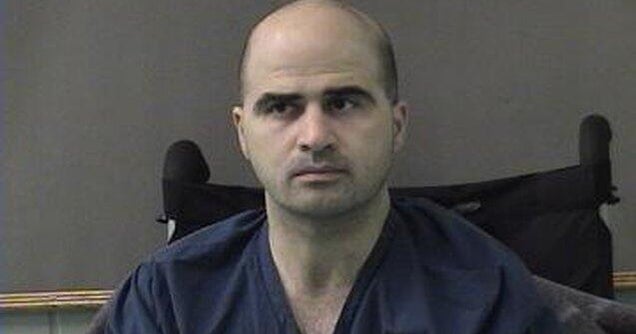
Nidal Hasan Seeks Execution Delay Amid Ongoing Controversy
Nidal Hasan, the Army officer convicted for the 2009 mass shooting at Fort Hood, Texas, has announced his intention to file a petition aimed at delaying his impending execution by firing squad. The announcement was made during a court session on Tuesday.
Legal Proceedings and Claims of Rights Violations
In his recent court filing, Hasan asserts that his death sentence and the original military court judgment violate his federal constitutional rights. Specifically, he cites “unlawful command influence” attributed to former President Trump and Secretary of Defense Pete Hegseth, indicating that their alleged racial and religious biases affected the judicial process.
Hasan, a former psychiatrist and U.S. Army officer of Palestinian descent, was found guilty on multiple counts of murder and attempted murder, with claims suggesting he targeted fellow soldiers in support of Islamic insurgents. His rationale framed the U.S. war on terror as a conflict against Islam.
Judge Tony Mattivi Assigned to the Case
U.S. District Court Judge Tony Mattivi has been assigned to oversee Hasan’s petition. Mattivi, appointed by Trump and confirmed by the Senate in 2023, has a notable history, previously serving as the lead prosecutor for a military commission at Guantanamo Bay involving the USS Cole bombing mastermind.
Disputed Victim Definitions Prior to Execution
Hasan’s legal actions coincide with a decision by military officials regarding the execution protocol. Three survivors of the Fort Hood attack were informed they would not be permitted to attend Hasan’s execution scheduled for December 3. The Army cited regulations that restrict attendance to direct victims, which these individuals contested.
- The three survivors argue that the definition of “victim” should include those who experienced emotional and psychological trauma.
- Retired Colonel Kathy Platoni expressed deep disappointment, likening the denial to betrayal.
“To look Hasan in the eye and say, ‘You didn’t get me,'” Platoni lamented.
Victim Impact and the Call for Justice
The military clarified that decisions surrounding victim attendance were informed by regulations governing military executions, emphasizing existing size and security limits. Despite this, survivors continue to voice frustration over their exclusion, interpreting it as a dismissal of their experiences as victims of Hasan’s actions.
Former Army Sgt. Alonzo Lunsford, who was injured during the shooting, has opted to attend the execution but expressed opposition to the earlier consideration of livestreaming it. He believes there is personal significance in witnessing the event. “I want to be in the room where I can see him, and he can see me,” Lunsford stated.
Haunting Memories from the Attack
On November 5, 2009, Hasan opened fire in a crowded readiness center, resulting in the deaths of 13 individuals and injuries to over 30 others. The memories from that day remain vivid for survivors, with Platoni recalling the urgency of treating the wounded amidst chaotic conditions.
Julia Wilson, a pregnant survivor at the time of the shooting, described enduring emotional harm from the military’s handling of survivor rights, denoting a series of betrayals that have impeded healing for herself and others.
The Future of the Case
Despite the execution date approaching, survivors and advocates are continuing efforts to redefine the Fort Hood incident as an act of domestic terrorism instead of mere workplace violence. This reclassification is a significant aspect of their quest for recognition and justice.
The Army has kept operational details regarding the execution and firing squad protocols confidential, including the number of personnel involved.
Conclusion
The ongoing legal and emotional complexities surrounding Hasan’s execution reflect broader discussions about justice, victim recognition, and the ramifications of the tragic Fort Hood events. As the execution date approaches, the case continues to invoke strong sentiments from survivors and officials alike.
