


Germany’s Commitment to Europe: Steinmeier’s Reassurance during Paris Visit
Strengthening Franco-German Ties
During a significant state visit to France, German President Frank-Walter Steinmeier expressed Germany’s unwavering commitment to the European Union, aiming to reassure France amid rising concerns over the growing influence of the far-right Alternative for Germany (AfD) party.
At the Elysee Palace, alongside French President Emmanuel Macron, Steinmeier stated, “Germans will remain good Europeans,” emphasizing that Germany can thrive only as an integral part of the European community.
Addressing Challenges and Concerns
Steinmeier’s statements come in the wake of significant electoral successes for the AfD in regions like Saxony-Anhalt, prompting unease in France about the political climate in Germany.
He characterized the current period as “damn difficult,” pointing out challenges such as the ongoing war in Ukraine, geopolitical tensions, and rising internal political discord in both Germany and France. He remarked on the troubling trend of increasing societal polarization and the prominence of radical political factions, noting its implications for effective governance.
Social Media’s Role in Society
During the visit, Macron echoed Steinmeier’s sentiments, describing this era as a “time of upheaval.” He highlighted the role of social media in accelerating societal change, stating, “If Germany and France do not move forward together, Europe will not make any progress at all.” This shared recognition of the challenges faced by democracies underscores the importance of collaborative efforts between the two nations.
Ceremonial Engagements and Future Collaborations
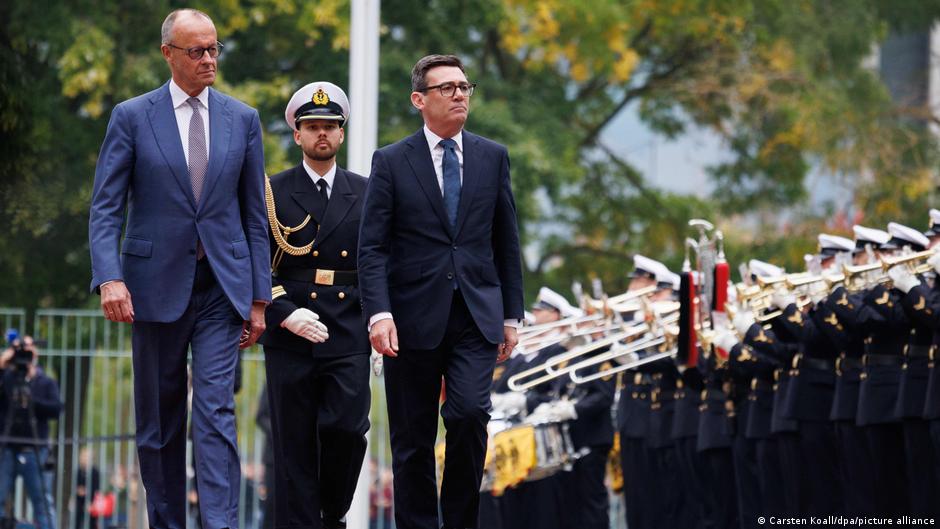
Steinmeier’s visit included ceremonial welcoming by Macron, where he honored the Tomb of the Unknown Soldier at the Arc de Triomphe, rekindling its memorial flame as a tribute to fallen soldiers.
Additionally, both presidents participated in signing an agreement that will incorporate the Franco-German Citizens’ Fund into the Franco-German Youth Office, aimed at supporting cross-border civil society initiatives with an annual budget of €5 million ($5.8 million).
The leaders plan to continue their discussions on defense and military cooperation during their upcoming visit to Bordeaux.
