


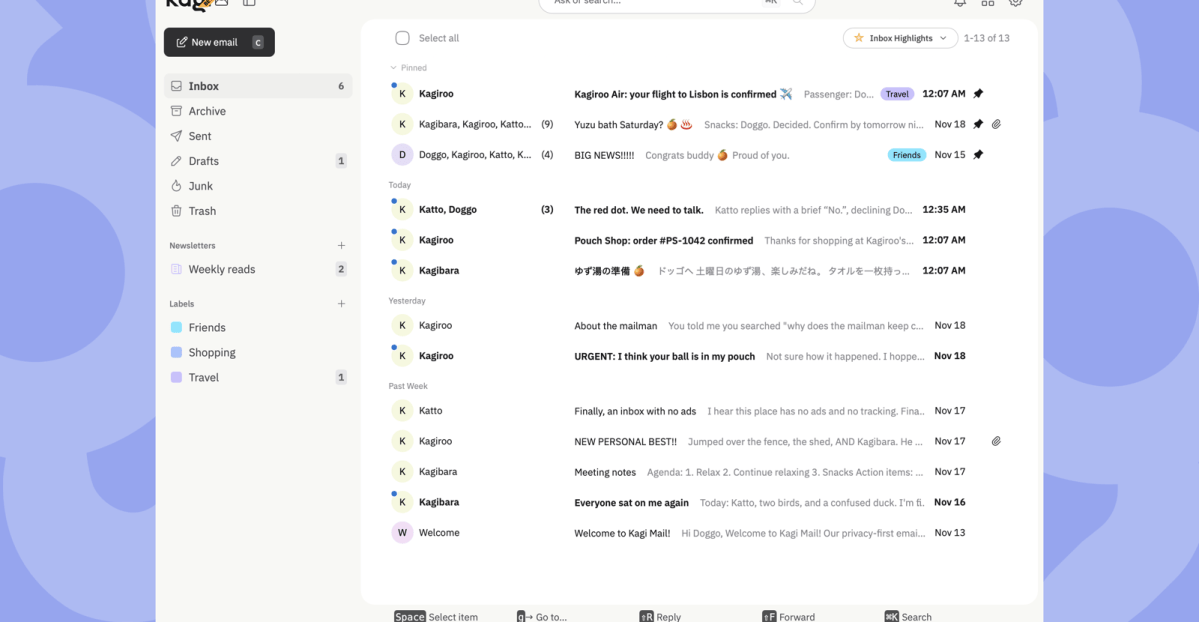
Kagi Launches Kagi Mail: A Privacy-Focused Email Solution
Kagi, already recognized for its paid search alternative and the Orion browser, is expanding into the email service sector with the introduction of Kagi Mail. This new offering aims to provide a compelling alternative to established services like Gmail.
Key Features of Kagi Mail
Kagi Mail promises a commitment to privacy and user-friendly functionality, emphasizing:
- No surveillance
- No advertisements
- Support for open standards
- No vendor lock-in
Users will receive an email address ending in @kagimail.com and will have the flexibility to create unlimited aliases and domains. Additionally, Kagi Mail offers a substantial storage capacity of 50GB and comes equipped with a built-in calendar.
Future Developments
Looking ahead, Kagi plans to introduce various features to enhance the user experience. Notable upcoming enhancements include:
- A contact management system and address book, expected in Q1 2027
- Native mobile applications, anticipated by Q3 2027
Rationale Behind Kagi Mail
Kagi reflected on the necessity of launching another email service, acknowledging the merit of existing platforms like Fastmail and Tuta. In their words: “Does the world need another email service? We asked ourselves that question more than once. There are great ones out there, and we’re fans of what Fastmail and Tuta are doing. We still built our own, for the same reason we build everything at Kagi: technology should do its job and then get out of your way.”
Availability and Pricing
Kagi Mail is currently in public beta, allowing users to try the service with a 60-day free trial. After the trial period, it will be available for an annual fee of $99. Additionally, Kagi Mail users can access the service as part of the Kagi Ultimate subscription plan, which costs $25 per month.
Conclusion
As Kagi ventures into the email market, Kagi Mail exemplifies its commitment to privacy and user-centric technology. This service aims to differentiate itself from existing providers with its no-ad, no-surveillance model, appealing to users seeking a more secure email experience.
