


Michigan Senate Candidates Face Off in Heated Debate Ahead of Midterms
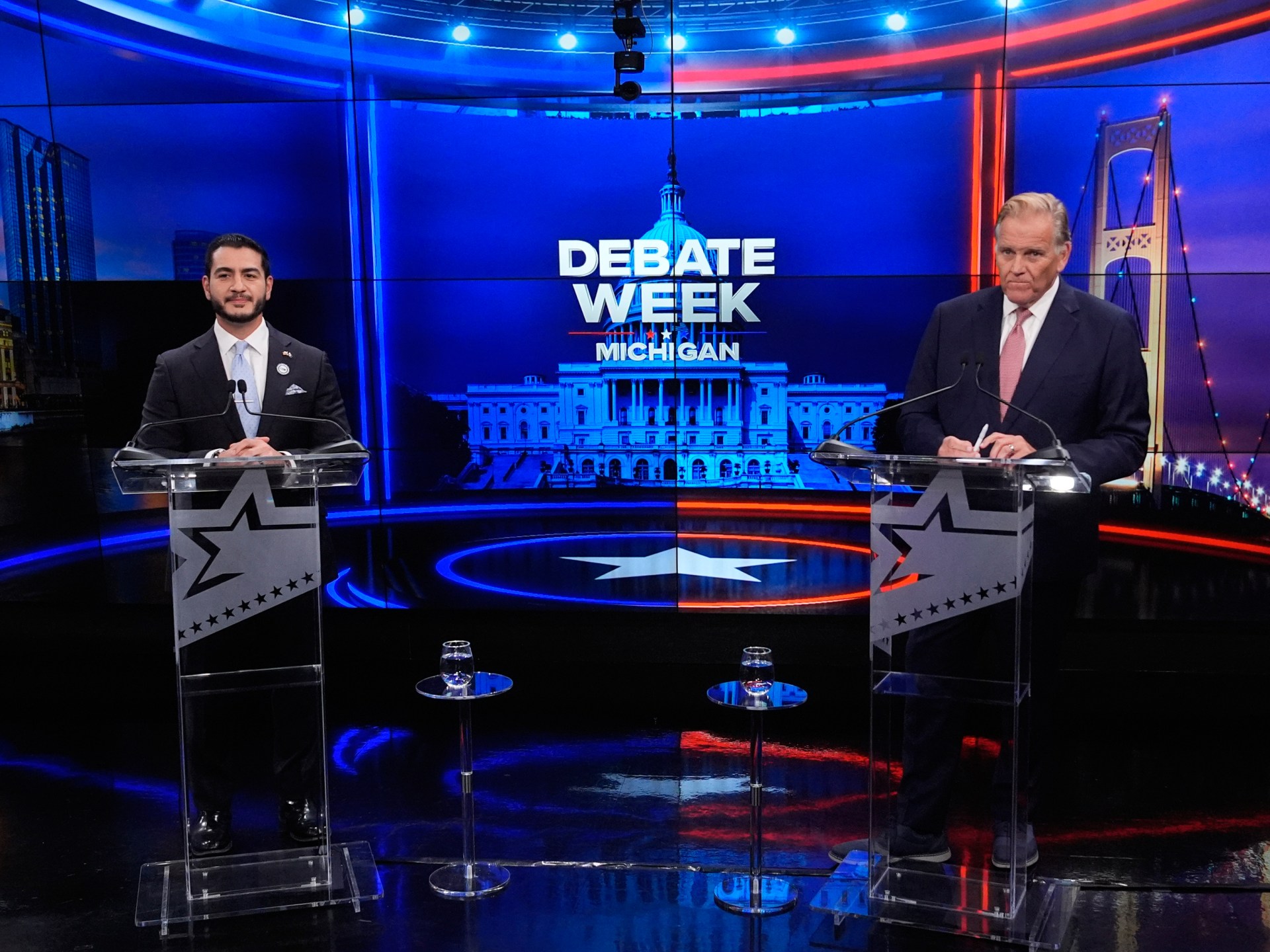
The inaugural televised debate between Democratic nominee Abdul El-Sayed and Republican candidate Mike Rogers took place recently, marking a critical moment in Michigan’s contentious Senate race as the November midterm elections approach.
Debate Dynamics and Contentious Exchanges
The hour-long debate showcased the heightened tensions and combative nature of the race. El-Sayed, the former Wayne County health director, consistently aimed to portray Rogers as disconnected from average citizens, referring to him as a “yacht-owning millionaire.”
In contrast, Rogers, a past member of the U.S. House, accused El-Sayed of being lenient on terrorism and having affiliations with foreign entities. This claim reflects a broader narrative that has accompanied El-Sayed’s campaign, which includes accusations of Islamophobia stemming from figures such as former President Donald Trump.
If successful in his election efforts, El-Sayed would achieve a historic milestone as the first Muslim senator in U.S. history.
The debate was marked by interruptions and sharp exchanges, with both candidates frequently speaking over one another. At one point, tension escalated as Rogers criticized El-Sayed’s inability to condemn an attack that occurred in Michigan. El-Sayed interjected, asserting, “I did condemn it,” to which Rogers retorted, “No, you did not.”
These confrontations illustrated the urgency and stakes of the campaign, as both parties recognize the significance of Michigan in the nationwide struggle for Senate control.
Racial and Religious Undertones in Attacks
Throughout the debate, Rogers’s tactics conveyed a focus on El-Sayed’s identity, raising implications linking him to terrorism. In one instance, Rogers claimed that El-Sayed had received campaign contributions from individuals supportive of extremist groups.
This line of attack prompted a confrontation where El-Sayed demanded clarity regarding Rogers’s insinuations, highlighting the ongoing challenges faced by Muslim and Arab candidates in the political landscape.
Common Ground on Foreign Policy
Despite the overall contentious nature of the debate, both candidates found agreement on the necessity to end U.S. military involvement in the Iran conflict. El-Sayed attributed rising inflation and gas prices to this prolonged engagement, while Rogers acknowledged the importance of bringing the war to a close but defended its justification.
Differing Views on Israel
The candidates also diverged significantly on U.S.-Israel relations. El-Sayed has voiced a call for halting military aid to Israel and has condemned actions in Gaza as genocidal. He emphasized the need to redirect funds toward addressing domestic issues such as education and healthcare.
Conversely, Rogers maintained that Israel has the right to self-defense amidst regional threats and supported continued U.S. military assistance, reinforcing a traditional Republican stance on the matter.
Stance on Immigration Reform
The debate did not shy away from discussing immigration policies. Both candidates expressed the need to temper the aggressive nature of Trump-era deportation efforts, with Rogers suggesting a more subtle approach to enforcement while El-Sayed criticized the existence of ICE as a source of societal terror.
Trade Relations and Economic Strategies
Discussion regarding economic policies included commentary on the trade war with Canada, with El-Sayed accusing Rogers of being an uncritical supporter of Trump’s tariffs and linked him to previous free trade agreements that have been controversial among constituents. Rogers, however, emphasized the need for renegotiation to promote fair trade practices.
