


Recent Developments in Kīlauea Volcano Eruption
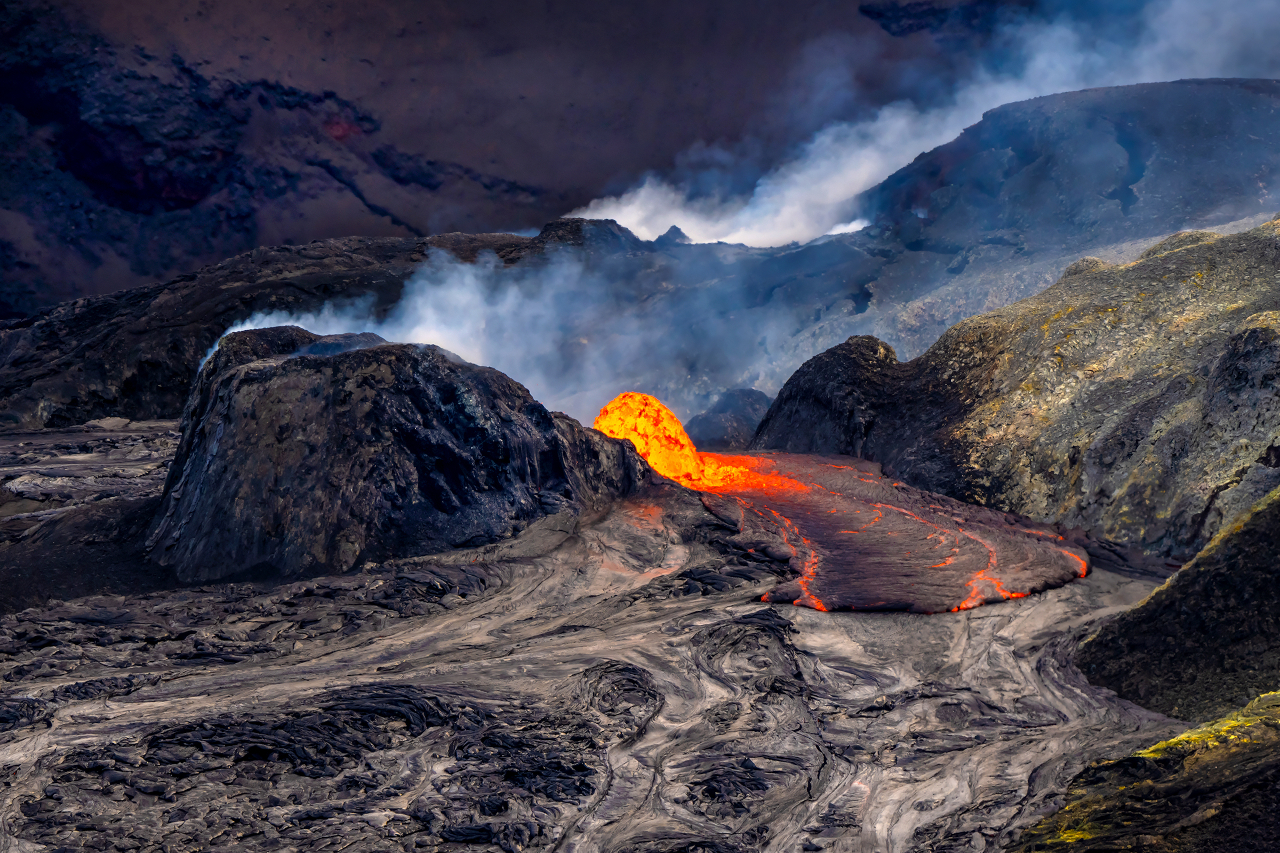
(BIVN) – The Kīlauea volcano in Hawaiʻi Volcanoes National Park has resumed low-level lava activity at its summit. This ongoing eruption is marked by activity at the south vent of Halemaʻumaʻu, with significant lava flows observed overnight.
Current Activity Overview
As of Friday morning, volcanic activity from the south vent has continued since a series of small eruptions began the previous evening. The summit area remains under considerable pressure, as indicated by the latest data from the U.S. Geological Survey’s Hawaiian Volcano Observatory (USGS HVO), which shows notable inflation in the region. Changes in eruptive behavior or vent locations remain a possibility, according to scientists.
Detailed Observations
“Multiple overflows from the south vent were observed through the night starting at 10:16 PM HST,” reported the USGS HVO. “There were 15 small overflows, each lasting under five minutes, advancing less than 100 feet from the vent.” At approximately 5:10 AM HST, a more substantial overflow covered the area within 300 feet with pahoehoe lava within a mere 10 minutes.
Presently, the south vent is characterized by a small dome fountain that feeds several channels of lava. This activity has required continuous monitoring, with recent overflows extending up to half a mile from the vent. Additionally, spatter has been observed at all active vents (north, south, and west) during the night, with consistent glow and occasional flames marking the eruptions.
Seismic and Environmental Conditions
As of 6 AM HST, a shift in tremor patterns was noted, transitioning from irregular bursts to more sustained tremor associated with the ongoing activity. In the last 24 hours, the region experienced 21 recorded earthquakes, predominantly in the southern and eastern sectors of Kīlauea’s summit area.
Moreover, summit tiltmeters indicated slight variations in tilt, pointing towards a general inflationary trend that has been consistent since midweek. GPS data collected from locations on either side of Halemaʻumaʻu suggests a small increase in length, indicative of a persistent inflation of the magma reservoir beneath the summit.
Volcanic Gas Emissions
During periods of inactivity, measurements of sulfur dioxide (SO2) emissions from Kīlauea typically fluctuate between 1,000 and 5,000 tonnes per day. Volcanic gas plumes have been visually detectable through webcam feeds during the day, with winds expected to originate from the north-northeast today.
Future Considerations
The eruption, which has been active since December 23, 2024, has displayed episodic behavior with varying durations and pauses. The recent patterns of ground deformation complicate efforts to predict the timing of future lava fountaining episodes. A significant dike intrusion that occurred on September 30-October 1 has added complexity to the overall conditions at Kīlauea.
Ongoing monitoring by HVO and collaboration with Hawai‘i Volcanoes National Park and the Hawai‘i County Civil Defense Agency ensure readiness for any potential eruptive hazards. As such, the volcano alert level currently remains at WATCH, and the aviation color code is set to ORANGE.
