


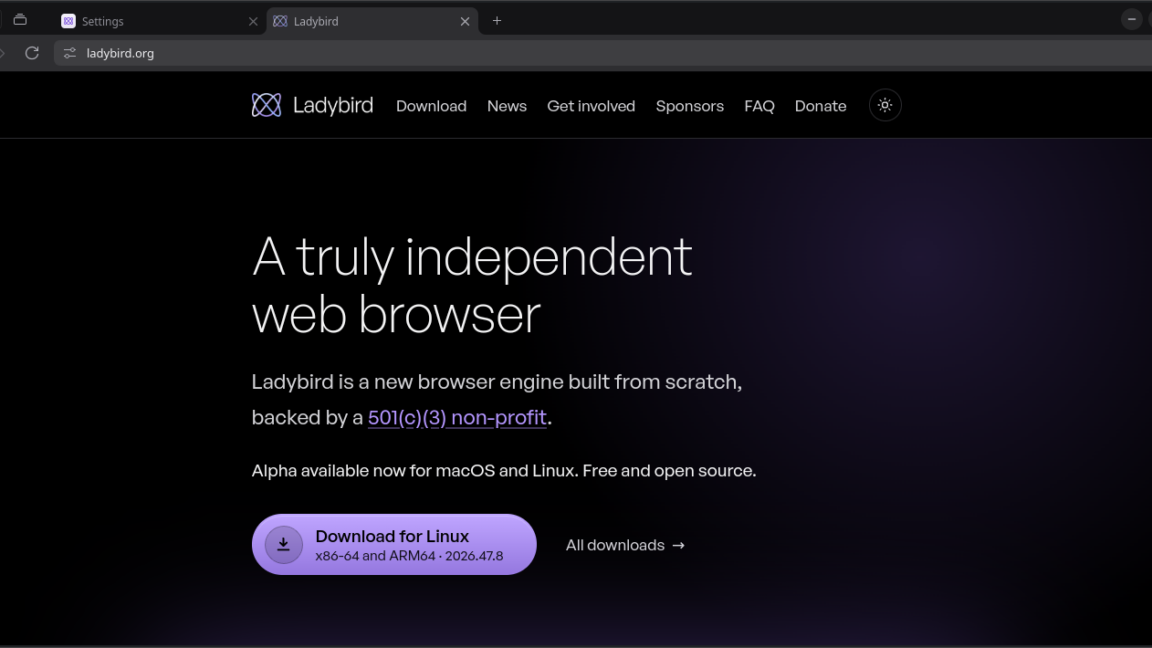
Introduction of Ladybird Browser: A New Era in Web Browsers
On November 23, 2023, the Ladybird project achieved a significant milestone by releasing its first downloadable alpha version for macOS and Linux users after four years of dedicated development. Previously, users had to compile the browser from its source code, but now, it is available as a user-friendly installable package that includes automatic updates.
A Unique Approach
The most striking aspect of Ladybird is its innovative foundation; it is not merely another fork of an existing browser. Unlike popular browsers such as Chrome, Edge, Brave, and Opera, which utilize the Blink engine, or Firefox, which relies on Gecko, Ladybird boasts a completely original rendering engine and LibJS JavaScript engine that were constructed from the ground up. Project lead Andreas Kling stated, “The engine is our own, built from the ground up, and not a fork. The browser around it is modest, but functional.”
Addressing Browser Engine Dominance
Currently, the landscape of web browsers is predominantly shaped by three main engines: WebKit (used by Safari), Gecko (used by Firefox), and Blink (used by Chromium-based browsers). This limited variety has led to a scenario where web developers often optimize their sites for Chromium due to its market dominance, inadvertently leading to a standardization of web practices that may not adhere strictly to published specifications.
By introducing an independent interpretation of web standards, Ladybird not only contributes to increasing competition in the browser market but also serves to highlight instances where web applications might rely on behaviors unique to Chromium rather than following formal standards. Although Ladybird may not revolutionize the browser market immediately, its existence opens up new avenues for testing compliance with web standards and may encourage a more diverse ecosystem.
Background of the Ladybird Project
The Ladybird Browser Initiative emerged from Andreas Kling’s work on the SerenityOS, a project aimed at creating a new standalone operating system. Over time, Ladybird transitioned into its own initiative, now recognized as a 501(c)(3) nonprofit organization supported by sponsorships and donations. The project proudly asserts that it operates without any sponsored search engine partnerships that often influence the development paths of other browsers, ensuring that sponsors have no authority over its roadmap.
For more information about the Ladybird project, visit the official Ladybird website.
