


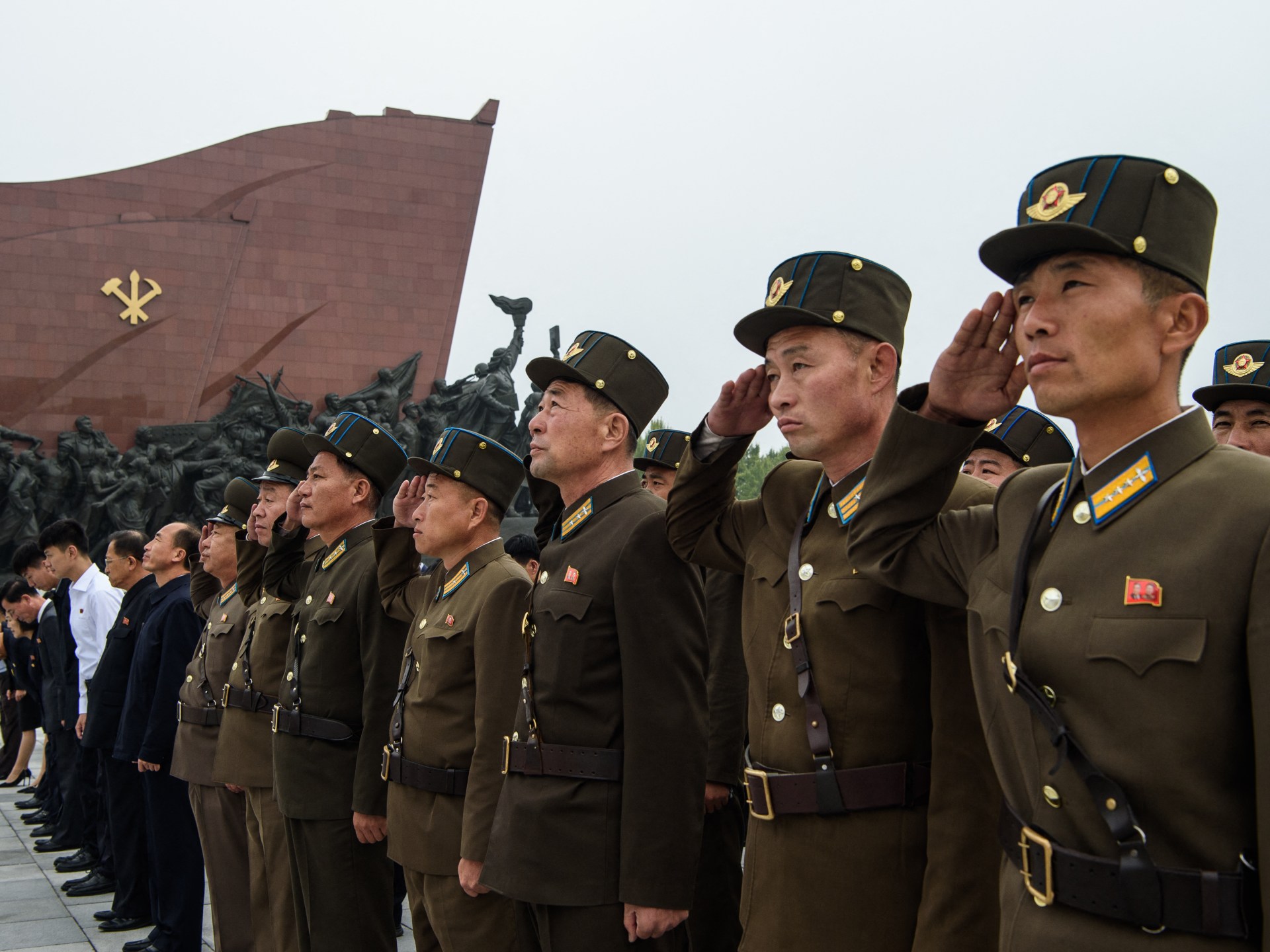
North Korea Conducts Missile Tests Amid Heightened Tensions
On October 12, 2026, North Korea launched multiple ballistic missiles towards the sea from its eastern coast, as reported by South Korea’s military. This follow-up missile activity has been interpreted as a demonstration of power in light of recent developments in the region, particularly South Korea’s own advancements in missile technology.
Details of the Missile Launches
According to South Korea’s Joint Chiefs of Staff (JCS), one of the missiles traveled over 900 kilometers (559 miles) from the area surrounding Pyongyang. The exact number of missiles launched was not disclosed. Meanwhile, Japan’s coast guard also observed two unspecified projectiles, believed to be ballistic missiles, falling into the sea shortly after launch.
International Response to the Launches
Following these developments, South Korea’s presidential office condemned the missile tests, stating that such actions by Pyongyang violate United Nations Security Council (UNSC) resolutions. South Korean officials are calling for an immediate halt to these provocative measures, highlighting the rising tensions on the Korean Peninsula as both nations engage in successive weapons testing.
Context of Escalating Military Activity
South Korean JCS spokesperson Jang Do-young commented that the recent missile launches by North Korea seem to be a direct reaction to South Korea’s previous hypersonic missile test-firing, which took place under the oversight of President Lee Jae Myung. President Lee’s administration stresses that the hypersonic weapons will bolster South Korea’s capacity to execute strategic strikes unexpectedly within operational theatres on the peninsula.
Notably, North Korea’s own hypersonic missile tests are designed to bypass missile defense systems in South Korea and Japan, with a notable trial occurring on October 3, 2026. These developments follow a recent incident—a landmine explosion in the Demilitarized Zone (DMZ)—that injured three South Korean soldiers. Allegations suggest that North Korean forces planted the mines, a claim that Pyongyang has denied while accusing Seoul of provocation.
Efforts Toward Diplomatic Dialogue
In the aftermath of the mine blast, South Korea has expressed interest in facilitating dialogue with North Korea and the United States. In his inaugural address in 2025, President Lee reaffirmed his commitment to reopening communication channels with the North, despite the ongoing provocations.
Since their historic meetings in 2019, aimed at denuclearization and fostering peace, talks between North Korean leader Kim Jong Un and former U.S. President Donald Trump ultimately stalled. Kim’s government continues to demand a cessation of what it perceives as hostile policies from Washington, which it claims are preconditions for any future discussions.
Conclusion
The situation on the Korean Peninsula remains precarious, with the recent missile launches by North Korea underscoring the fragile state of regional security. As both nations navigate the complexities of military capability and diplomatic engagement, the international community watches closely, hoping for a resolution to the escalating tensions.