


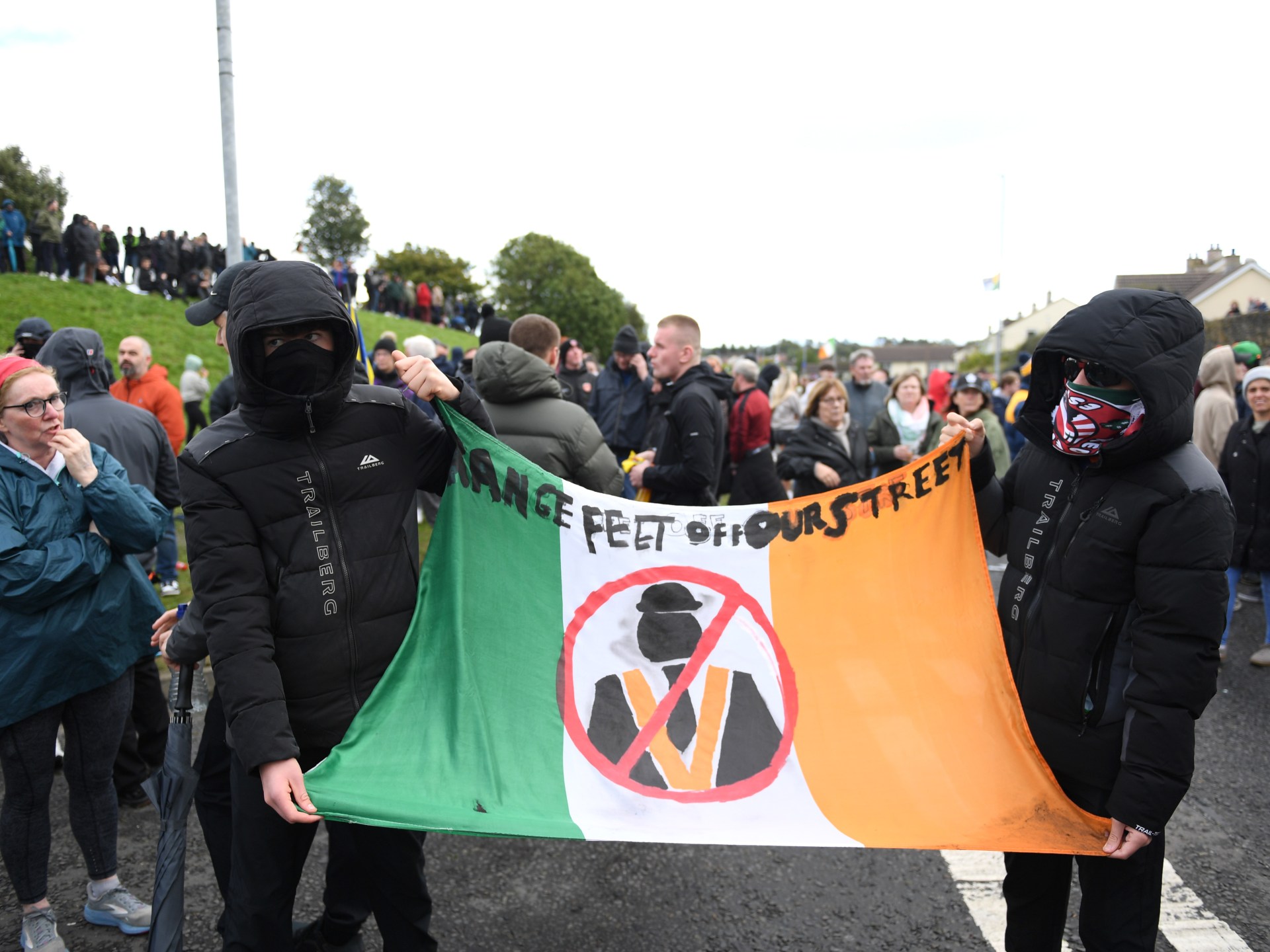
Police Investigate Sinn Fein Participation in Protest Against Protestant March
Published On: 9 Oct 2026
The Northern Ireland Police Service has reached out to Sinn Fein representatives regarding their involvement in a recent protest that impeded a Protestant parade’s passage through a predominantly Catholic neighborhood, according to statements made by the party.
Currently, Sinn Fein holds a central role in Northern Ireland’s power-sharing governance alongside the Democratic Unionist Party (DUP), which has called for legal action against Sinn Fein lawmakers involved in the protest.
Sinn Fein’s Acknowledgment
In a Facebook announcement, Sinn Fein revealed that several of its members and elected officials had received communication from law enforcement as part of the investigation.
The party reiterated its support for the residents of Garvaghy Road, emphasizing their right to live peacefully without facing sectarian intimidation, which they asserted as their stance throughout the demonstration against what they deemed an unwelcome Orange march through the community.
The March and Its Legal Context
For the first time in 28 years, Northern Ireland’s High Court authorized the Orange Order—a Protestant fraternal organization—to march along Garvaghy Road, a decision that has reignited tensions in the region. The police have since launched an inquiry into what they classify as an unlawful assembly in response to this march.
Representatives from Sinn Fein, including First Minister Michelle O’Neill and party President Mary Lou McDonald, were noted to have taken part in the protests opposing the march.
Response from the Democratic Unionist Party
The DUP has voiced strong opinions against Sinn Fein’s actions, asserting that lawmakers should face prosecution. “A political title is not a shield, and no one is above the law,” the DUP stated in a recent release.
Historical Context
Historically, attempts by the Orange Order to march through Catholic areas have resulted in significant unrest. Following years of turmoil, the route was banned in 1998 as part of efforts stemming from the Good Friday Agreement. The current crisis surrounding the protest and resultant police investigation poses potential implications for Northern Ireland’s power-sharing government.
