


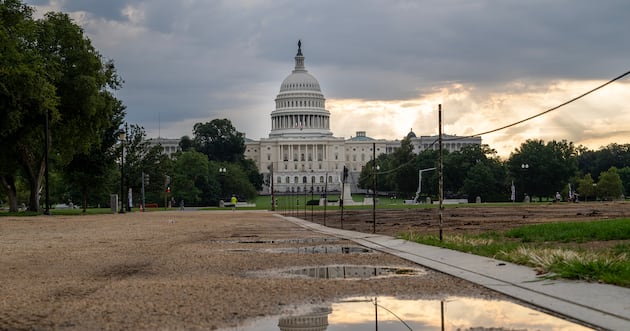
The Legislative Branch: Intent and Importance
The legislative branch of the United States government, as established in Article I of the Constitution, is a fundamental component of the nation’s governance. This section, comprising 2,268 words, outlines a framework intended to embody the will of the people through elected representatives, highlighting its significance well above that of the executive and judicial branches.
The Founders’ Vision for Congress
James Madison articulated in Federalist 51 that in a republican form of governance, the legislative authority is paramount. During a past personal endeavor toward congressional candidacy, the aspiration was to help realize the vision that John Boehner echoed when he assumed the role of Speaker of the House: a commitment to restoring genuine representational governance. This commitment emphasizes engaging in the intricate, often unpredictable process of democratic legislation rather than mere party-line voting on measures dictated by powerful factions.
First Among Equals: Legislative Power
In discussions about the three branches of government—executive, legislative, and judicial—the expected order is often mistaken. The Constitution prioritizes the legislative branch in Article I, deliberately emphasizing its foundational role in governance. While the executive branch is covered in 1,025 words and the judiciary in just 377, the comprehensive instruction in Article I reflects the expansive powers granted to Congress.
This allocation reinforces the idea that while the branches are interdependent through a system of checks and balances, it is the legislature that holds the primary role in delineating the direction of national policy.
The Essence of Constitutional Creation
The Constitutional Convention of 1787 was viewed by many Founding Fathers as a remarkable achievement, not merely because of the Constitution drafted but due to the collaborative spirit that underpinned its creation. This collaboration, which saw leaders from diverse backgrounds unite for a common goal, is often described as miraculous. George Washington remarked on the improbability of such different states reaching a consensus, underscoring the need for mutual concessions and a spirit of amity.
A Call for Civic Virtue
In today’s political climate, the virtues of civility, deference, and concession are increasingly important. Voter responsibility transcends party loyalty; it revolves around selecting representatives of strong character who can engage in meaningful governance. As Washington suggested, civic virtues are indispensable for the functioning of democracy.
As forthcoming elections approach, it is crucial to remember that voters must elect individuals of integrity, for only with decent representatives can the republic operate according to the ideals envisioned by the Founding Fathers. Fundamentally, the qualities of character that originally facilitated the Constitution’s creation remain essential for its survival today.
Conclusion
The importance of the legislative branch, as outlined in the Constitution, cannot be overstated. It is incumbent upon citizens to participate thoughtfully in the electoral process, focusing on the character of candidates to ensure the longevity of the republic. As we reflect on the role of Congress, we must stay true to the foundational principles that allow democracy to thrive.