


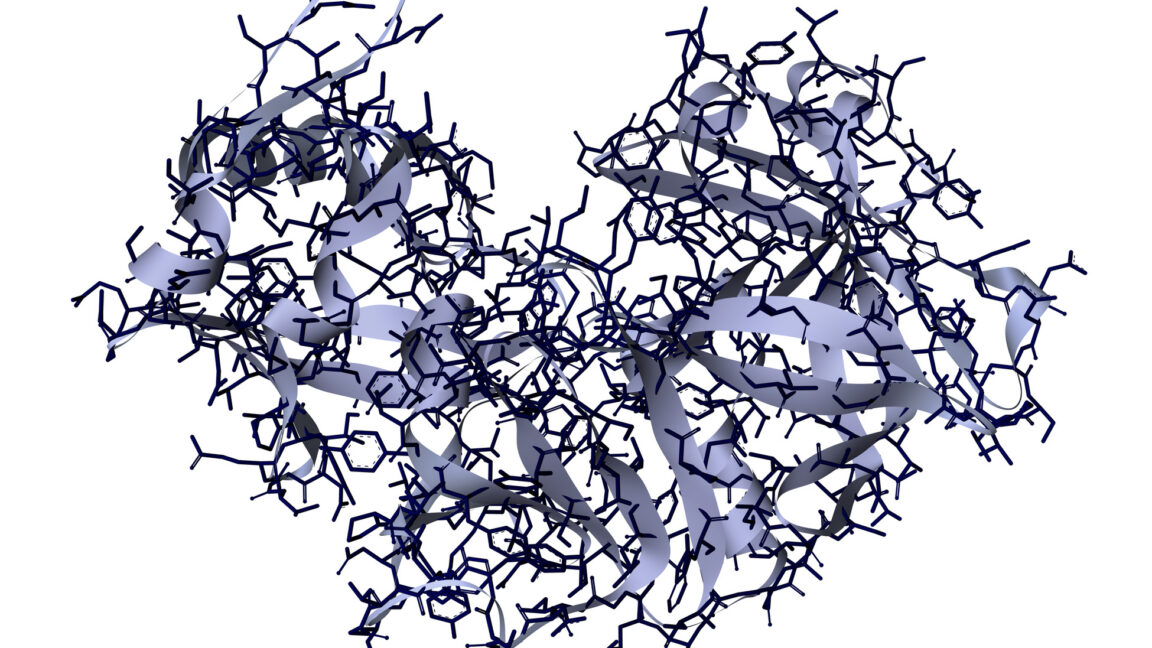
The Role of Proteases in Protein Degradation and Innovations in Enzyme Design
Understanding Proteins and Peptide Bonds
Proteins are fundamental biomolecules composed of chains of amino acids. These amino acids are linked by peptide bonds, which are incredibly stable under ideal conditions, with a half-life estimated to be several hundred years. However, in natural environments, proteins typically degrade much more quickly due to the presence of specialized enzymes.
The Function of Proteases
Proteins in their environment are often subjected to degradation by enzymes called proteases. These enzymes play a critical role in breaking down proteins by cleaving the peptide bonds, thus facilitating the recycling of amino acids within biological systems. As a result, proteases are ubiquitous in nature and are essential for various biological processes, including digestion and cellular regulation.
Cutting-Edge AI Innovations
Recent advancements in artificial intelligence have transformed the field of protein engineering. Researchers have harnessed AI-based protein design tools to streamline the development of new proteases. By utilizing the catalytic core from two different proteases, they have successfully engineered novel enzymes that can target and cleave specific proteins associated with neurological diseases.
The Chemistry Behind Peptide Bond Formation
The formation of peptide bonds occurs through a chemical reaction involving the removal of a water molecule when an amino group reacts with an acidic group of an amino acid. This reaction is vital for assembling the long chains necessary for protein structure. Understanding this process helps elucidate how these bonds function and their stability in biochemical reactions.
Enzyme Mechanisms in Action
To facilitate the breakdown of peptide bonds, enzymes are required due to the inherent stability of these bonds. For example, zinc proteases utilize the positive charge of zinc to coordinate the peptide bond, key residues of the enzyme, and a water molecule. This interaction aids in activating the water molecule to effectively break the peptide bond apart.
Conclusion
The synergy between natural evolutionary processes and modern AI-driven techniques holds promise for the development of specialized proteases that can aid in various scientific and medical applications. As researchers continue to explore and engineer these enzymes, there could be significant implications for treating diseases and advancing our understanding of protein dynamics.
