


AI Regulation Concerns Amid U.S.-China Competition
Romney’s Warning on AI Regulation
Former Utah Senator Mitt Romney voiced serious concerns on social media regarding the rapid advancement of artificial intelligence (AI) without adequate regulatory frameworks. He highlighted the paradox of the U.S. accelerating its AI capabilities to outpace China, while simultaneously exporting crucial technology that could bolster China’s own progress.
“Let me get this straight: we rushed AI along without regulating safeguards in order to stay ahead of China and at the same time, we sold China the very chips they’d need to get ahead of us. Smells of profit, corruption and perhaps worse,” Romney stated on X (formerly Twitter).
Trump’s Push for U.S. AI Leadership
Concurrently, President Donald Trump and members of his administration have been vocal about the necessity to enhance the United States’ position in the AI domain. Following recent electoral victories, Trump branded himself an “AI bull,” emphasizing the critical nature of maintaining competitive advantages over China.
“The level of power of winning that race is very important,” Trump remarked in reference to the U.S.-China AI competition.
He further warned that if Chinese President Xi Jinping continues to advance AI technologies, the U.S. could find itself at a significant strategic disadvantage.
The Call for AI Safeguards and National Security
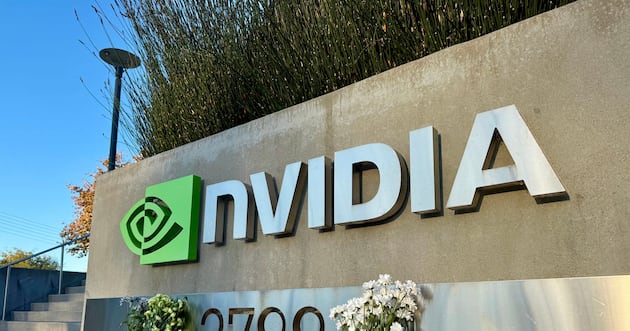
Amid rising national security concerns, discussions about implementing regulatory measures for AI have intensified, particularly following recent controversies involving Nvidia CEO Jensen Huang. Reports have surfaced about Huang’s alleged extramarital affair with an individual claimed to be affiliated with Chinese intelligence, raising alarms regarding potential chip technology diversion to China.
Despite these allegations, Huang was reinstated to his position at Nvidia, a move defended by Trump as lacking immediate national security threats.
U.S. Commitment to Responsible Technology Transfer
The Department of Commerce announced its dedication to deploying American technology for legitimate commercial objectives while remaining vigilant about potential threats that could arise from its misuse. In light of this, Trump mentioned after a meeting with Xi that both leaders had agreed to establish “joint guardrails” on AI development, though specifics of these measures were not disclosed.
Expert Perspectives on National Security and AI
Experts have pointed out that the intersection of AI, chip technology, and national security is increasingly vital. Mike Kofoed, an economics professor at the University of Tennessee, articulated the need for stringent measures in trade with China. He highlighted the risks posed by Huang’s situation as a critical national security issue.
“Mitt Romney is correct here,” Kofoed remarked. “If China was taking trade secrets through Huang’s affair, traveling there now justifies this behavior and limits our credibility in enforcing our defensive posture in the future.”
