


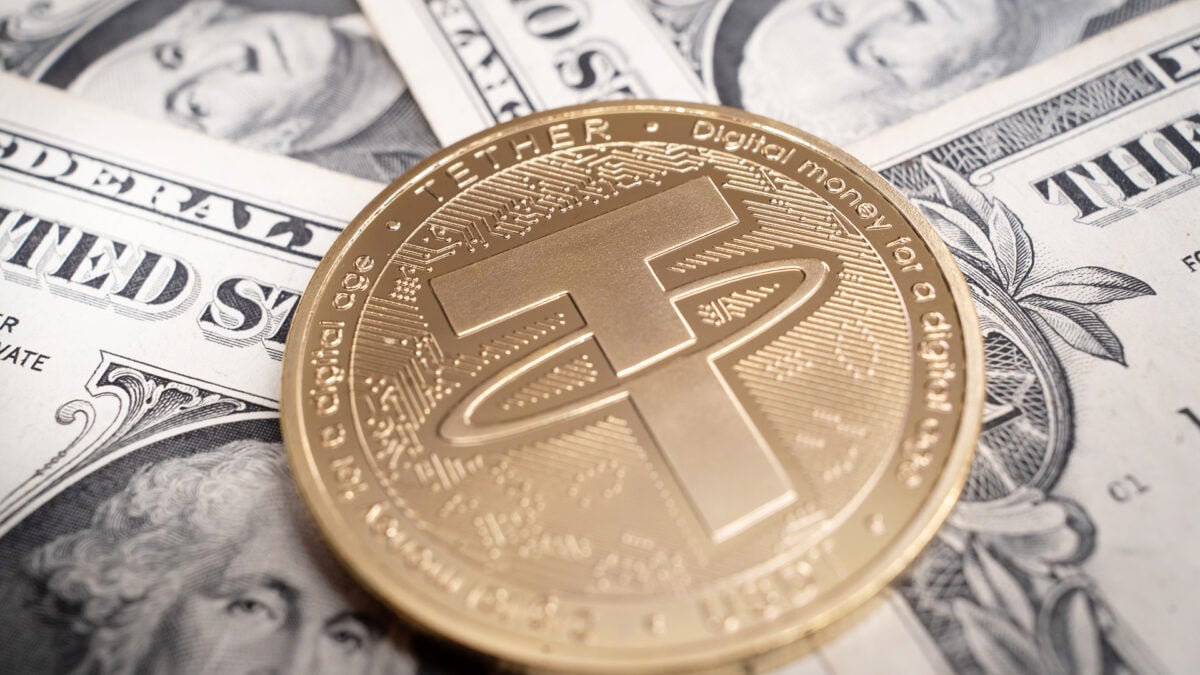
Tether’s Reissuance Fees and the Response to Crypto Theft: A Deep Dive
Recent reports reveal that Tether, the issuer of the USDT stablecoin, has advised a company that acquired Bittok Technology Pte. Ltd. about a reissuance fee concerning stolen USDT. A lawyer for Tether indicated that there could be a 20% charge on any frozen USDT that might eventually be recovered, stemming from a significant hack in June 2020 where $50 million was stolen from the Singapore-based exchange.
Although Tether initially froze a portion of the misappropriated USDT, Bittok has yet to receive the released funds. Notably, the Bloomberg article does not confirm whether Bittok paid the aforementioned fee, nor does it suggest that Tether has formalized this percentage for theft-related cases. Various individuals involved in recovery processes have reported that victims often receive their funds in parts, typically incurring similar fees.
Tether’s Fee Structure and Policies
Tether’s CEO, Paolo Ardoino, articulated that in civil cases, funds may be reissued gradually to mitigate the risks posed by other claimants. He acknowledged the absence of specific legal frameworks guiding these actions, stating, “The problem is there is no guidance, there is no law that guides this.” A spokesperson for Tether mentioned that the company has reissued over $1.2 billion in USDT, which encompasses funds returned to both victims and law enforcement. The fees collected are used to support this process and cover legal expenses.
For other recovery types, Tether has publicly outlined fees associated with tokens transferred mistakenly to unsupported addresses. Their official site indicates that a fee may be charged of “up to 10% of the recovery amount or $1000 (whichever is greater)” for such transactions. However, there is currently no standard established for theft-related fund recoveries.
The Evolution of Intervention Policies in the Crypto Space
The conversation surrounding the cost of reclaiming stolen assets has become increasingly pertinent following the recent $6.3 billion hack of Binance, during which approximately $3 billion in stolen assets were frozen. This included over $1.5 billion in USDT and around $1.1 billion in USD Coin (USDC) from Circle.
Circle’s swift action during the hack where they implemented freezes on transactions marked as stolen has drawn attention. Initially, Circle’s CEO Jeremy Allaire stated that freezing USDC would not occur without a court order or law enforcement directive. However, adjustments made in May now allow government authority orders to suffice for fund freezes. Circle moved quickly after the initial thefts during the Binance hack, illustrating the complexities of centralized responses within a decentralized framework.
You’re touting decentralization for a job that requires you to move centrally-issued stablecoins and tokenized stocks.
— Kyle Torpey (@kyletorpey) November 3, 2026
Concerns about the intervention capabilities of centralized entities have sparked debates across the industry. Notably, THORChain, which markets itself as an unstoppable exchange protocol, was forced to halt trading following a $10 million theft in May. Their ability to intervene has raised questions that challenge the very branding of the platform, especially against the backdrop of its prior operational stoppage.
A similar discussion has surfaced surrounding Bitcoin, with critics highlighting the limitations of decentralization when operators can selectively block transactions as needed.
A Surge in Crypto Asset Freezes
As of November 20, 2026, stablecoin issuers have reportedly frozen around $9 billion, significantly surpassing previous years’ figures. Of this total, Tether is responsible for over $7 billion of the freezes.
This surge is tied to high-profile incidents such as the Binance hack, linked to North Korean cybercriminals, prompting Tether and Circle to act decisively. The U.S. Justice Department is now seeking to seize more than $1 billion of the stolen funds as investigations continue.
During this same timeframe, the market for stablecoins has experienced a sharp decline, with the overall market cap dropping by more than $17 billion over just 30 days, as reported by DefiLlama.
This dramatic downturn in the stablecoin market could be influenced by the recent spate of cyber thefts, culminating in the Binance hack and subsequent incidents that continue to unfold across the cryptocurrency landscape.
