


Glacial Retreat in the Western U.S.: An Urgent Climate Crisis
The Disappearance of Glaciers
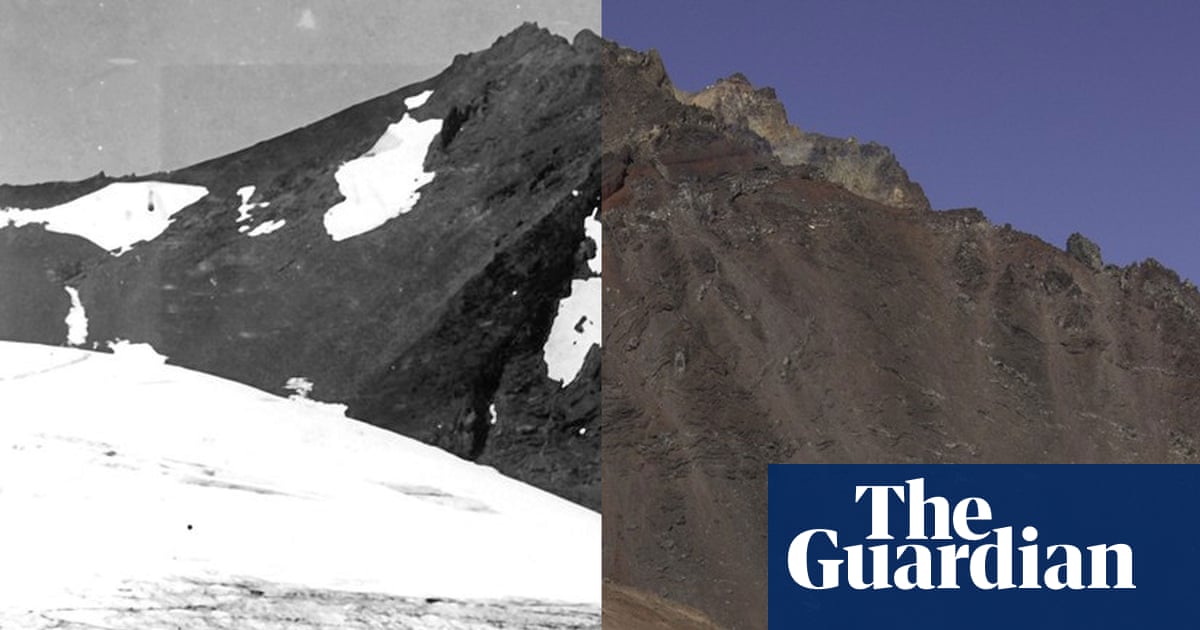
A recent study reveals alarming trends concerning glaciers across the western United States, where rising temperatures are leading to their rapid retreat. Since the 1960s, approximately 300 glaciers have been classified as functionally vanished, significantly impacting the region’s ecosystem and water supply.
Historical Perspective
In the mid-20th century, over 1,450 glaciers, which are massive formations of ice, snow, and rock, existed across the mountainous regions. These glaciers played a crucial role in maintaining ecological balance by providing essential water resources as they melted gradually. However, the total glacier area in this region has diminished by a third since the 1960s, and the trend is accelerating due to climate change driven by fossil fuel consumption.
Many of these glaciers, particularly those found in California’s Sierra Nevada, originated thousands of years ago, with some dating back to the last ice age, which concluded approximately 11,700 years ago.
Impact of Climate Change
The ongoing climate crisis is exacerbating the situation. Andrew Fountain, a geographer at Portland State University and lead author of the study published in the Proceedings of the National Academy of Sciences, stated, “When I realized this it was like, ‘Yikes – that’s a lot more than I thought.’” The research indicates that smaller glaciers, particularly those at lower elevations in the Sierra Nevada and the Cascade Range, are experiencing the most significant shrinkage.
Fountain’s team utilized satellite imagery and aerial photography to assess the retreat of glaciers in six Western states, highlighting the concerning fate of even larger glaciers, which are also expected to disappear within the next fifty years.
Consequences for Ecosystems and Communities
The decline of these glaciers poses a threat not only to the natural environment but also to human communities that rely on glacier-fed water sources for agriculture and hydroelectric power. Fountain emphasizes that the loss of glaciers is a tangible sign of diminishing snowpack, directly linked to water availability during drought conditions.
“People like knowing glaciers are around; they are close to their hearts, and it’s worrying to see the mountains look bare,” Fountain noted, stressing that the retreat of these iconic ice formations is an immediate concern for local populations.
Global Implications
This phenomenon is not unique to North America. Similar patterns of glacial retreat have been observed in Europe and the Himalayas, further impacting agricultural productivity and natural habitats globally. “We are turning up the heat in the refrigerator, so the ice is melting everywhere,” Fountain explained.
Moreover, the melting glaciers contribute to rising sea levels, which have already seen an increase of about an inch globally due to the loss of ice from Greenland and Antarctica, as per recent studies. This rise in sea levels presents significant risks for coastal cities around the world, making flooding and storm effects increasingly severe.
The Path Forward
To mitigate further losses, actions to reduce greenhouse gas emissions are crucial. However, the complete restoration of glaciers may take centuries, if it is even possible. Eric Rignot, a glaciologist at the University of California, Irvine, expressed concerns about the stability of terrain as glaciers retreat. “We have seen that in Nepal but also in the Alps, where the climbing season is getting shorter because it’s too dangerous,” Rignot stated.
The situation underscores the complexity of climate change and the multifaceted challenges that communities and ecosystems will face as glaciers continue to shrink. “You get creeping sea level rise, but then you have events like storms or king tides on top of that, and then you are in trouble,” Rignot added. Although the challenges are daunting, he urges action: “It’s getting worse all the time but it’s not too late; any step in the right direction matters.”
