


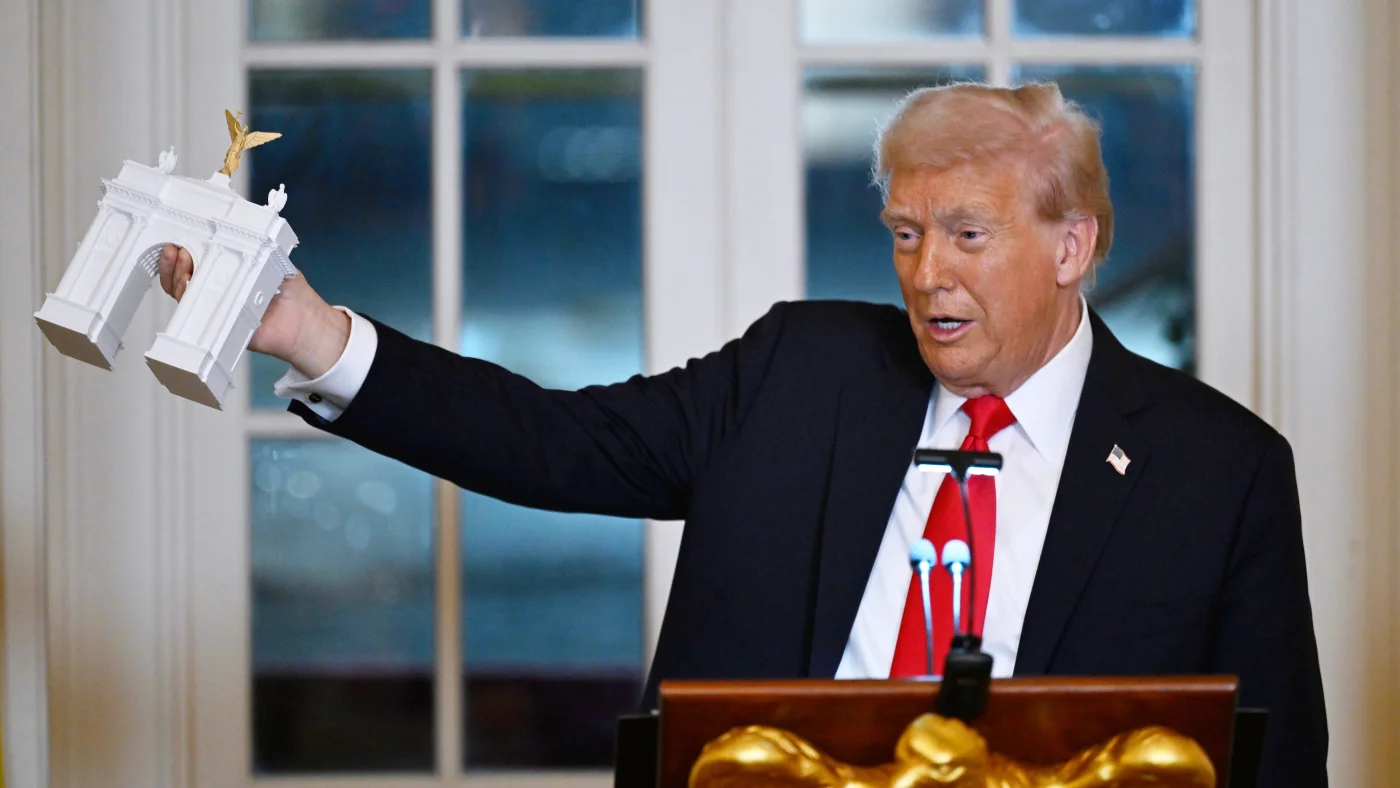
Federal Court Rulings Halt Trump’s Proposed Triumphal Arch Project
The ambitious project proposed by President Trump, a 250-foot triumphal arch in Arlington, Virginia, faces significant legal challenges as federal judges have issued rulings against it. This project, aimed at enhancing the landscape of Memorial Circle near key historical sites, is now on hold amid concerns raised by local authorities and environmental advocates.
Court Decisions Against the Arch
On a recent Friday, Judge Leonie Brinkema of the U.S. District Court in Virginia announced her intention to issue a preliminary injunction intended to block the arch’s construction indefinitely. This ruling follows a lawsuit filed by the Arlington County board, which raised alarms regarding potential detrimental effects on residents and emergency services in the area.
According to Kate Talmor, senior counsel with Democracy Forward, the organization representing the plaintiffs, “We are pleased that the court has recognized the irreparable harm that will come to people who live and work in Arlington and stopped the massive vanity project while our case is heard and considered by the court.”
Government’s Response and Continued Legal Battles
The Justice Department has indicated plans to appeal the decision, asserting a commitment to pushing the arch project forward. Despite the legal setbacks, the Trump administration remains optimistic about the arch’s proposed significance as a grand monument.
Concerns Raised by Arlington County
Arlington officials have voiced multiple concerns regarding the arch, highlighting significant harm to local residents through increased noise, air pollution, and traffic congestion that could obstruct emergency response routes. Additionally, they argue that the dual purpose of the arch—serving both as a monument and a potential military complex—could impose further public safety risks and stretch local resources thin.
- Traffic Disruptions: Increased visitors to the arch could exacerbate the already busy surroundings of Arlington National Cemetery.
- Environmental and Safety Risks: Construction and resulting traffic could lead to accidents and impede emergency vehicles.
- Historical Integrity: The arch is said to disrupt crucial sightlines between Arlington National Cemetery and the National Mall in Washington, D.C.
Legal and Environmental Considerations
Critics argue that the Trump administration has approached the required environmental reviews too hastily, claiming essential alternatives were not adequately considered before moving toward approval. The National Park Service defends its review process, maintaining that the proposed location is integral to the arch’s intended impact.
In related legal proceedings, Judge Tanya Chutkan of the D.C. District Court also issued a restraining order against construction activities, pushing the decision timeline to December 3 while further arguments are evaluated.
Future Implications
As federal courts continue to review the legality of the arch, Judge Brinkema remarked on the project’s reliance on a 1925 law intended for a different purpose, expressing skepticism about the government’s argument. Throughout this legal journey, concerns over the arch’s environmental impact and the implications for airspace safety remain critical points of contention.
The situation is evolving as legal challenges mount and public opinion continues to shape the discourse surrounding this monument. As hearings proceed, stakeholders from local officials to federal representatives will closely monitor the developments.
Conclusion
The proposed triumphal arch, envisioned by President Trump as a symbol of grandeur, now stands at a crossroads amid legal challenges grounded in environmental and community safety concerns. The outcomes of ongoing court cases will be pivotal in determining the future of this controversial project.
