


Controversy Surrounds Trump’s Proposed 250-Foot Arch in Washington, D.C.
This week is pivotal for the proposal to construct a 250-foot arch in Washington, D.C., championed by President Trump. Despite ongoing controversies, the Trump administration has accelerated the project, pushing through federal approvals while deeply entangled in legal disputes.
Government’s March Towards Approval
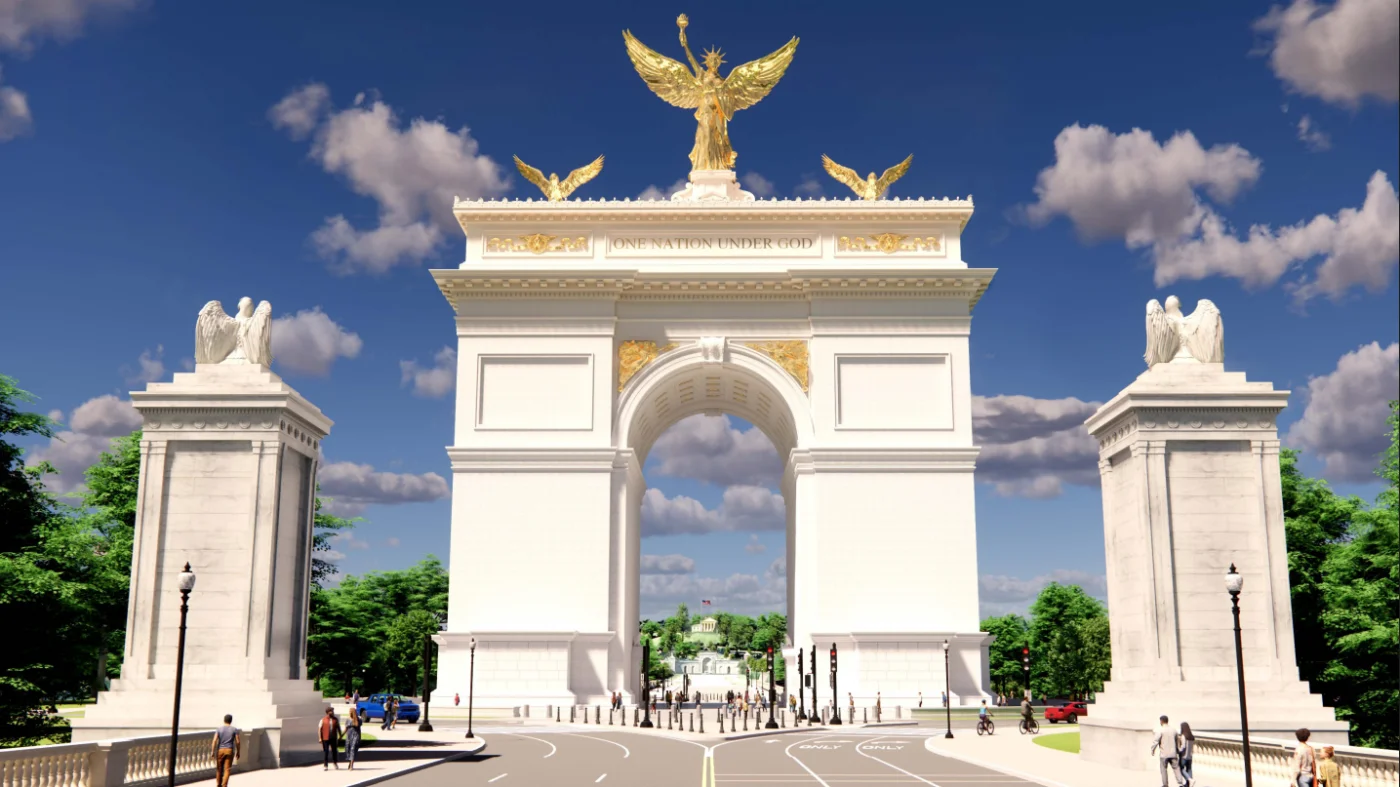
After months of progressing through various federal reviews and public objections, the project’s final design was submitted to the National Capital Planning Commission (NCPC). The plans feature an imposing arch with three golden statues and an eternal flame at its pinnacle.
In recent months, the project has garnered attention for circumventing traditional congressional oversight. The Commission for Fine Arts, composed entirely of Trump appointees, approved the design despite significant public opposition.
Legal and Public Opposition
The NCPC is scheduled to meet online on Thursday to deliberate on the arch’s final approval. The agenda is singularly focused on the arch, and public interest is high, with nearly 120 individuals registered to voice their concerns—an unusually extensive turnout.
Over 100,000 comments have been submitted against the project by veterans, local citizens, and preservationists, who argue that the arch would obstruct critical views in the area, disrespect military personnel interred at Arlington National Cemetery, and introduce additional risks within the complex airspace of D.C.
Arguments for and Against the Arch
Proponents, including the White House, assert that the arch will enhance the visitor experience at Arlington National Cemetery and become an iconic landmark. “It will be one of the great things we’ve ever done,” Trump remarked, linking the project to broader construction initiatives in the area.
Concerns and Inhibitions
Critics maintain that the proposal is primarily a reflection of Trump’s personal ambition, with many expressing deep discomfort at the idea of such a monument overshadowing Arlington’s historic significance. Furthermore, environmental and historic preservation laws could be violated without congressional approval. Local governments have also filed suit against the administration, alleging that the arch would disrupt local life and pose significant logistical challenges, including increased traffic and potential hazards to airspace.
Impending Legal Decisions
As the legal challenges mount, attention is focused on U.S. District Judge Tanya Chutkan, who is overseeing the case. She has questioned the urgency surrounding the project and has consolidated several lawsuits against the arch into one case. The claims allege that the structure lacks legal foundation and could inflict “irreparable harm” on the D.C. and Virginia communities.
The administration contends that previous congressional acts permit such construction, yet critics argue this is a misinterpretation of the law. With the planning commission’s meeting approaching, the judge has ordered the government to inform the court immediately of any outcomes related to the project.
Public Sentiment
With voices from veterans like Michael Lemmon—who expressed profound discomfort at the arch’s shadow potentially looming over his future burial site—highlighting the emotional stakes, public sentiment appears divided but heavily weighted against the project. Demonstrations against the arch further illustrate the concerns surrounding the initiative, and numerous legislators have vowed to take action should it receive approval.
Final Thoughts
As the decision date approaches, the national dialogue surrounding the proposed arch reflects broader tensions in American society regarding memorialization and the legacy of leadership. Critics and supporters alike are prepared to make their voices heard as the final decisions loom on an ambitious and controversial project.
