


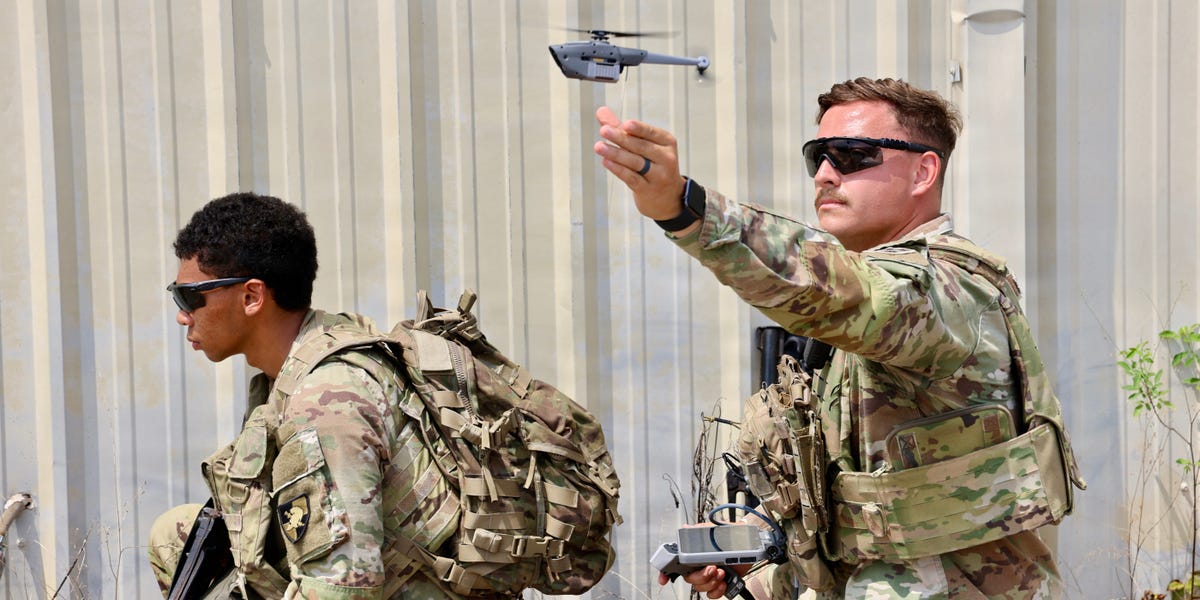
Drone Training Innovations: Insights from Ukraine’s Killhouse Academy
Ukraine’s Killhouse Academy has emerged as a pivotal training ground for drone operators, especially amid the evolving landscape of modern warfare. This facility, operated by the elite 3rd Army Corps, dedicates itself to equipping soldiers, foreign fighters, civilians, and defense industry professionals with the skills necessary to effectively operate small drones.
The Killhouse Academy Experience
During a recent visit to the Killhouse Academy, James Andreasen, a senior U.S. Army aviation warrant officer and instructor at Fort Rucker, Alabama, was taken aback by the professionalism and scope of the operations provided. His observations reflect a comprehensive approach to drone warfare training that stands in contrast to traditional U.S. methodologies.
Key Differences in Training Approaches
One significant distinction noted by Andreasen is the emphasis placed on maintenance in the Ukrainian training program. Trainees are not just pilots but are also responsible for understanding and repairing their drones, along with managing their essential systems. “It’s really important for our guys to understand how these things work,” he emphasized, highlighting the importance of adaptability on the battlefield.
Furthermore, Andreasen highlighted the realistic battlefield conditions incorporated into the training at the Killhouse. Unlike U.S. military exercises, which often prioritize reliable signal conditions, the Killhouse intentionally simulates challenges such as electronic warfare that could disrupt drone operations. This practice aligns closely with the demands faced by drone operators in real combat situations.
Training Under Realistic Conditions
The Killhouse Academy adopts an unorthodox method of training by deliberately degrading signal quality to create an environment that closely reflects actual combat scenarios. “The Army’s instinct is to preserve the signal,” Andreasen noted, contrasting this with the Killhouse’s approach that prepares operators for signal disruptions. This training is crucial for fostering a resilient and capable drone operator.
Technology and Equipment
In terms of technological advancements, Andreasen observed that Ukrainian drones are often simpler and more functional compared to the U.S. military’s traditionally more sophisticated systems. “I was surprised at how bare-bones their drones were,” he remarked, indicating that the focus is on utility rather than advanced features. Many of these devices are acquired through donations, secondhand purchases, or U.S. military support, underscoring a resourceful approach to drone operation.
Implementing Lessons Learned in the U.S.
The insights gained from the Killhouse Academy are being actively incorporated into the U.S. Army’s own drone training curricula. For instance, Andreasen highlighted a shift in focus within the U.S. training environment toward stability and control, as opposed to speed. “Their drones aren’t doing backflips and crazy maneuvering,” he explained. Instead, the training emphasizes the importance of steady hovering and low-level flight maneuvers that are crucial in urban combat scenarios.
As a result, aspects such as attack altitude and target engagement strategies are being revised to align more closely with the successful methodologies observed in Ukraine. Soldiers are now encouraged to develop a more instinctive understanding of their drones and the operational environment, a necessary evolution for modern combat effectiveness.
Conclusion
Andreasen’s experiences at the Killhouse underline the pressing need for the U.S. military to adapt quickly to changing warfare dynamics. While there are challenges in training speed, he noted that the Army has demonstrated a remarkable responsiveness in updating drone training programs. “At no time in my 16 years in the Army have I ever seen the U.S. Army move faster than they have done for drones trying to catch up to Ukraine,” Andreasen concluded.
