


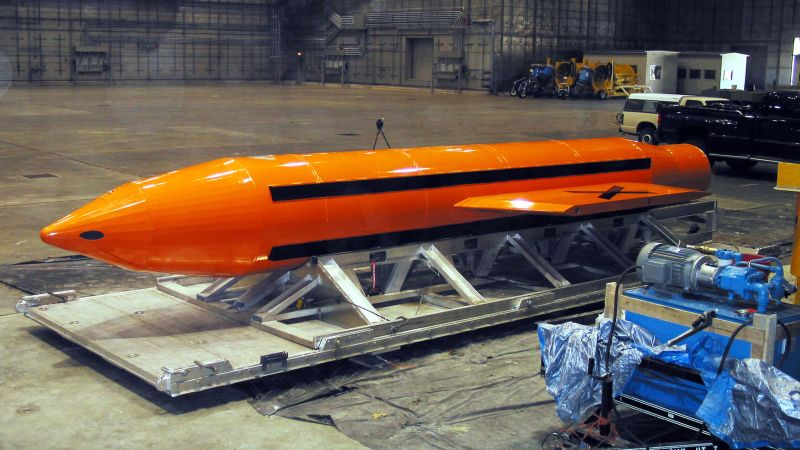
Potential Military Strategies Against Iran: The Role of the MOAB
Strategic Military Plans
In response to increasing tensions with Iran, the U.S. military has developed new strike options that may include the use of the Massive Ordnance Air Blast bomb (MOAB) against critical Iranian energy and nuclear infrastructure. According to several U.S. officials familiar with the situation, these plans could unfold either prior to or following the upcoming midterm elections, contingent upon President Trump’s directives.
The MOAB: Capabilities and Limitations
Dubbed the “mother of all bombs,” the GBU-43/B MOAB is the most powerful non-nuclear weapon in the U.S. arsenal. The usage of this bomb would signify a significant escalation in military action against Iran, although there remain concerns about its effectiveness in meeting Trump’s strategic military objectives.
Military discussions indicate skepticism surrounding the MOAB’s ability to penetrate fortified structures, such as deep underground nuclear sites, which are believed to be well protected. The bomb’s explosive yield, capable of covering approximately nine city blocks, does raise concerns about potential civilian casualties if used near populated areas.
Political and Military Context
As the Trump administration faces pressure to conclude what many perceive as an unpopular conflict, strategists within the military have been tasked to propose options that may be characterized as a “definitive” end to the war. Trump and his advisors have discussed various military responses aimed at delivering a substantial message to both domestic and international audiences.
Despite some government officials characterizing the conflict as effectively won, Trump himself has refrained from declaring victory, acknowledging “unfinished business” in the region. His cautious approach reflects concerns that a sudden withdrawal might suggest defeat.
Military Readiness and Potential Operations
Military planners have prepared a spectrum of operational options ranging from high-end strikes involving the MOAB to more conventional tactics. Reports indicate that Trump has requested plans that would target key Iranian energy infrastructure and potentially nuclear facilities, including the heavily fortified Pickaxe Mountain site.
While some military officials warn that utilizing the MOAB may not yield the intended strategic outcomes, its deployment could serve as a psychological maneuver aimed at undermining Iran’s resolve in light of ongoing international diplomatic negotiations.
Future Implications
The administration continues to assess its options, weighing the potential ramifications of military actions not only for U.S. interests but also in terms of civilian safety. Current military strategies are informed by a desire to find a “symbolic” win that could facilitate a political off-ramp, allowing for a potential diplomatic breakthrough, such as reopening crucial shipping routes like the Strait of Hormuz.
As the midterm elections approach, the situation remains fluid, with military readiness being heightened in anticipation of possible Iranian retaliation should the president authorize strikes. The ongoing deliberations reflect a complex intertwining of military strategy, domestic politics, and international diplomacy.
