


US Military Strikes Commercial Cargo Ship in Gulf of Oman
In a significant escalation of maritime tensions, the United States military has disabled a commercial cargo vessel in the Gulf of Oman, according to a statement from Central Command (CENTCOM). This action came after the ship’s crew allegedly ignored multiple warnings and attempted to breach an ongoing naval blockade intended to restrict maritime movements associated with Iran.
Details of the Incident
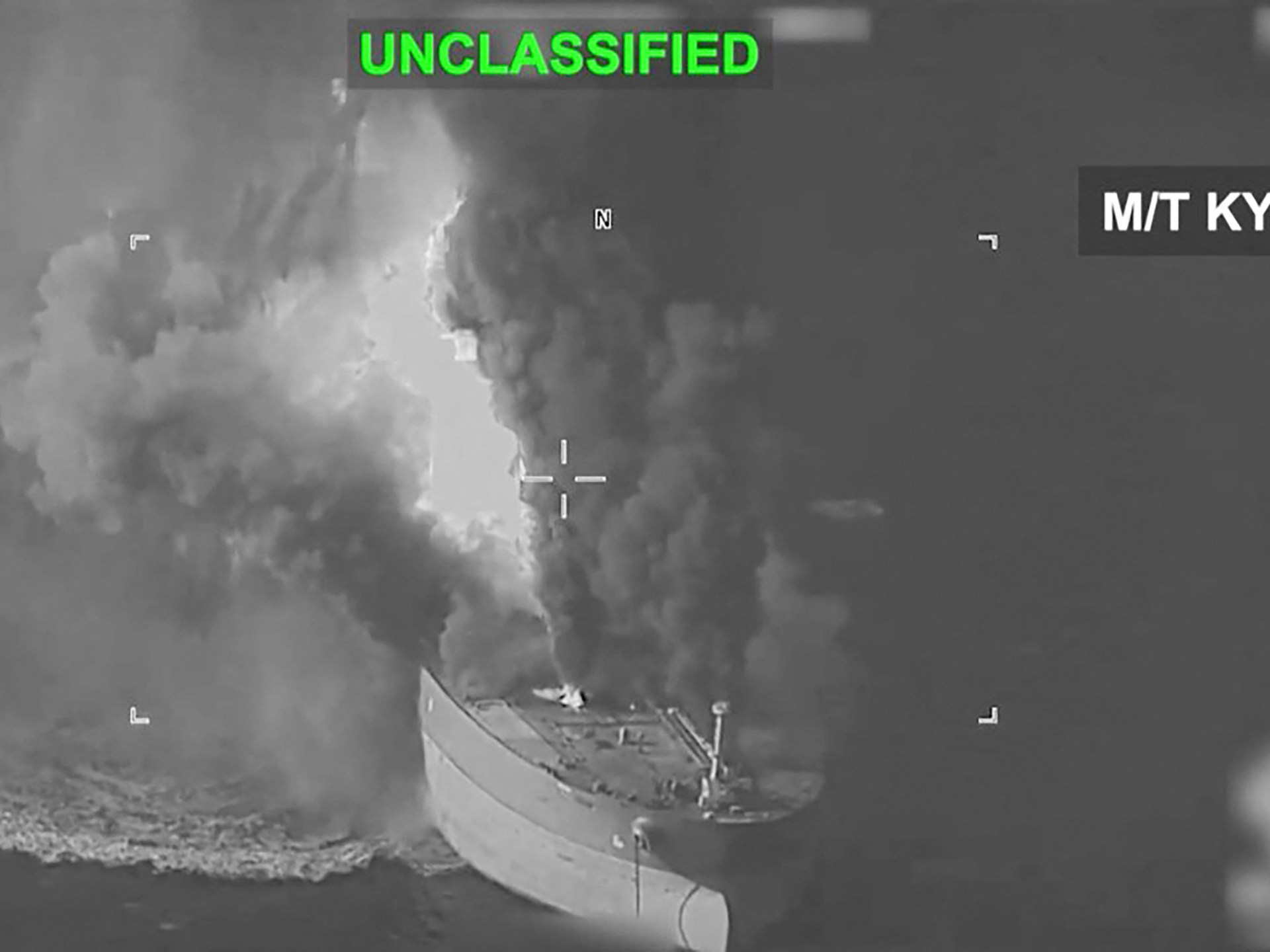
The U.S. Air Force conducted the strike on Saturday, targeting the stern of the Panama-flagged M/V Ocean Molica, also known as the Arika Sun. CENTCOM reports that the precision munition used in the strike *completely disabled* the ship’s propulsion system while ensuring the safety of its crew. The vessel had reportedly set sail from an Iranian port before being intercepted.
Naval Blockade Enforcement
Since July 14, U.S. forces have intensified their maritime operations, resuming a blockade against all shipping movements to and from Iranian ports. CENTCOM disclosed that during this period, they have disabled four commercial vessels and diverted approximately 135 ships, all as part of stringent enforcement measures. Additionally, U.S. military operations have led to the destruction of ten tankers linked to Iran’s Islamic Revolutionary Guard Corps (IRGC), which are believed to be part of a clandestine maritime network.
Responses and Reactions
The military operation has drawn scrutiny from U.S. lawmakers, including Senator Chris Murphy, who voiced concerns on social media, questioning the rationale behind such military actions. “What is this all for? Why are taxpayers paying billions to hit commercial ships?” he asked, suggesting that these actions might be intended to negotiate favorable terms with Iran.
International Maritime Implications
The incident in the Gulf of Oman was acknowledged by the UK Maritime Trade Operations (UKMTO), which has stated that they received notifications regarding interactions between military forces and commercial vessels in the region. Investigations are currently underway to assess the broader implications of this event.
In a reciprocal move, the IRGC has also claimed responsibility for striking a vessel within the Strait of Hormuz, stating that the ship attempted to navigate an “illegal route.” This escalation highlights the ongoing tit-for-tat actions between U.S. forces and Iranian military in the strategically vital waterway.
The Condition of Maritime Trade
The Strait of Hormuz remains a crucial conduit for global oil and liquefied natural gas shipments, with approximately one-fifth of the world’s supply passing through this narrow gateway. However, the recent military developments have raised concerns about the safety of commercial shipping in this essential maritime pathway.
As tensions continue to rise with the onset of military operations aimed at enforcing blockades and counter-blockades, the future of maritime trade through this region appears increasingly precarious.
Conclusion
The strike on the M/V Ocean Molica serves as a stark reminder of the heightened military tensions in the Gulf as the U.S. continues to enforce its blockade against Iran. As both military and commercial vessels navigate these troubled waters, the situation remains fluid and continues to evoke international concern.
