


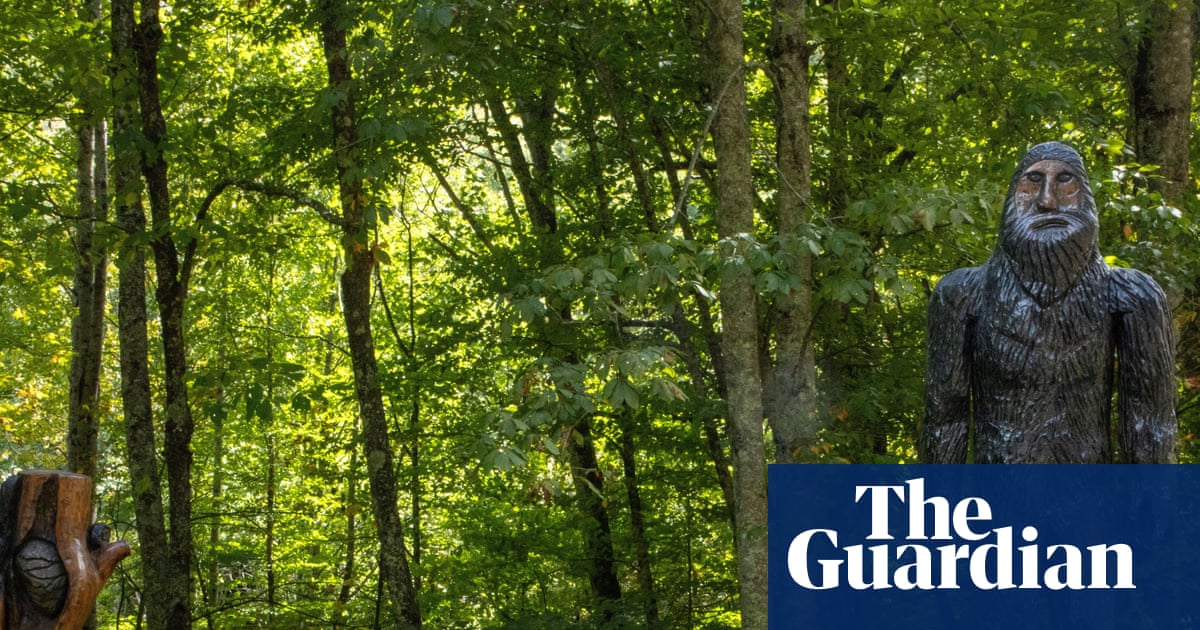
Newly Released U.S. Forest Service Files Shed Light on Bigfoot Sightings
Recent Reports Spark Interest
The U.S. Forest Service has recently made available a collection of documents that detail suspected encounters with Bigfoot, reigniting public fascination with this elusive creature. The files include reports from Montana and Oregon, highlighting tracked sightings and eyewitness testimonials.
Insights from Historical Reports
Among the files is a notable report from 1982 where wildlife biologist Rodney Johnson investigated unusual tracks in northeast Oregon. The investigation involved creating plaster casts of the tracks to ascertain their origins.
In his findings, Johnson listed eight reasons why he doubted the tracks could belong to Sasquatch, including:
- The stride of the tracks did not alter with the slope of the terrain.
- The tracks did not reach the bottom of the mud.
- The small toes lacked a definitive pad at their tips, as would typically be expected.
A Cautious Approach to Evidence
Despite his skepticism, Johnson did not fully dismiss the possibility of Bigfoot. He noted, “If the tracks were faked, someone went to a great deal of trouble and detail,” implying that the craftsmanship of the prints would be challenging to replicate accurately. In a later evaluation, an investigator concluded that the tracks were a “very clever attempt to perpetrate a hoax.”
Additional Accounts
Also included in the files is a testimonial from Leo Kinney in Montana from the 1980s, describing an encounter while retrieving an elk carcass. Kinney recounted how he and his companions noticed a creature walking on two legs, alongside unusual sounds and a strong odor, which led them to feel uneasy about continuing their search.
A 2003 article from the Clark Fork Valley Press cited a group in Montana reporting numerous strange footprints, with one witness stating, “I didn’t believe it until I saw the tracks.”
Recent Encounters in Ontario
Adding to the intrigue, rural Ontario residents reported two large figures resembling Bigfoot scavenging through garbage in June, further fueling interest in the cryptid’s existence.
The Bigfoot Mapping Project
The newly released documents contribute to the extensive collection compiled by the Bigfoot Mapping Project, which catalogues over 16,000 reports related to the creature. This initiative underscores the enduring allure of the unverified and the ongoing quest for discovery in the natural world.
Expert Insights
Professor Josh Redstone from Carleton University has remarked on the cultural significance of Bigfoot, stating, “For people who believe in Sasquatch, there’s an excitement around the possibility of discovering something new.” This perspective highlights the ongoing fascination with the possibility of uncovering previously unknown species.
