


The Rise of AI in Protein Structure Prediction
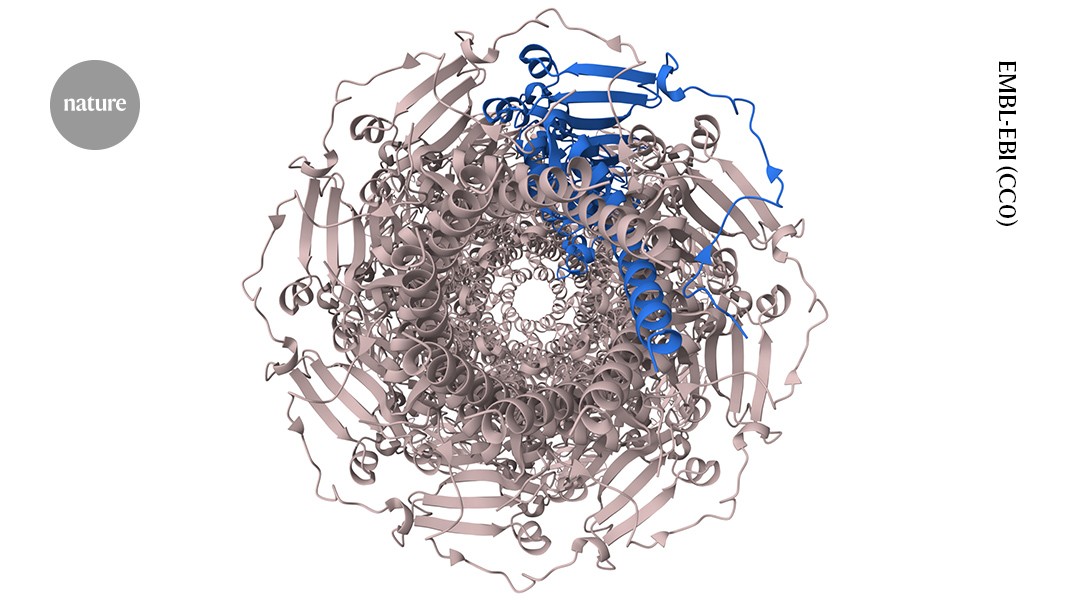
Prominent AI models like AlphaFold have traditionally excelled at predicting protein structures, but recent advances in general-purpose models are narrowing the gap.Credit: EMBL-EBI (CC0)
In a recent investigation led by Xinming Tu from Phylo, a biotech firm in South San Francisco, cutting-edge large language models (LLMs) were tested for their capability to predict bacterial protein sequences. The findings showcased a surprising level of performance from models developed by Anthropic, OpenAI, and Google, particularly suggesting that Anthropic’s Claude model outperformed both general LLMs and specialized protein-focused counterparts.
A Shocking Revelation in Protein Biology
Upon analyzing the results, Tu reported that Claude outshone not only other language models but also dedicated protein sequence models. This prompted further exploration among computational biologists eager to assess Claude’s other functionalities in protein biology. Tu, alongside computational biologist Leo Chen from Harvard Medical School, shared these exciting developments in a blog post on November 16, igniting a wave of interest across the bioinformatics community.
On November 24, OpenAI made headlines by announcing that its latest language models achieved success in designing new proteins, with some demonstrating expected behaviors upon laboratory testing. This represents a significant milestone, indicating that LLMs might be advancing their understanding of protein biology.
Debate Over Future Capabilities
As the capabilities of LLMs evolve, a debate has emerged regarding their potential role in biological AI. Some researchers predict that versatile models like Claude and ChatGPT may surpass specialized tools such as AlphaFold in areas like protein design and structure prediction. As Joy Jiao, head of life-sciences research at OpenAI, stated, “We want to see a world where a scientist can just describe in natural language what they want a ChatGPT model to do, and the model can just be infinitely flexible and design exactly what the person wants.”
However, skepticism remains regarding how well these LLMs grasp the foundational principles of protein biology. Some experts caution that their apparent success may stem from simply reproducing patterns found in their training data.
Specialists vs. Generalists in Protein Design
The introduction of AlphaFold2 by Google DeepMind in 2020 revolutionized protein structure prediction, leading to a flourishing ecosystem of software for protein modeling and design. Although researchers have begun integrating LLMs to streamline operations with these specialized models, Martin Pačesa, a structural biologist at the University of Zurich, notes, “In most cases, a specialist will always perform better than a generalist for a given task.”
To evaluate the potential of LLMs as substitutes for dedicated protein design tools, Jiao and colleagues deployed an OpenAI model known as GPT-6.2 to create three-dimensional structures of proteins targeted at various biological functions, including cancer-related proteins. Following the design phase, results from a specialist AI tool were used to establish corresponding genetic sequences, confirming that approximately 11% of the generated designs successfully bound to their intended targets.
The Future of Protein Biology and AI
OpenAI’s teams demonstrated that LLMs could effectively generate protein sequences, redesign antibodies, and tackle tasks typically reserved for specialized AI applications. While their performance varied, particularly in 3D structure predictions where results were less consistent, Jiao emphasized that these findings serve as proof of principle, highlighting that expert AI tools still play a critical role.
Masatoshi Uehara, also from OpenAI, expressed optimism about the progression of LLMs, asserting, “I believe the large language model can technically beat every specialized model in even each capability.”
The ongoing developments in AI-driven protein biology indicate a dynamic shift in the field, with both generalist and specialist models offering unique advantages and potential collaborative synergies. As research continues, the intersection of AI and biological sciences promises a transformative impact on how scientists design and understand proteins.
