


Women Break Barriers in Navy SEAL Training
In a groundbreaking moment for gender representation within U.S. Special Operations, two women recently reached unprecedented milestones in the Navy SEAL training program. Although they did not complete the course, their progress marked a significant achievement in the mission to integrate women into elite military roles.
Training Highlights
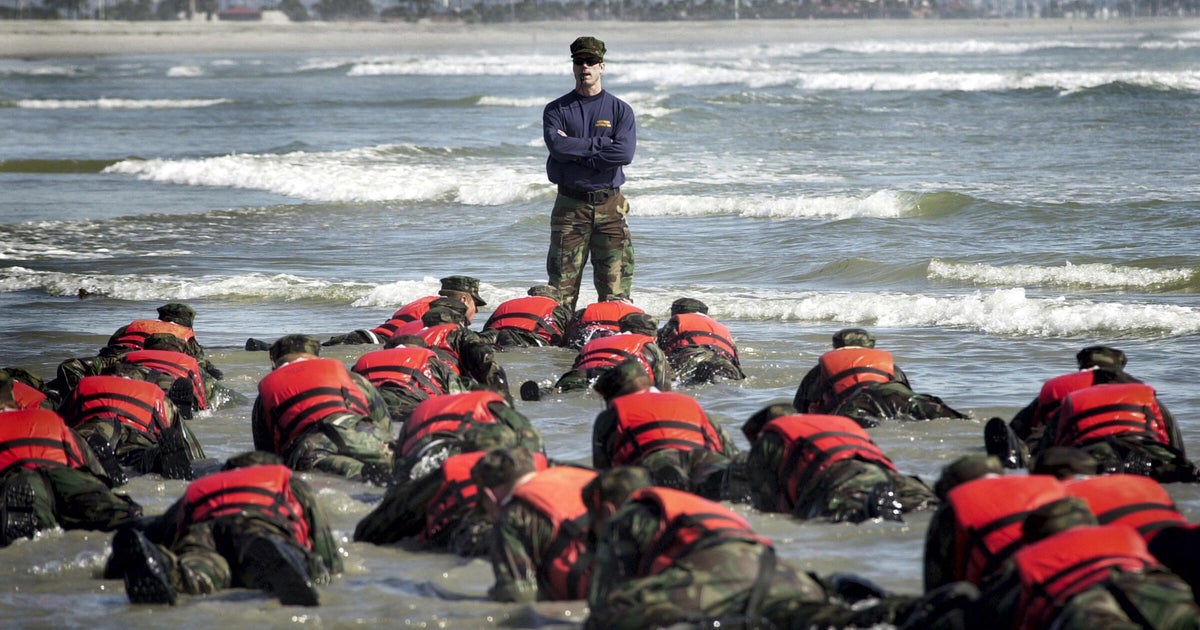
According to multiple reports, an enlisted sailor and a naval officer entered Basic Underwater Demolition/SEAL (BUD/S) training a few weeks ago, advancing to the third week of the program. This stage precedes the notoriously challenging Hell Week, which is known for its extreme physical and mental demands. While the officer was rolled back to the next class, she ultimately opted out of continuing just prior to Hell Week. The enlisted sailor, meanwhile, was medically withdrawn from participation in the grueling endurance test.
While neither candidate completed the SEAL training, they surpassed previous records for female participants since the military began allowing women to train for special operations in 2016. CBS News has chosen not to disclose their identities to protect their privacy.
Challenges of SEAL Training
Advancing to Hell Week is a notable accomplishment, as historical data reveals that approximately 45% of candidates typically either drop out or are reassigned before reaching that stage. Hell Week, which begins in the fourth week of training, generally involves only about four hours of sleep over five days and requires candidates to perform a variety of strenuous tasks, including carrying heavy logs, launching boats amid rough seas, and enduring extended periods in cold ocean water.
A spokesperson from the Naval Special Warfare Command emphasized that for security and privacy reasons, the organization does not disclose details about individual candidates or their training statuses.
Historical Context
Women have been involved in U.S. military operations for decades, dating back to World War II, when they participated in intelligence and logistical roles for the Office of Strategic Services, a precursor to the CIA. However, restrictive policies, such as the “Risk Rule” established in 1988, limited women’s assignments based on perceived combat dangers.
Following the Gulf War, Congress repealed the combat aviation exclusion in 1991, allowing women to serve in related roles, and by 1994, the risk rule was rescinded — although limitations on direct ground combat assignments remained in place. It wasn’t until 2016 that all gender-based restrictions on military roles were fully lifted, enabling women to pursue elite special operations positions like those in the Navy SEALs, Army Rangers, and Green Berets.
Attrition Rates and Female Participation
Across the military, while thousands of women have successfully joined infantry and combat support units, relatively few have applied for special operations. Statistics reveal that between 1998 and 2023, around 68% of candidates were removed at various stages of the SEAL training pipeline, with Hell Week itself seeing a 66% attrition rate during its first phase.
- Approximately 45% of all candidates do not make it past the three weeks leading up to Hell Week, with about 29% opting for voluntary withdrawals.
- During Hell Week, around 21% either choose to leave or are removed for medical or performance reasons. Nevertheless, about 80% of candidates manage to finish the week.
- Attrition rates decrease significantly in later phases, dropping to 5% during combat diving training and below 1% during the SEAL Qualification Training.
In 2021, a woman became the first to graduate from the Naval Special Warfare training pipeline as a Special Warfare Combat Crewman, and historically only about 35% of all candidates looking to join have successfully graduated.
Current Barriers and Future Outlook
Despite ongoing progress, women aspiring to join special operations often face scrutiny and challenges from various sections of the military community. For instance, some former SEALs voiced criticism online regarding the two women’s attempts at BUD/S. Defense Secretary Pete Hegseth has expressed concerns about women serving in combat roles, suggesting that their inclusion might affect military effectiveness; however, these claims were countered by former Army Ranger Capt. Hailey Gibbons, who insisted that standards have not been diminished to accommodate women.
As the review of women’s effectiveness in combat roles continues, the conversation surrounding gender integration in the military remains a significant and evolving topic.
