


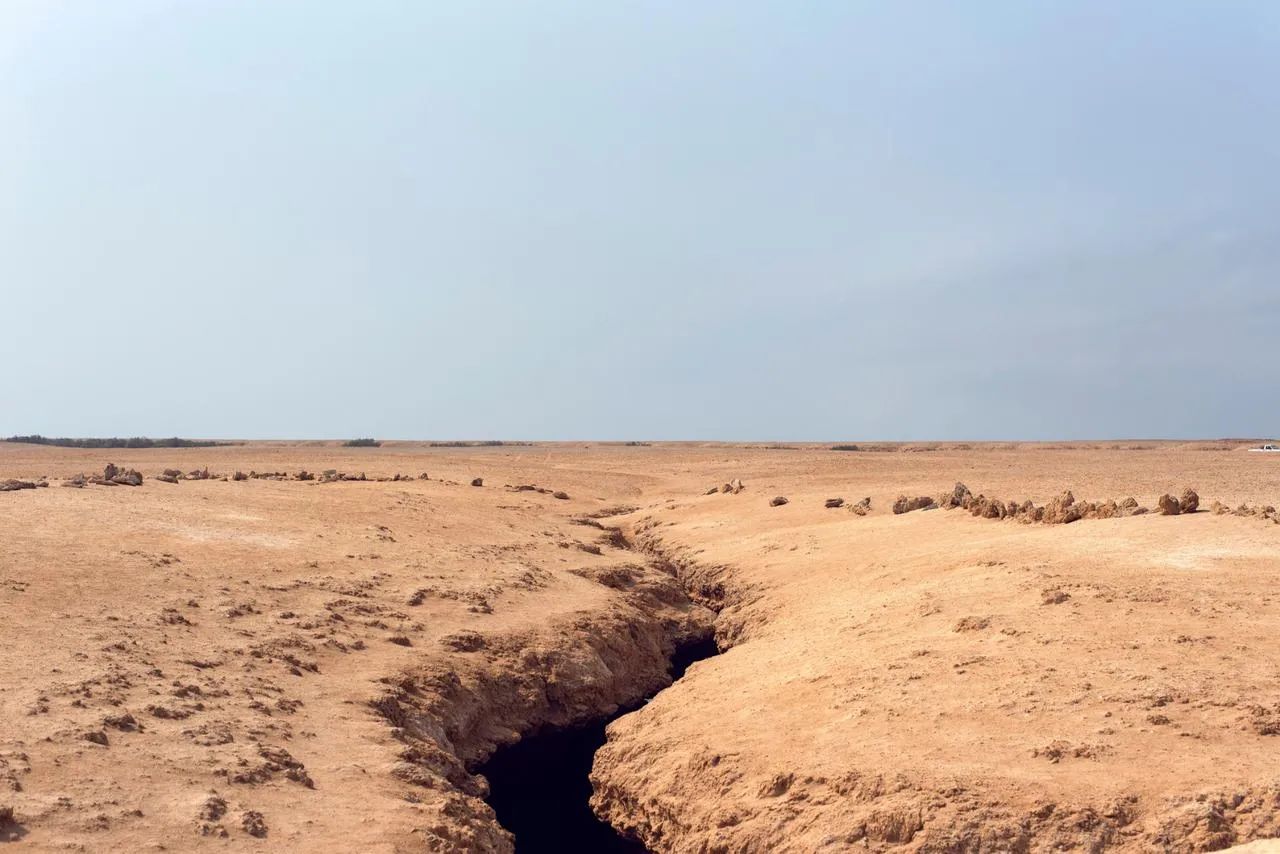
The East African Rift: Geological Dynamics and Subterranean Forces
November 20, 2026
Reading time: 4 min
Introduction to the East African Rift
The East African Rift (EAR) is a prominent geological feature that spans approximately 2,200 miles, serving as the focal point of tectonic activity in the region. Stretching from the Afar Triangle in Ethiopia down to Mozambique, this rift is part of an ongoing geological process that is gradually splitting the African continent into two distinct landmasses.
Geological Significance of the Rift
The formation of the East African Rift is primarily driven by tectonic forces that create a divergent boundary between the African and Somali plates. This divergence leads to significant geological phenomena, including volcanic activity and the emergence of rift valleys.
Notably, the rift is home to several active volcanoes, which are indicative of the geological processes at play beneath the Earth’s surface.
Connection to Subterranean Processes
Recent studies, including those focused on the geothermal fields in Kenya, have revealed the presence of gases that suggest a link to processes originating near the Earth’s core. The gases found in these geothermal areas provide vital clues about the heat and material movement from deep within the Earth’s mantle, possibly connected to a large, persistent geological phenomenon known as a superplume.
Implications for Future Research
The ongoing exploration of the East African Rift has significant implications for understanding not only local geology but also the larger dynamics of Earth’s tectonic activity. As researchers continue to study the interactions between surface events and deep geological processes, new insights are likely to emerge regarding the evolution of the Earth’s crust and its implications for seismic activity.
Conclusion
The East African Rift represents a dynamic intersection of geological forces that continue to shape the landscape of East Africa. As investigations into this region evolve, the knowledge gained will enhance our understanding of tectonic processes and their broader implications for the planet.
