


Validation of the First Image of a Black Hole: Confirming Einstein’s Legacy
In a groundbreaking development for astrophysics, an independent team of researchers has confirmed the authenticity of the first-ever image of a supermassive black hole. This achievement serves to validate Albert Einstein’s theory of general relativity, which initially proposed the existence of black holes and predicted characteristics of their environments.
The Historic Image
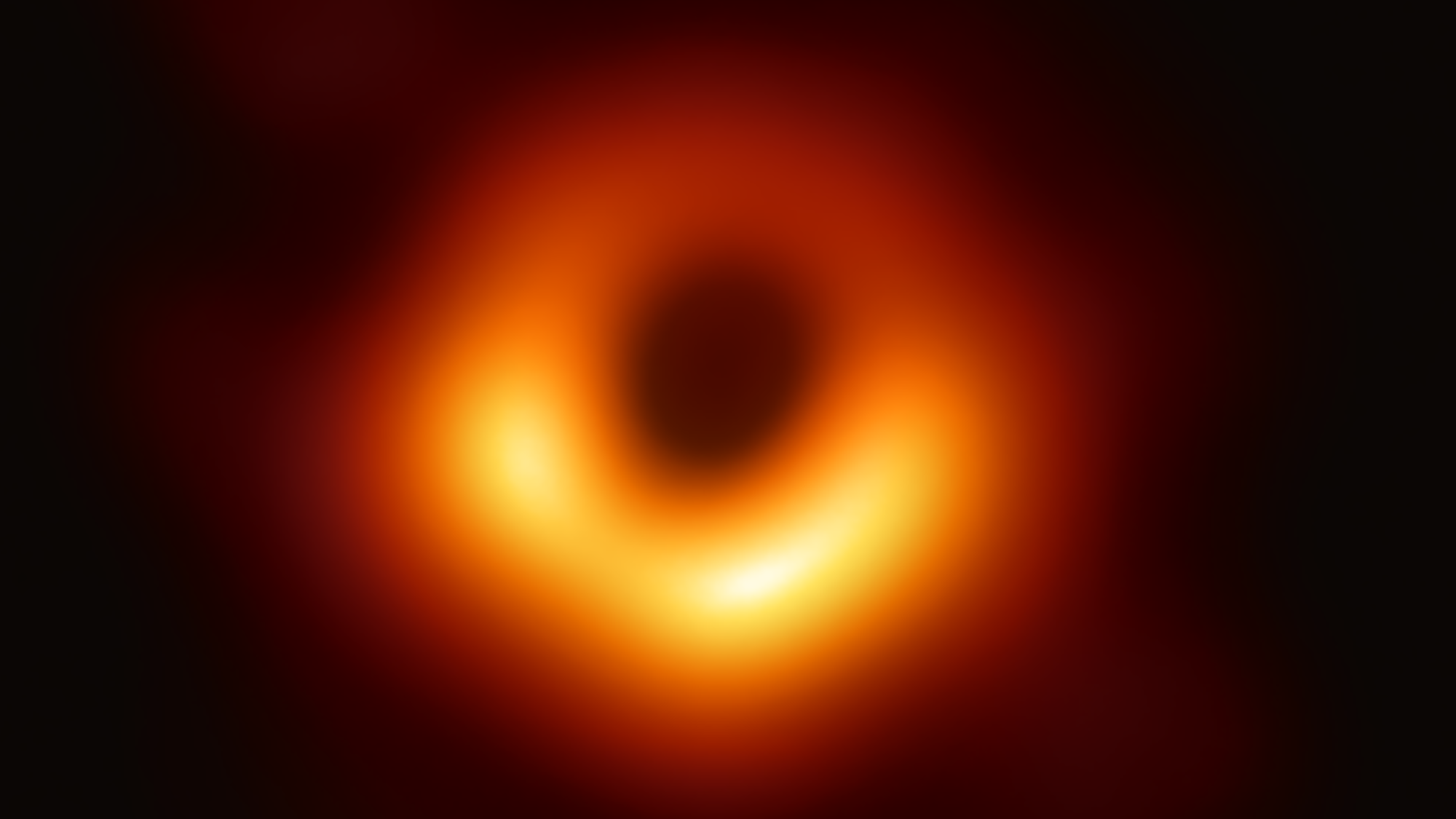
Revealed in April 2019, the captured image shows the supermassive black hole, designated M87*, located at the center of the galaxy Messier 87. This black hole is approximately 55 million light-years away from Earth and possesses a mass nearly 6.5 billion times greater than that of our Sun. This historic endeavor was executed by a network of global telescopes known as the Event Horizon Telescope (EHT), functioning as a single Earth-sized observatory.
Why Validation Matters
Despite the monumental achievement represented by the initial image, the necessity for independent validation arose. Samuel Lai, a researcher at Australia’s Commonwealth Scientific and Industrial Research Organisation (CSIRO), highlighted the challenges involved in capturing such distant astronomical objects. He likened the task to attempting to photograph a doughnut on the moon from one’s backyard.
Innovative Techniques for Verification
Lai and his team employed advanced machine learning methods to analyze the black hole’s structural details and filter out atmospheric distortions that could affect the EHT’s observations. Their innovative technique, termed GenDIReCT, helped mitigate biases that may have emerged from the data collected by multiple telescopes.
Upon applying this technique to the original EHT dataset, the researchers discovered a black hole whose dimensions and shape closely resembled those of the initial image. Raiding the dataset without any preconceived notions about what a black hole’s image should look like allowed for a truly independent verification.
Einstein’s Predictions and Their Confirmation
Albert Einstein’s general relativity, published in 1915, revolutionized the way we understand gravity and its effects on the curvature of space and time. Einstein’s theory suggested that massive objects create significant distortions in spacetime, leading to phenomena such as black holes—regions where the gravitational pull is so intense that nothing, not even light, can escape.
Scientific insights from the study conducted by Lai’s team reaffirm these predictions about black holes. Specifically, the image of M87* portrayed a glowing ring of superheated plasma around a dark central shadow, consistent with Einstein’s theoretical predictions.
Implications for Future Research
This independent validation not only bolsters the initial findings of the EHT but also enhances our understanding of black holes. As noted by Laurent Loinard, Director of the EHT Collaboration, independent validation is crucial to the scientific process, especially for groundbreaking discoveries such as this. It opens doors for broader applications, potentially extending to fields such as medical imaging and seismic activity mapping.
The results of Lai’s research have been published in the journal Nature, marking a significant step in the ongoing study of black holes and supporting Einstein’s enduring legacy.
Conclusion
As we continue to explore the cosmos, findings such as the validation of the M87* image reinforce our understanding of the universe’s most enigmatic phenomena. These advancements not only support existing theories but also catalyze new research directions that may yield further scientific breakthroughs.
