


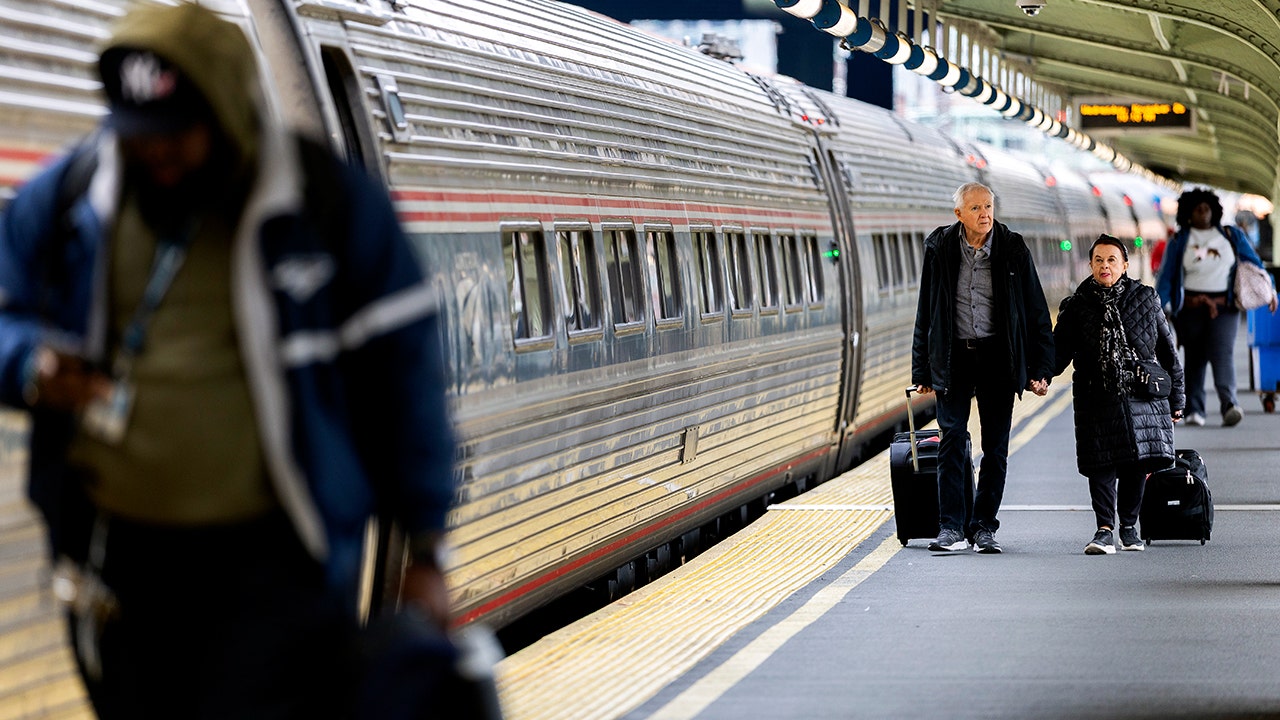
Amtrak Achieves Record Ridership Amid Rising Travel Costs
Record Passenger Numbers
Amtrak announced this week that it has reached a milestone of 37.1 million riders over the past year, representing a 7.4% increase. This growth is attributed to travelers seeking more affordable transportation options as skyrocketing airfare and gas prices prompt them to consider train travel.
For the fiscal year ending September 30, Amtrak reported total operating revenue of $4.1 billion, which is an increase of 4.9% compared to the previous year. Despite this revenue growth, the rail service recorded an adjusted net loss of $492.7 million, although this marks a 19% improvement over last year.
Shifts in Travel Preferences
Byl Herrmann, Amtrak’s interim president, noted that high airline fare prices are significantly influencing travel decisions. “I have no doubt that the airline prices, gas prices pushed people to say, ‘Maybe I should ride the train instead’,” he stated in a recent interview.
Modernization and Future Goals
To enhance reliability and attract more passengers, Amtrak has made significant investments in infrastructure, particularly in the Northeast Corridor. This includes plans to replace aging trains that are over 40 years old with newer, more efficient trainsets, anticipated to be completed by 2028.
Amtrak has initiated the process of replacing its Acela trains, and the organization aims to improve travel times significantly. Herrmann expressed that one of their goals is to reduce the journey between New York and Washington, D.C., on the Acela to just two and a half hours, down from approximately three hours currently. Achieving this would require obtaining approval for higher-speed travel and minimizing stops.
Government Support and Funding
Amtrak has benefitted from around $2.4 billion in annual government funding in recent years, alongside a substantial $22 billion allocation approved in 2021 for major capital projects. Herrmann highlighted the necessity for more stable funding, urging Congress to consider multi-year budget awards to assist in long-term planning, stating, “The ability to plan with only a one-year budget cycle is extraordinarily difficult.”
Competing with Airlines
As travel costs surge, particularly in the airline sector—where experts anticipate the highest holiday airfares in a decade—Amtrak is positioning itself as a competitive alternative. Recent reports indicate that airline ticket prices are dramatically inflated due to increased jet fuel costs, driven in part by geopolitical tensions.
Hayley Berg, an economist at Hopper, remarked that “Airfare this holiday travel season will be the most expensive it’s been in at least 10 years,” aligning with Amtrak’s vision to enhance its services to attract more travelers.
Conclusion
With a strong focus on modernization and an increasing number of passengers, Amtrak is strategically navigating a changing travel landscape shaped by economic factors. As the company aims to enhance its service offerings, it is poised to compete more directly with airlines for a growing customer base.
