


Federal Appeals Court Blocks Voter Action by Trump Administration
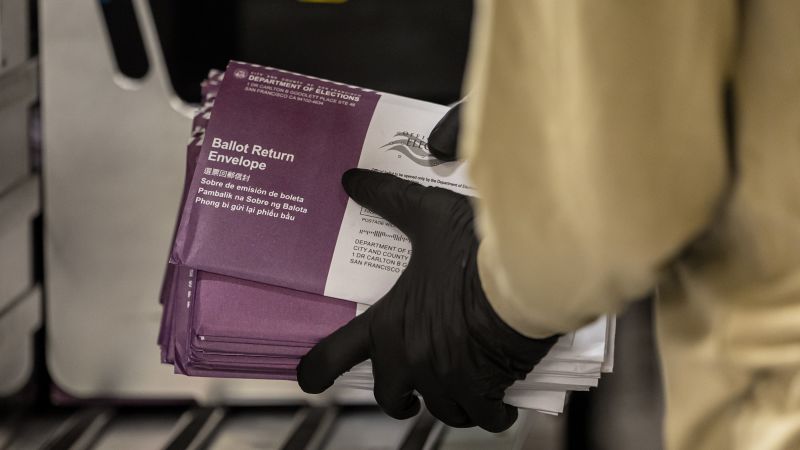
On Monday, a federal appeals court dismissed a significant legal maneuver by the Trump administration, which aimed to compel California officials to disregard ballots cast by approximately 20,000 individuals flagged as potential noncitizens.
Background of the Case
The Justice Department initiated the lawsuit earlier this month, marking a broader effort to assert federal oversight over state election processes. This initiative has drawn scrutiny and criticism from various sectors concerned about electoral integrity and local governance.
Details of the Ruling
A three-judge panel of the 9th Circuit Court of Appeals delivered a 2-1 decision against the Justice Department’s emergency appeal. This ruling followed a rare emergency hearing conducted through Zoom, held on a Sunday. The panel included Judge Mark Bennett, appointed by Trump, and Judge Gabriel Sanchez, appointed by Biden, who decided that the court could not intervene until a lower district court had addressed the issue.
Court’s Reasoning
The majority opinion indicated skepticism regarding the Justice Department’s claims of urgency, stating, “The United States’s claimed emergency, at least in part, is a self-constructed one.” They highlighted that delays in the proceedings were partly due to the Justice Department’s own lag in filing the suit and its understanding of California’s established election laws.
Next Steps for the Case
The ruling remands the case back to the US District Court in California, where a hearing is scheduled for Tuesday at 4 p.m. ET. This denotes a pivotal moment for both the state and the federal government as they navigate the delicate balance of election law.
Justice Department’s Position
The Justice Department filed its claim due to concerns that ballots from over 20,000 potentially noncitizen voters were processed without appropriate verification. They sought immediate intervention after a district court failed to issue a ruling ahead of the upcoming hearing.
Judicial Skepticism
During the hearing, two of the judges expressed doubts about the Justice Department’s approach. Judge Bennett noted that, had the court been able to make a determination on the merits, he would have ruled against the Justice Department, emphasizing that state authority over election administration remains paramount.
Arguments from California Officials
California and its legal representatives contended that the Constitution primarily grants states the authority to manage elections. They argued that the federal government based its assertions on data deemed unreliable, particularly during an active election period.
Reactions and Implications
Rob Bonta, California’s Attorney General, hailed the court’s decision as a protective measure for voters’ rights and insisted that state protocols align with constitutional provisions to ensure fair elections. Illustrating the potential chaos an injunction could cause, Judge Sanchez warned that such actions would disrupt established electoral processes and confuse both voters and officials.
Dissenting Views
Judge Patrick Bumatay, the dissenting voice in the panel, argued for the need for federal oversight to uphold election integrity. He asserted that the federal government possesses the authority to intervene in cases where the validity of votes is in question, stating, “The question—does the federal government have the power to stop this potential attack on the integrity of our elections? … the answer must be ‘yes.’”
Conclusion
This recent ruling reflects ongoing tensions between state and federal authorities regarding election administration. As the case proceeds back to the district court, it will be closely watched as an indication of how similar disputes may be handled in the future.
