


Understanding Bitcoin’s Cycles and the S&P 500’s Historical Trends Post-Midterm Elections
Bitcoin’s Cyclical Pattern Linked to Mining Reward Halvings
Bitcoin operates on a four-year cycle primarily dictated by its mining reward halving. This mechanism reduces the reward for mining Bitcoin by half every four years, significantly influencing the market dynamics. To date, Bitcoin has experienced four halving events, each followed by substantial price increases over the subsequent 12 to 18 months before entering a bear market.
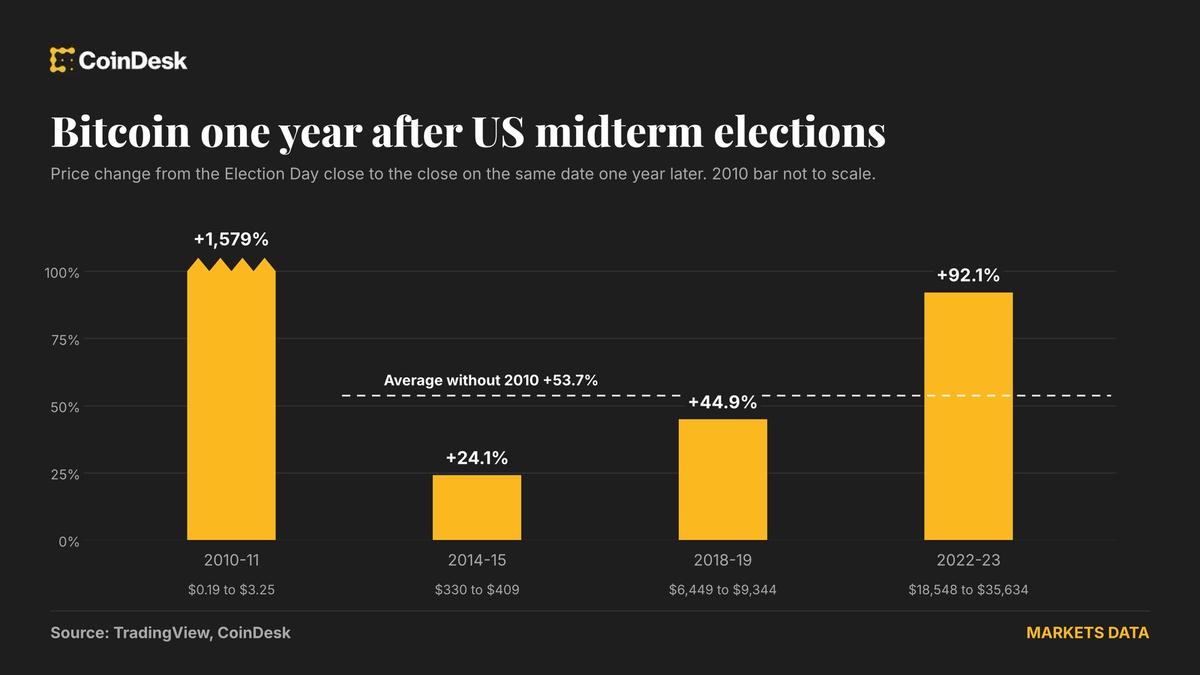
The historical occurrences of bear markets were noted in 2014, 2018, and 2022, prompting speculation that the upcoming year of 2026 may also usher in a similar trend. The recovery that typically follows a midterm election may hint at the beginning of a new cycle for Bitcoin rather than being driven by political factors.
Positive Long-Term Trends in the S&P 500
The S&P 500, known for its robust historical performance, generally demonstrates upward trends, which can be a promising indicator for Bitcoin and other speculative assets. According to data from Hartford Funds, since 1950, the S&P 500 has realized an average annual gain of 15.17% in the year following midterm elections, a notable increase compared to an average of 7.30% during other years.
The Stakes in the Upcoming 2026 Elections
The 2026 elections are poised to impact the political landscape significantly, particularly regarding President Donald Trump’s agenda during his final two years in office. Should the Democratic party gain control of one or both chambers of Congress, tension over the national debt will likely intensify, especially with unresolved issues surrounding the debt limit.
Trump’s proposed allocation of $350 billion for mandatory defense spending could face significant challenges in Congress, leading to potential legislative delays that might affect funding for various initiatives, including military engagements in the Middle East, as highlighted by Brookings Institution analyses.
