


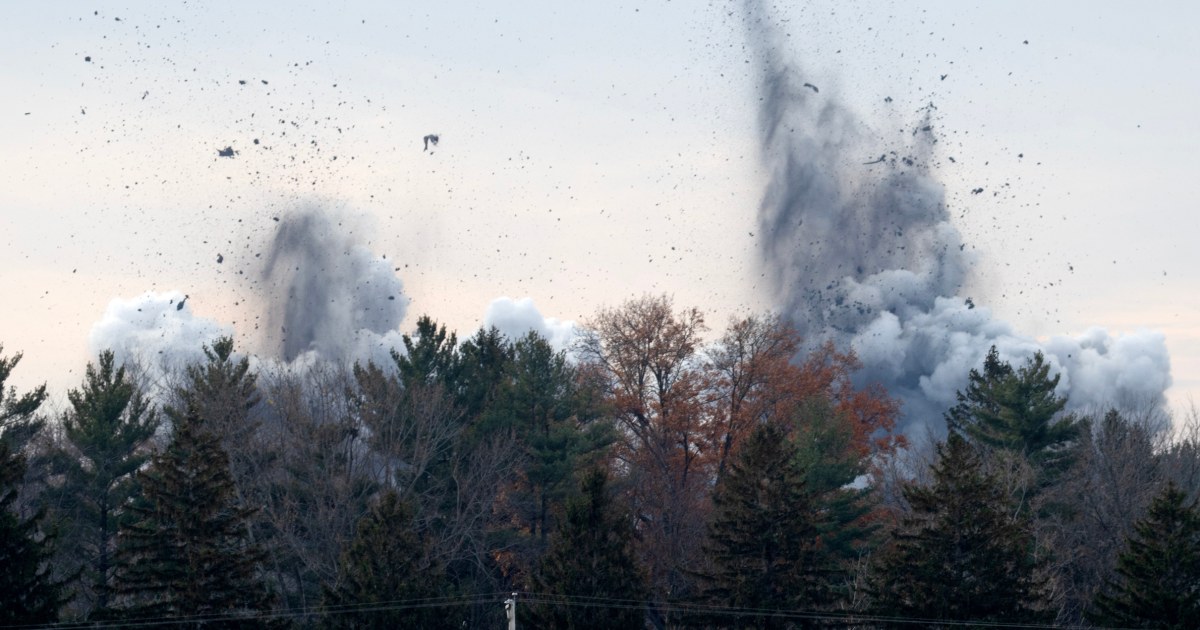
Community Concerns Rise Ahead of Controlled Explosion in Iowa
Impact on Local Residents
In the days leading up to a scheduled detonation of unstable explosives at the Iowa Army Ammunition Plant, local residents expressed significant anxiety and frustration. Many reported inadequate warning about the imminent blast, prompting a wave of changes to Thanksgiving plans. Residents took measures to protect themselves and their properties, such as taping windows, covering gardens, purchasing cleaning supplies, and in some instances, relocating their families temporarily.
Rushed Preparations
Jill Holler, a family farmer located approximately 20 miles from Middletown, described her hurried efforts to gather soil samples for future analyses of lead contamination. “I was down in the dark getting the soil samples, and it’s just frustrating,” she remarked, highlighting the urgency felt by many in the area.
Health Risks of Lead Exposure
Lead is recognized as a potent neurotoxin, with no safe level of exposure. It poses significant health threats, especially to children. Consequences of lead exposure include learning disabilities, reproductive issues, mental health challenges, and heightened risks of hearing loss. Furthermore, once lead particles settle in the environment, they can persist indefinitely unless physically removed.
Detonation and Safety Measures
Army officials argued that conducting the detonation in a controlled environment was necessary to mitigate risks associated with a potential unplanned explosion. They implemented various safety measures intended to contain lead dust within the plant’s boundaries. Measures included:
- Installation of “HESCO” barriers made from sand-filled modular structures surrounding the detonation site.
- Water spraying during the blast to capture smaller particles.
- Utilization of aqueous foam and gel blocks, alongside two water walls consisting of 16,000-gallon tanks to absorb shock waves.
Post-Detonation Monitoring Plans
Following the blast, environmental monitoring teams are scheduled to track the plume’s trajectory. This involves collecting soil and water samples to assess lead levels. If lead concentrations exceed the threshold of 200 parts per million within residential properties, the Army pledged to manage remediation efforts, including soil removal and cleaning at no cost to homeowners.
However, details regarding the testing methods, timeline, and remediation processes lacked clarity, raising concerns about the adequacy of the Army’s emergency permitting documents.
Independent Monitoring Efforts
In response to community concerns, independent environmental health specialists, including Peter Thorne from the University of Iowa’s College of Public Health, are planning to monitor the plume and assess the levels of airborne lead. Thorne indicated that their monitoring equipment will determine lead deposition on surfaces, allowing for evaluations of potential health risks associated with exposure.
Historical Context of the Explosives
The explosives in question were relocated to the ammunition plant in 2009 and had been previously flagged for their potential hazards, especially since lead azide—once a standard component in bomb triggers—has been largely discontinued from use in recent years. This raises questions about the management of such dangerous materials over time.
Thorne emphasized the need for proactive measures, stating, “It should have been dealt with in the past, and now it’s become a crisis.”
