


Understanding Bitcoin’s Volatility and Market Dynamics
Bitcoin, the leading cryptocurrency, is currently experiencing notable shifts in its volatility and overall market dynamics. Recent analyses from industry experts provide insights into its behavior and future potential, alongside key warnings regarding market positioning.
Current Volatility Trends
According to Justin Sun, the current annualized volatility of Bitcoin stands at approximately 40%. This figure is significantly lower than its historical average, which has been above 80%. Such a reduction in volatility indicates a more stable market environment compared to previous years.
In the options market, analyst Ardern points out that Bitcoin’s annualized implied volatility index, known as DVOL, is currently stable around 35 points. This reflects an ongoing trend of predictability in price movements.
Future Price Movements: A Staircase Approach
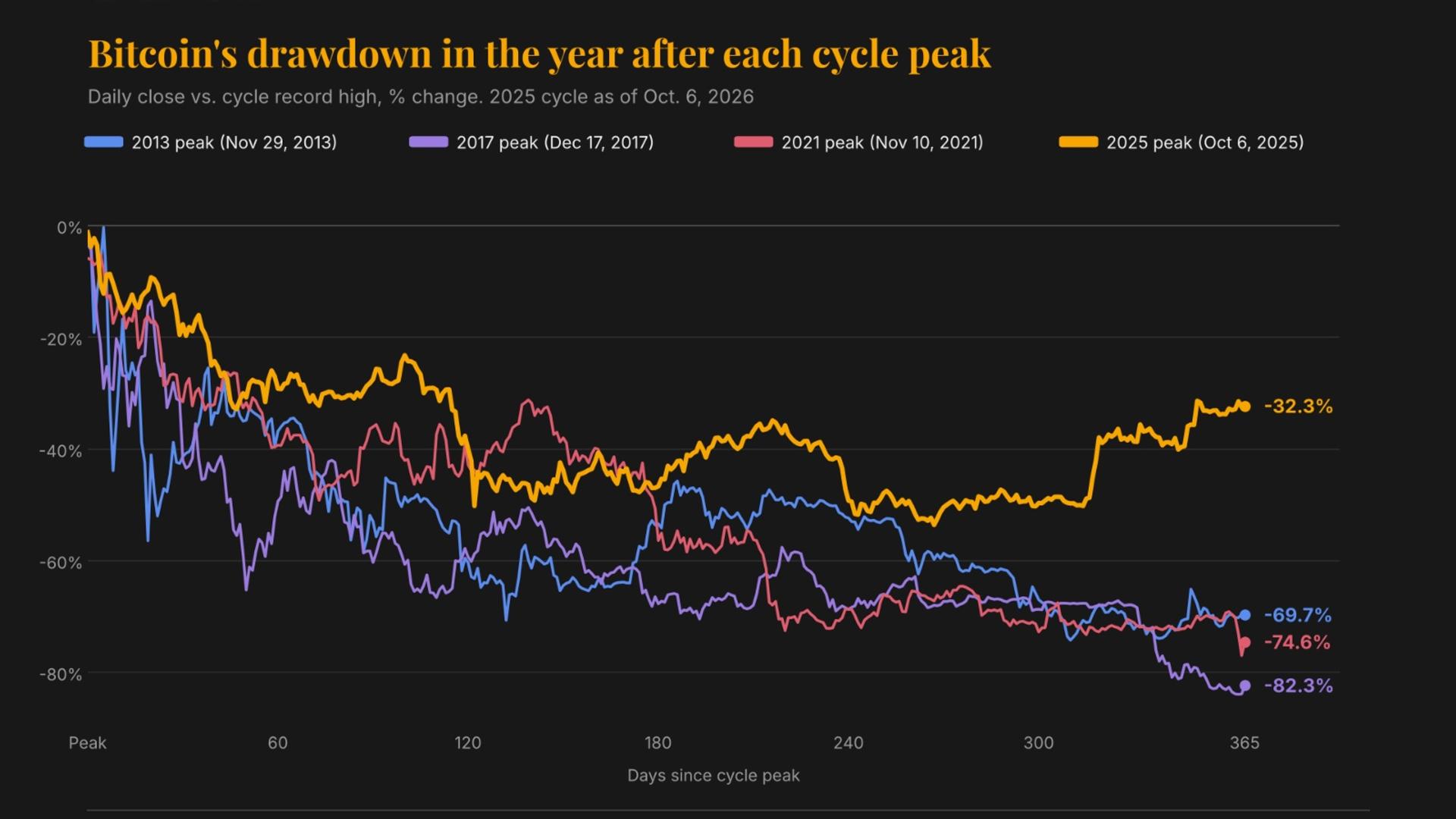
Experts envision that Bitcoin may experience a price trajectory resembling a staircase model rather than a parabola in the near future. As articulated by Sun, the pattern is expected to entail a gradual upward grind interspersed with sudden corrections, termed “air pockets,” followed by rapid recoveries.
Sun emphasizes that while these patterns suggest cautious optimism, significant price rallies remain possible due to Bitcoin’s unique tokenomics. With a capped supply of 21 million coins and a substantial portion held by long-term investors, factors such as inflows from exchange-traded funds (ETFs), improvements in macro liquidity, or concentrated short-covering could trigger swift bullish movements.
- Marginal demand shifts can lead to substantial increases in prices.
- Short covering could create scenarios for sudden price surges.
The Cautionary Note on Market Positioning
Despite these optimistic perspectives, Ardern cautions against an overly bullish sentiment. He highlights that implied volatility is currently at one of its lowest levels historically, indicating a lack of market enthusiasm for long positions. The options skew, which measures the pricing difference between bullish call options and bearish put options, remains neutral to bearish.
Ardern observes that while the derivatives market has adopted a “shallow” approach, there is currently a reluctance among traders to invest in “upside exposure.” This suggests that many participants are not yet confident in chasing after bullish opportunities in Bitcoin.
Conclusion
As Bitcoin navigates through varying degrees of volatility and potential price movements, it is essential for investors to remain informed and cautious. While the underlying factors present opportunities for significant rallies, market positioning and trader sentiment may dictate short-term dynamics. Awareness of these elements will be crucial for anyone involved in the cryptocurrency market.
