Close Menu
Newsward
  • World
  • US
    • Politics
  • Tech
    • Science/Tech
  • Money
    • Business and Market Watch
    • Crypto
    • Career
  • Health
    • Fitness
  • State of Women
  • Opinion
  • Sports
    • NFL
    • MLB

Subscribe to Updates

Get the latest creative news from FooBar about art, design and business.

What's Hot

Show us your clutter, and we’ll tell you which generation you come from – The Washington Post

October 18, 2026

2026 Midterm Elections: Trump Rallies Republicans

October 18, 2026

Bitcoin Futures Open Interest Slips To $7.68 Billion As Traders Keep Funding Positive — TradingView News

October 18, 2026
Newsward
  • World
  • US
    • Politics
  • Tech
    • Science/Tech
  • Money
    • Business and Market Watch
    • Crypto
    • Career
  • Health
    • Fitness
  • State of Women
  • Opinion
  • Sports
    • NFL
    • MLB
Subscribe
Newsward
Home » Where are the best places for life in the cosmos? A universe in a supercomputer yields the answer
Science/Tech

Where are the best places for life in the cosmos? A universe in a supercomputer yields the answer

Kabil Bendress<span class="bp-verified-badge"></span>By Kabil BendressOctober 6, 2026No Comments4 Mins Read
Facebook Twitter Pinterest LinkedIn Tumblr WhatsApp VKontakte Email
Where are the best places for life in the cosmos?
Share
Facebook Twitter LinkedIn Pinterest Email

Exploring Habitable Zones in the Universe

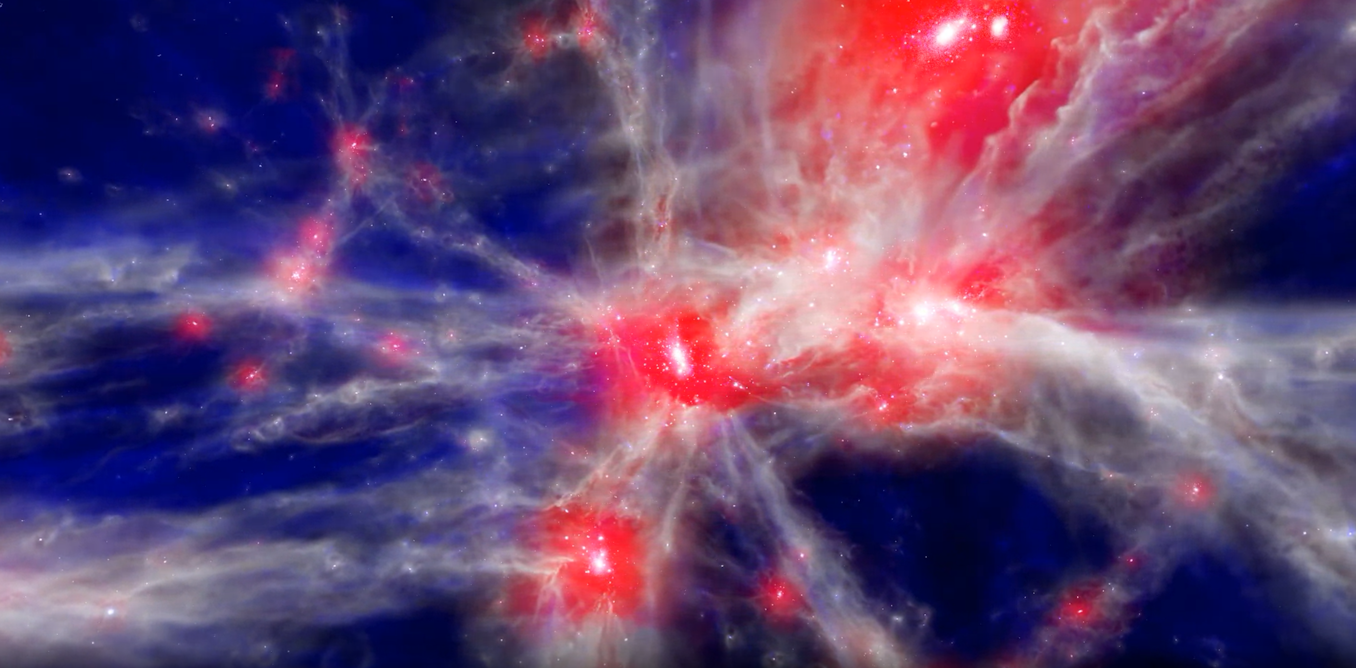
While Earth currently faces numerous challenges, our cosmic environment remains largely tranquil. However, dangers such as cosmic explosions and collisions exist throughout the vastness of space. In a recent study published in the Monthly Notices of the Royal Astronomical Society, researchers conducted a comprehensive analysis of simulated universes to pinpoint favorable locations for potential life.

The Concept of Goldilocks Zones

Habitable or Goldilocks zones refer to regions within the universe that are ideally suited for life. These zones must meet specific conditions, notably the presence of liquid water. While ongoing research investigates whether life exists within these zones, understanding celestial environments provides crucial insights into potential habitability.

Finding Potential Habitats

One critical aspect of the search for life involves identifying the circumstellar habitable zone around stars. This zone is positioned at the right distance from a star, allowing for temperatures that can sustain liquid water rather than extreme heat or cold. The classification of these zones is essential to the exploration of exoplanets, or planets beyond our Solar System, in the quest to discover life beyond Earth.

The circumstellar habitable zone is optimally situated for life, as it holds conditions that are ‘just right’ – not too hot, not too cold. Credit: NASA

Examining the Galactic Habitable Zone

Broadening the perspective, we can evaluate where to locate life-friendly environments within our Milky Way galaxy. Young stars located too close to the galaxy’s center face complications due to crowded conditions, whereas those placed excessively far may lack essential elements for life. Notably, the Sun resides within both its own circumstellar zone and what is referred to as the Milky Way’s “galactic habitable zone.”

Utilizing Advanced Simulations

In their quest, researchers tapped into the EAGLE (Evolution and Assembly of GaLaxies and their Environments) project, a sophisticated simulation that replicates galaxy formation and expansion. This project meticulously tracks cosmic phenomena, including the influence of gravity, gas, stars, and black holes, giving scientists a rich tapestry to analyze the universe’s structure and evolution.

Assessing Life’s Adversaries

While the existence of extraterrestrial life remains hypothetical, scientists focus on the cosmic elements necessary for life to emerge. The primordial hydrogen and helium from the Big Bang are insufficient for life, leading researchers to concentrate on stars that produce heavier elements essential for complex lifeforms.

Observational data from exoplanets suggest that Earth-like rocky planets require a specific abundance of heavier elements. Yet, excessive amounts may lead to the formation of gas giants, like hot Jupiters, which can destabilize and annihilate rocky planets.

Researchers also model catastrophic events detrimental to potential life. Classical threats include supernovae and gamma-ray bursts, which have the potential to sterilize regions far beyond their immediate vicinity. For context, some paleontologists posit that a nearby stellar explosion may have contributed to the Ordovician mass extinction, occurring approximately 450 million years ago.

Moreover, the movement of stars within dense galactic neighborhoods presents additional risks, potentially disturbing planetary orbits, while supermassive black holes can unleash destructive energy as they consume matter. Consequently, these violent environments are areas to avoid when seeking potential habitats for life.

Conclusion: A Safe Harbor in the Milky Way

Though definitive evidence of life in these favorable areas remains elusive, the findings underscore the Milky Way’s amenability to hosting life-friendly conditions. Notably, our galaxy exhibits a remarkable balance, having moved away from the turbulent phases that characterize smaller or more energetic galaxies.

The Milky Way appears to have settled into a more serene phase, with the likelihood of catastrophic events diminishing significantly. In comparison, smaller galaxies, more abundant in the universe, tend to be chaotic and inhospitable. Thus, from an astronomical investment perspective, the Milky Way may be a promising residence for life.

Answer cosmos Life Places supercomputer Universe Yields
Share. Facebook Twitter Pinterest LinkedIn Tumblr WhatsApp Email
Previous ArticleThe Best Prime Day Video Game Discounts for PS5, Switch 2, and Xbox — 18 Best October Deals
Next Article Bitcoin (BTC) is down ‘just’ 32% a year after the record high of $126,000
Kabilbendress0
Kabil Bendress

Related Posts

'It was jaw-dropping': The shocking lessons from an infamous experiment in obedience – BBC

October 18, 2026

Did an eruption of poop trigger the biggest explosion of life and diversity Earth has ever seen?

October 18, 2026

VIDEO: Kilauea spews sheets of lava during 55th eruptive episode

October 17, 2026

Physicists Simulated What Might Happen When Two Wormholes Collide, And Things Got Weird : ScienceAlert

October 17, 2026

Top Articles

Bill Maher, 70, Defends Trump Comments About Bombing L.A.

October 11, 2026

Senate ratings change: Kansas and Minnesota tighten

October 13, 2026

Scientists discover genetic code that breaks rules of life

October 13, 2026

4 mental tricks to help you remember things you tend to forget

October 11, 2026

Don't Miss

Technology

Show us your clutter, and we’ll tell you which generation you come from – The Washington Post

By October 18, 20260

Personal Clutter: A Reflection of Generational Influences Understanding the nuances of personal belongings can reveal…

2026 Midterm Elections: Trump Rallies Republicans

October 18, 2026

Bitcoin Futures Open Interest Slips To $7.68 Billion As Traders Keep Funding Positive — TradingView News

October 18, 2026

College Football Rankings: Historic Upset-Filled Week 7 Flips Top 25 Upside Down

October 18, 2026

Subscribe to Updates

Subscribe to our newsletter and stay updated with the latest news and exclusive offers.

About Us
About Us

NEWSWARD is an independent news and media company covering the economy, politics, international affairs, and a changing world. Through articles, podcasts, video, and candid conversations, we connect major events to their impact on your life, your livelihood, and your future.

Our purpose is simple: help you understand what matters, think critically, and make informed decisions.

See what’s happening now. Know what’s next.

Don't Miss

Show us your clutter, and we’ll tell you which generation you come from – The Washington Post

October 18, 2026

2026 Midterm Elections: Trump Rallies Republicans

October 18, 2026

Bitcoin Futures Open Interest Slips To $7.68 Billion As Traders Keep Funding Positive — TradingView News

October 18, 2026
Most Viewed

Bill Maher, 70, Defends Trump Comments About Bombing L.A.

October 11, 2026

Senate ratings change: Kansas and Minnesota tighten

October 13, 2026

Scientists discover genetic code that breaks rules of life

October 13, 2026
  • About Us
  • Contact Us
  • Privacy Policy
  • Terms and Conditions
  • Disclaimer
© 2026 Newsward. All Rights Reserved.

Type above and press Enter to search. Press Esc to cancel.