


Kilauea Volcano Resumes Eruptions After Two-Month Pause
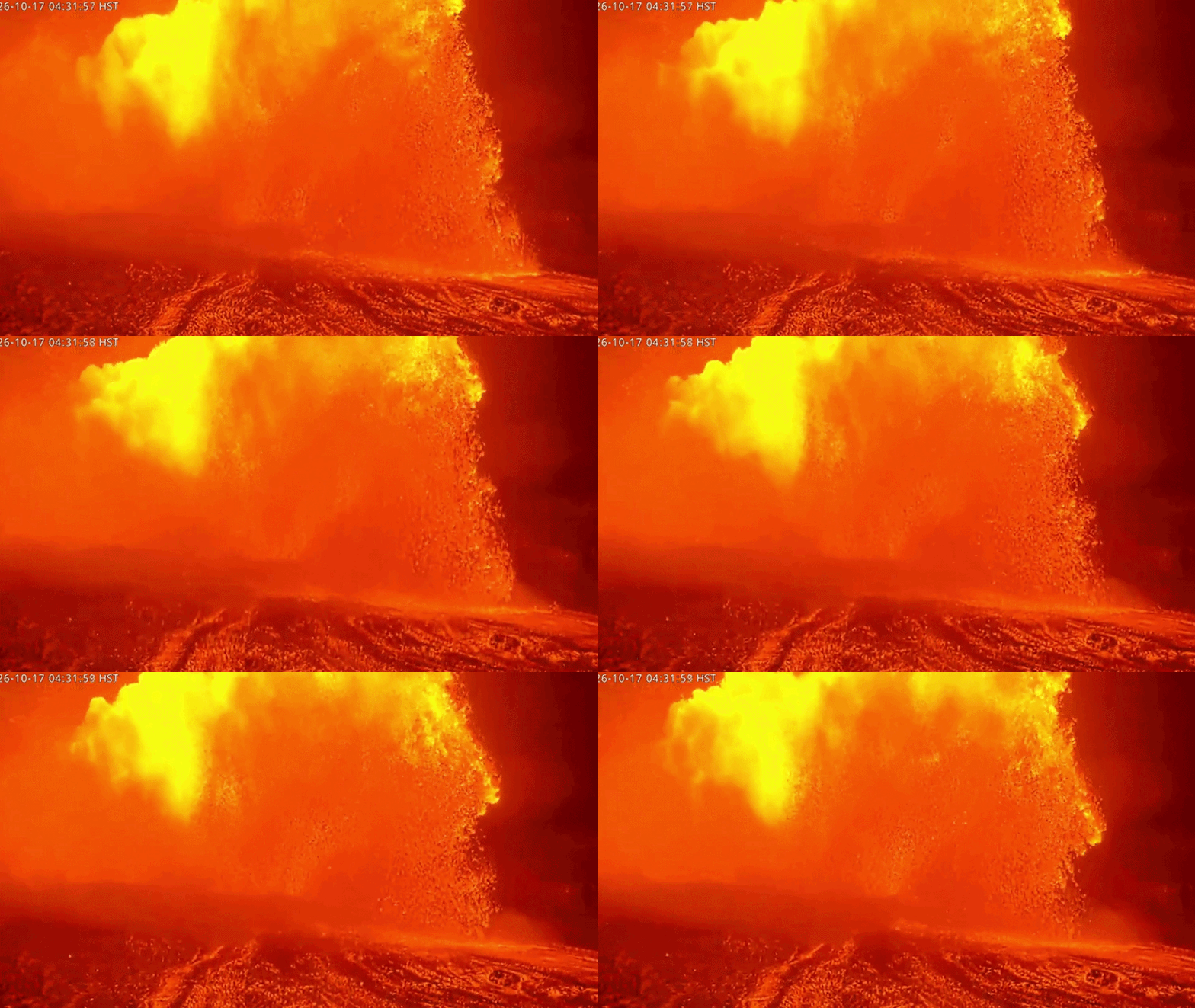
HAWAII VOLCANOES NATIONAL PARK, Hawaii — In a significant volcanic development, Hawaii’s Kilauea volcano recommenced its eruptive episode early Saturday morning, marking its 55th since the sequence began on December 23, 2024.
Details of the Eruption
The eruption started just after 3 a.m. local time, bringing an end to an unusually extended pause of approximately two months. Prior to this, Kilauea had experienced episodic eruptions dating back to late 2024.
Recent Activity and Seismic Concerns
The United States Geological Survey (USGS) had been monitoring increasing seismic activity at Kilauea, including a series of earthquakes and a recent shallow magma intrusion beneath the Halemaʻumaʻu crater. These shifts in geological activity prompted scientists to express uncertainty regarding the exact timing of the eruption.
Volcanic Features Observed
As the eruption unfolded, USGS observers noted that lava fountains reached heights of approximately 250 feet (80 meters), contributing to a broad sheet of lava filling the Halemaʻumaʻu crater.
“The fountain is feeding a broad sheet of lava into Halema’uma’u crater,” the USGS reported via social media.
Impact on the Surrounding Areas
Due to the increased volcanic activity, certain areas within Hawaii Volcanoes National Park, including the Halema’uma’u Trail and sections of the Byron Ledge Trail, have been temporarily closed to ensure visitor safety.
Volcanic gas release during eruptions poses potential health risks, especially for sensitive populations. Furthermore, eruptions can introduce Pele’s hair—filamentous strands of volcanic glass—which may irritate skin and respiratory systems.
Understanding Kilauea’s Activity Patterns
Kilauea is renowned as one of the world’s most active volcanoes. Historically, its eruptions have been characterized by a pattern where magma accumulates in a shallow reservoir beneath the Halemaʻumaʻu crater. This cycle of pressure release and subsequent magma refill has often resulted in regular episodic eruptions, typically weeks apart.
However, recent seismic events and geological changes have complicated these patterns, leading to this prolonged eruption hiatus.
