


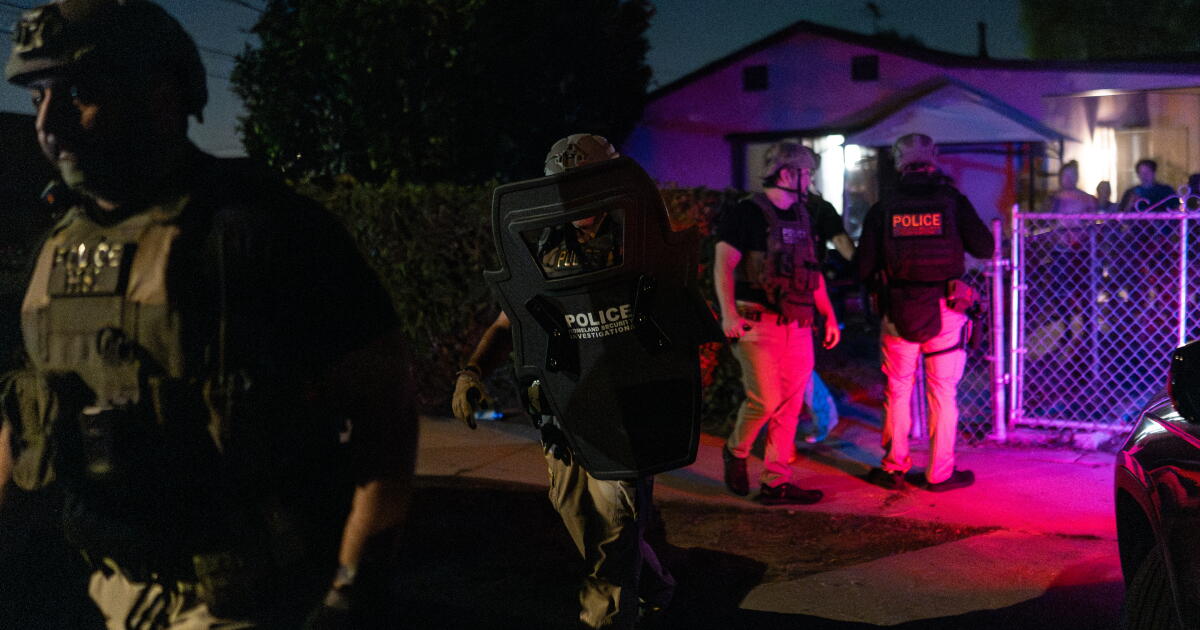
Arrests in California’s Alleged Voter Fraud Case Spark Controversy
Late Monday, at the federal courthouse in downtown Los Angeles, multiple lawful permanent residents faced federal charges of alleged voter fraud. These individuals expressed confusion regarding the accusations against them, claiming they had little to no recollection of registering to vote.
Details of the Arrests
Among those arrested was 60-year-old Ana Domínguez from El Salvador, who was charged with illegally registering to vote in July 2006 and then allegedly providing false information in her naturalization application in March 2026. Domínguez stated, “I don’t have any memory of registering to vote.”
Another defendant echoed her sentiments, asserting that he was unaware of ever registering to vote, despite the ongoing federal claims. All 28 individuals arrested faced charges ranging from fraudulent voter registration to making false statements during the naturalization process.
Federal Claims vs. State Response
Federal prosecutors, alongside officials from the Justice Department, presented these arrests as evidence of noncitizen influence on California’s electoral processes—an assertion that has been a focal point of the Trump administration’s narrative surrounding voter fraud. In a press conference, First Assistant U.S. Attorney Bill Essayli emphasized the integrity of eligible U.S. voters, saying, “You have to go out of your way to register to vote; it’s not something that just happens to you.”
However, state officials dismissed these claims, arguing that even if isolated instances of noncitizen voting occurred, they do not constitute widespread voter fraud. California Attorney General Rob Bonta referred to the 28 cases among the state’s 23 million registered voters as a mere “drop in the bucket.”
Expert Perspectives on Voter Registration Errors
Election experts weighed in, suggesting that many instances of noncitizen voter registration might stem from administrative mistakes or misunderstandings rather than malicious intent. Rick Hasen, a law professor at UCLA, noted, “We know from past experience that sometimes people register to vote accidentally, as when there is a mistake at the DMV.”
Emotional Impact on Defendants
As the defendants awaited their court appearances, family members expressed growing concern. Domínguez, who was shackled and cuffed during her hearing, described her arrest as surreal and distressing, stating, “I never, ever in my entire life … thought this would ever happen to me.”
Omar Muñoz, 72, another defendant from Belize, was similarly apprehensive following a heavily publicized arrest involving multiple federal agencies. His daughter, Lliani Orantes, criticized the handling of the situation, calling it “political ploy” and expressing concerns about the excessive force used against her father, who is recovering from multiple surgeries. “They’re trying to instill fear in society,” she claimed.
Future Legal Proceedings
Following their court appearances, the four defendants were released on personal recognizance, with their preliminary hearings scheduled for November 9. As the legal proceedings unfold, scrutiny from both legal experts and public opinions will likely continue, particularly concerning claims of voting fraud at the federal level versus the realities faced by individual defendants.
While the federal authorities present these cases as vital to safeguarding electoral integrity, the defendants and their families await clarity and resolution, emphasizing the need for balanced discourse on voter registration practices and the treatment of lawful permanent residents in legal contexts.
