


Advancements in Protease Engineering: Mechanisms and Innovations
Proteases, essential enzymes that catalyze the hydrolysis of peptide bonds, have garnered substantial research interest for their potential applications in biotechnology and medicine. In this article, we will explore the structural characteristics, catalytic mechanisms, and the latest advancements in protease engineering.
Understanding Catalytic Mechanisms
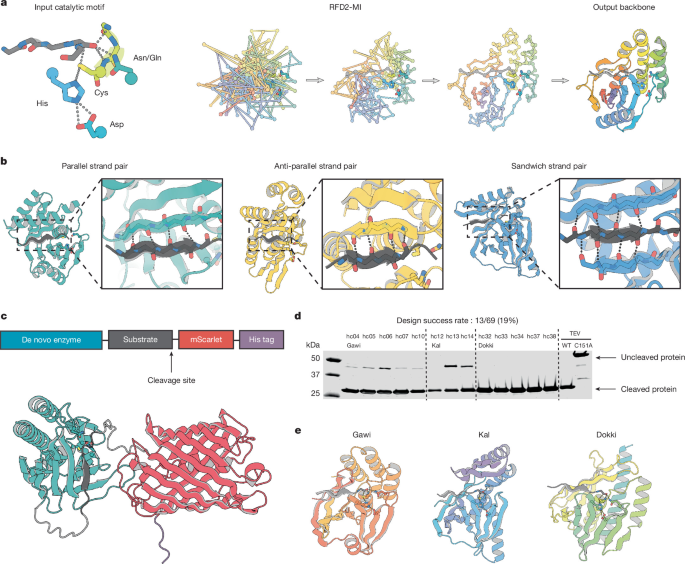
Proteolytic enzymes function through complex catalytic mechanisms that often involve specific residues forming a catalytic triad. These triads typically consist of serine, cysteine, or aspartic acid residues, which play crucial roles in the transition state stabilization and substrate specificity.
- Serine Protease: Features a serine residue that acts as a nucleophile, with a catalytic triad often comprising histidine and aspartate.
- Cysteine Protease: Utilizes a cysteine thiol as the active site nucleophile, with significant contributions from histidine and other nearby residues.
- Aspartic Protease: Degrades peptide bonds in a manner involving two aspartic acid residues that facilitate the hydrolytic process.
Influences on Catalytic Activity
The catalytic efficiency of proteases is influenced by their environmental conditions, including pH and temperature. Research indicates that variations in pKa values of active site residues can significantly affect enzymatic function. For example, a study highlighted the role of the oxyanion hole in cysteine protease activity, which influences transition state stability and catalytic proficiency.
Furthermore, the regulation of enzyme activity can involve various mechanisms, including post-translational modifications, which have emerged as crucial factors in protease functionality.
Innovations in Protease Engineering
Recent advancements in computational design and molecular modeling have revolutionized the field of protease engineering. Researchers are now able to create novel proteases with enhanced stability and specificity through techniques such as:
- Computational Design: Leveraging algorithms to predict and generate enzyme variants that can effectively catalyze targeted reactions.
- Directed Evolution: Using iterative rounds of mutation and selection to enhance desirable traits within enzyme populations.
- Machine Learning: Incorporating AI to analyze vast datasets, predicting outcomes of protein interactions and optimizing designs.
Applications of Engineered Proteases
The implications of engineered proteases extend into various domains, including:
- Pharmaceuticals: Designing inhibitors targeting specific proteases has therapeutic potential against diseases like cancer and viral infections.
- Biotechnology: Utilization in industrial processes for protein production and waste management, where precise peptide bond cleavage is essential.
- Diagnostics: Developing biosensors that utilize protease activity for real-time detection of biomarkers.
Future Directions
The future of protease research lies in the intersection of synthetic biology and artificial intelligence. By continuing to explore the structural intricacies and mechanisms of proteases, scientists can forge pathways for the design of next-generation enzymes with unprecedented capabilities.
Key References
For an in-depth exploration of protease structures and functions, refer to the following foundational studies:
- Radzicka, A. & Wolfenden, R. (1996). Rates of uncatalyzed peptide bond hydrolysis in neutral solution and the transition state affinities of proteases. J. Am. Chem. Soc. 118, 6105–6109.
- Dyer, R. P. & Weiss, G. A. (2022). Making the cut with protease engineering. Cell Chem. Biol. 29, 177–190.
- Otto, H.-H. & Schirmeister, T. (1997). Cysteine proteases and their inhibitors. Chem. Rev. 97, 133–172.
- Carter, P. & Wells, J. A. (1988). Dissecting the catalytic triad of a serine protease. Nature 332, 564–568.
In conclusion, the field of protease engineering is rapidly evolving, with innovative approaches paving the way for advancements in therapeutic and industrial applications.
