


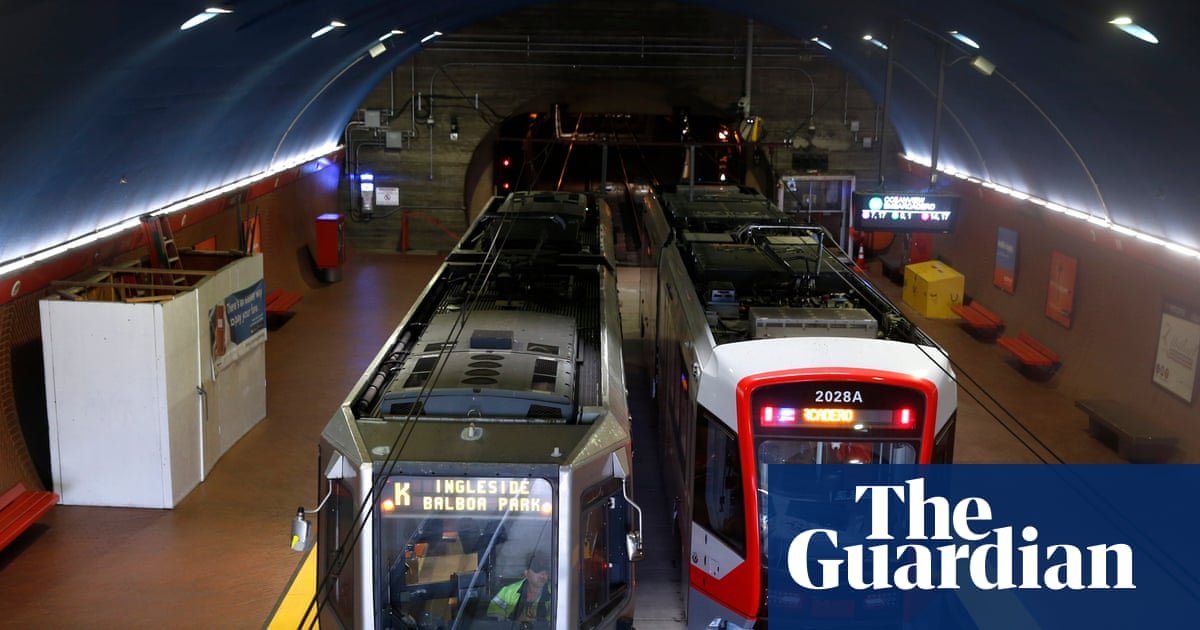
Bay Area Voters Approve Vital Transit Measures to Support Public Transit
In a significant move for public transportation in the San Francisco Bay Area, voters have approved two crucial measures designed to alleviate the financial crises faced by local transit agencies. The initiatives aim to prevent a potential decline in public transit services that could have had dire consequences for both residents and the regional economy.
Overview of the Approved Measures
The Regional Transit Measure (RTM), which introduces a 0.5% sales tax across four counties and a 1% sales tax in San Francisco, is projected to generate around $1 billion annually. This revenue will be allocated to the Bay Area’s four largest transit operators, receiving overwhelming support of 62.2% across the five counties involved in the voting process, and an impressive 78.6% approval in San Francisco alone.
Additionally, San Francisco voters approved a parcel tax with 73.6% support aimed at funding Muni, the city’s publicly owned transit agency.
Consequences of Non-Approval
If these measures had not secured approval, the impacts on public transit would have been severe. Bay Area Rapid Transit (BART) faced the possibility of closing up to 15 stations as early as next year, which would significantly reduce service frequency and increase ride and parking fees. Similarly, Caltrain would have had to shutter 10 stations and cease weekend services, while Muni could have had to slash one-third of its service, eliminate 20 bus lines, and suspend operations of its famed streetcars and cable cars. All transit agencies would have also been forced to suspend evening services.
This potential decline in service would have adversely affected fare revenues, leading to fewer commuters and triggering a negative feedback loop that could devastate public transportation accessibility for Bay Area residents, particularly in a region known for its heavy traffic congestion.
Impact on Traffic and Commuting
A report by Laura Tolkoff, transportation policy director at the San Francisco Bay Area Planning and Urban Research Association, predicted that traffic delays on major routes, including the San Francisco-Oakland Bay Bridge, could have more than doubled during peak hours due to reduced transit options. Currently, this bridge handles approximately 3.5 million crossings each month.
Community Mobilization and Advocacy
During the pandemic, Bay Area transit agencies experienced significant reductions in ridership due to their dependence on fare revenues, which prompted activists to rally for support as federal relief funding approached its expiration. Lian Chang, an organizer with Connect Bay Area, illustrated the dire situation through creative initiatives, including a mock funeral procession featuring cardboard models of local transit vehicles.
Despite lacking previous campaigning experience, Chang led efforts that resulted in thousands of volunteers collecting 77,000 of the required 305,000 signatures to qualify the measures for the ballot, marking the largest signature-gathering push in recent Bay Area history.
Future Outlook and Challenges
Though the measures were successfully passed, they may still encounter legal challenges from anti-tax groups, reminiscent of obstacles faced by past transit initiatives. Rebecca Long from the Metropolitan Transportation Commission expressed readiness to defend the measures and uphold the voters’ decision.
Advocates, including Jeff Cretan from Connect Bay Area, emphasize the importance of maintaining momentum to prevent a repeat of this transit crisis in the future. “This is an opportunity for us to go to the state and say, we need to change how we do this, not just here, but in other parts of the state,” stated Cretan.
Long-Term Support for Transit
California’s historical underinvestment in public transit has hindered its urban centers, as highlighted by a 2022 report indicating that for the state to meet its climate goals, public transit networks need to double their capacity and service frequency by 2030. Although BART, AC Transit, Caltrain, and Muni account for 30% of the state’s transit ridership, only 5% of BART’s operating revenue comes from state funding.
The recent elections also ushered in new leadership, with state senator Scott Wiener and governor-elect Xavier Becerra emerging as supportive figures for public transit initiatives.
As transit advocates hope to enhance the region’s public transport framework, they are encouraged by the strong voter support. As Tolkoff stated, “I hope that Governor Becerra and elected representatives take note of the messages voters just sent: transit is not controversial – it’s essential and it’s incredibly popular.”
