


Federal Reserve’s Interest Rate Policy Under Review Amid Economic Strength
Economic Landscape and Federal Reserve Insights
As inflation rates hold steady and the economy exhibits signs of resilience, bond investor Jeffrey Gundlach has articulated that the Federal Reserve should consider increasing interest rates. Speaking on CNBC’s “Closing Bell,” Gundlach, CEO and CIO of DoubleLine Capital, noted the current yield on the 2-year Treasury, which was reported at 4.714%, reinforcing his stance for a rate hike.
Fed Chair Kevin Warsh’s Position
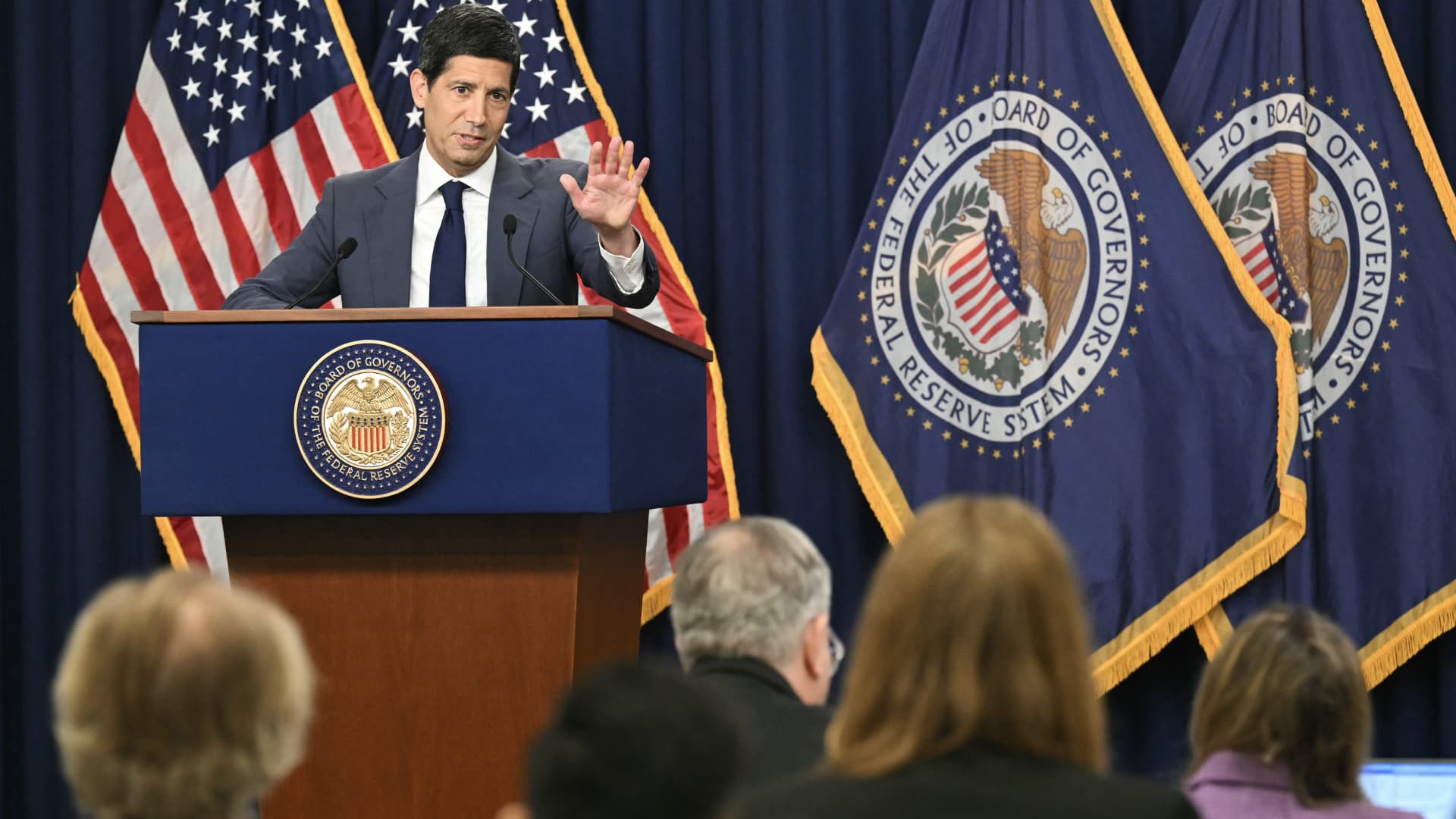
Following a recent Federal Reserve press conference where officials opted to maintain interest rates within a range of 3.75% to 4%, Chair Kevin Warsh reiterated the strength of the economy. “What I heard during the meetings is consistent with my views: the economy is strong,” he stated, signaling a cautious optimism.
Key Discussions on Interest Rate Stability
Gundlach questioned the decision to keep rates steady, asking, “What are you waiting for? You just upgraded the economy,” in reference to Warsh’s comments. The diverging opinions between Gundlach and Warsh highlight the ongoing debate surrounding the Fed’s monetary policy approach in response to economic metrics.
Forward Guidance and Fiscal Strategy
Warsh has also made it clear that he does not favor the practice of “forward guidance,” which involves signaling future monetary policy directions. Emphasizing his preference for flexibility, he stated, “In normal, ordinary times…I don’t believe in it.” This approach is designed to maintain a level of independence from immediate political pressures.
Impact of Interest Rates on Economic Sectors
Highlighting the influence of rising interest rates on market behaviors, Warsh mentioned that higher borrowing costs have led to discernible shifts in investment patterns. “Interest rates have had an effect,” he noted, indicating a tightening of financial conditions for certain sectors, particularly amidst advancements in technology such as artificial intelligence.
Future Meeting Strategies
The upcoming adjustments to the Federal Open Market Committee’s (FOMC) meeting schedules aim to foster deeper strategic discussions without the pressure of immediate rate decisions. Warsh explained that, starting in 2027, additional meetings will focus solely on broad policy strategy, allowing for a thorough evaluation of monetary policies without predetermined outcomes.
Political Considerations in Monetary Policy
Addressing perceptions of political influences on monetary decisions, Warsh asserted that market discussions at the Fed have been devoid of political considerations ahead of the upcoming midterm elections. “I didn’t hear an utterance about politics,” he commented, reinforcing the notion that economic evaluations remain the primary driver of policy decisions.
Current Economic Metrics and Trends
In light of economic data, Warsh reported improved GDP growth, revising the first half of the year’s growth rate from 1.8% to 2.4%. Such revisions offer economic policymakers a more robust baseline from which to operate. Additionally, trends indicate that the unemployment rate remains at historically low levels, bolstering the overall economic outlook.
Conclusion: The Path Forward for the Federal Reserve
As the Federal Reserve navigates the complexities of economic recovery amidst persistent inflation pressures, the divergence in opinions regarding interest rates underscores the challenges ahead. Warsh’s commitment to a holistic examination of monetary policy, alongside experts like Gundlach advocating for action, paints a nuanced picture of the central bank’s future direction.
