


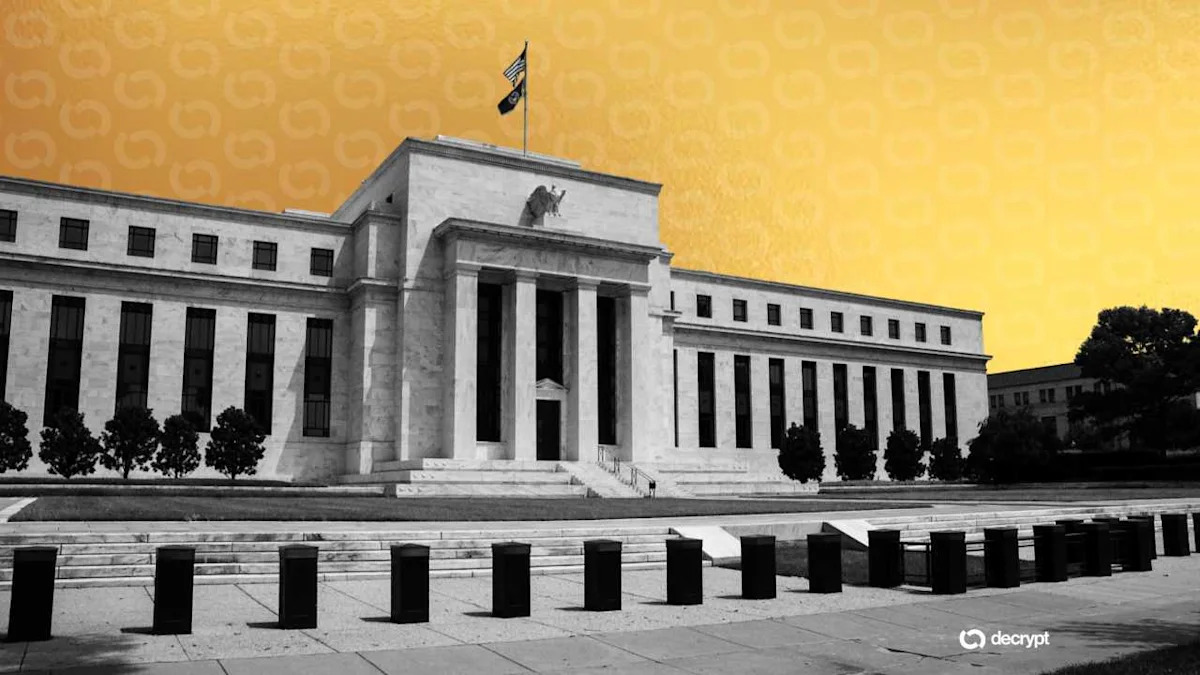
Federal Reserve Holds Interest Rates Steady Amid Inflation Concerns
On Wednesday, the Federal Reserve decided to keep interest rates steady, maintaining the range between 3.75% and 4.00%. This decision came after a 10-2 vote, with dissent from Fed Governor Lisa Cook and Cleveland Fed President Beth Hammack, who favored a quarter-point increase.
Market Reactions
The response from the cryptocurrency market was subtle, with Bitcoin inching up by around 0.2% to approximately $80,950 shortly after the Fed’s announcement at 2 p.m. ET. Before the announcement, market tools such as CME FedWatch indicated a strong probability—around 90%—for no change in rates.
Impact on the Economy
The federal funds rate is a critical benchmark, influencing interest rates across various sectors, including credit cards and auto loans. This decision is particularly noteworthy given that the Fed last raised this rate in September 2023, which was its first increase of the year made in a unanimous 12-0 vote.
Economic Outlook
In its statement, the Fed highlighted that economic activity is advancing at a robust pace, an upgrade from its previous assessment of a solid pace. The Fed noted, “Job gains have kept pace with the workforce, and the unemployment rate has changed little.”
Inflation Concerns
While job growth remains strong, inflation continues to be a significant concern. The Fed acknowledged that inflation remains elevated, stating, “the accumulation of more information will help the Committee determine the policy stance appropriate to ensure a timely return of inflation to the Committee’s 2 percent goal.”
Recent Dissenting Votes
Hammack’s dissent is not a new occurrence; she also opposed the committee’s decision in July, which saw a 9-3 vote for keeping rates unchanged at that time. Notably, both Neel Kashkari and Lorie Logan sided with Hammack in July but voted with the majority this time, reducing the dissent count from three to two.
Oil Prices and Inflation’s Ripple Effect
Oil prices continue to be a significant driver of inflation. Recent geopolitical tensions, especially involving the U.S. and Iran, have tightened global supply. As of Tuesday, U.S. crude oil prices reached $99.90 per barrel. Rising oil prices lead to increased costs in gasoline and shipping, ultimately affecting consumer prices, which rose by 3.7% over the past year, with a notable 9.1% increase in gasoline prices reported for September.
Investor Behavior and Market Dynamics
Heightened inflation leads to increased yields on government debt, which in turn affects Treasury yields. The yield on the 10-year Treasury bond, a benchmark for mortgage rates, closed at 4.99% on Tuesday, a decline after peaking at 5.31% earlier in the month. This higher yield makes Treasury investments more attractive compared to riskier assets, including cryptocurrencies. Bitcoin, which does not offer yield, saw fluctuations in its value, briefly exceeding $81,600 before relaxing back below key resistance levels between $81,000 and $82,500.
Future Considerations
Leverage in trading can amplify market movements, particularly surrounding Fed announcements. Following a previous speech by Fed Chair Kevin Warsh, approximately $481 million in cryptocurrency positions were liquidated in only 24 hours due to sudden price swings. Currently, traders estimate over a 70% chance that a quarter-point rate hike will occur in the Fed’s upcoming meeting scheduled for December 8-9. Essential economic data, including the October jobs report and inflation statistics, will be available in early November, setting the stage for the Fed’s next decision.
Fed Chairman Warsh will address the public during a press conference at 2:30 p.m. following the December meeting, providing further insights into the Fed’s direction and economic forecasts.
