


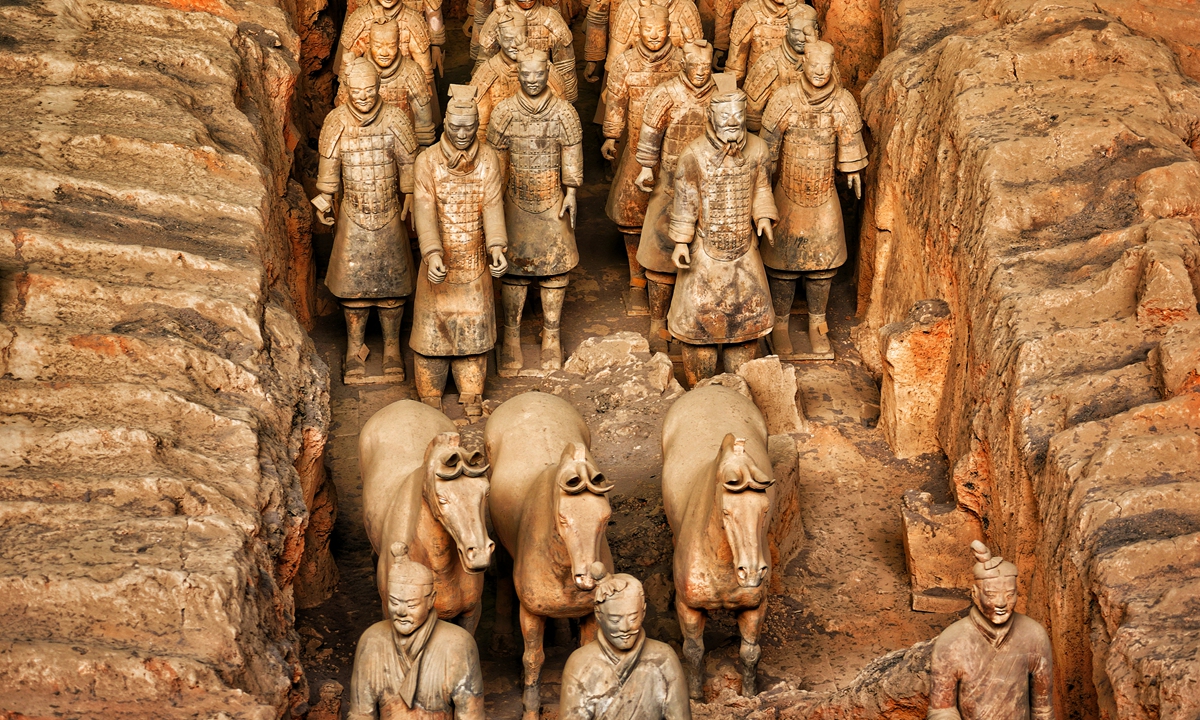
The Terracotta Warriors: Unveiling the Contributions Beyond Male Artisans
Introduction
Recent research has brought to light that the 2,200-year-old Terracotta Warriors, an iconic archaeological site associated with China’s first emperor, were not solely crafted by men. A comprehensive study has detected fingerprints in the clay figures, providing the initial biological evidence that women and younger individuals contributed to this monumental project.
The Study’s Findings
Conducted by experts from the Emperor Qinshihuang’s Mausoleum Site Museum and Shandong University, the study analyzed 79 distinct fingerprints located on 23 separate terracotta figures. Utilizing a Bayesian mixture model, which estimates the composition of a group based on incomplete data, researchers found the following:
- Approximately 45% of the fingerprints belonged to adult men.
- Adult women accounted for about 32.7% of the prints.
- Juveniles, those under the age of 15, made up around 22.3% of the total.
The Significance of the Findings
This groundbreaking result, published in an international academic journal, challenges the traditional view that the production of the Terracotta Warriors was entirely a male endeavor. This study is unique in presenting group-level biological evidence indicating active participation from both women and young individuals in the construction process.
The analysis revealed that the majority of the fingerprints were found on independently molded components—such as the heads, arms, and armor plates of the warriors. Out of the identified prints, 73 were impressions made when the clay was still pliable, while six were raised prints resulting from artisans pressing onto decorative aspects, including rivets or belts. The assembly method used corresponds with a modular manufacturing approach, suggesting an organized workflow in their creation.
Demographics of the Artisans
The predominant age for the male fingerprints clustered around 20 years old, while the adult female prints were also concentrated within young adulthood. This demographic distribution corresponds with historical references to apprentices working alongside seasoned craftsmen during the Qin Dynasty.
Future Research Directions
Though these findings provide a statistical estimation of the artisans’ contributions, they lay the groundwork for more extensive fingerprint surveys in additional archaeological pits. This research offers a rare glimpse into the diverse human efforts—both male and female, alongside the youth—that contributed to one of the ancient world’s most celebrated artifacts.
Researchers continue to endorse larger-scale studies to enhance understanding of the workforce behind this incredible archaeological feat.
