


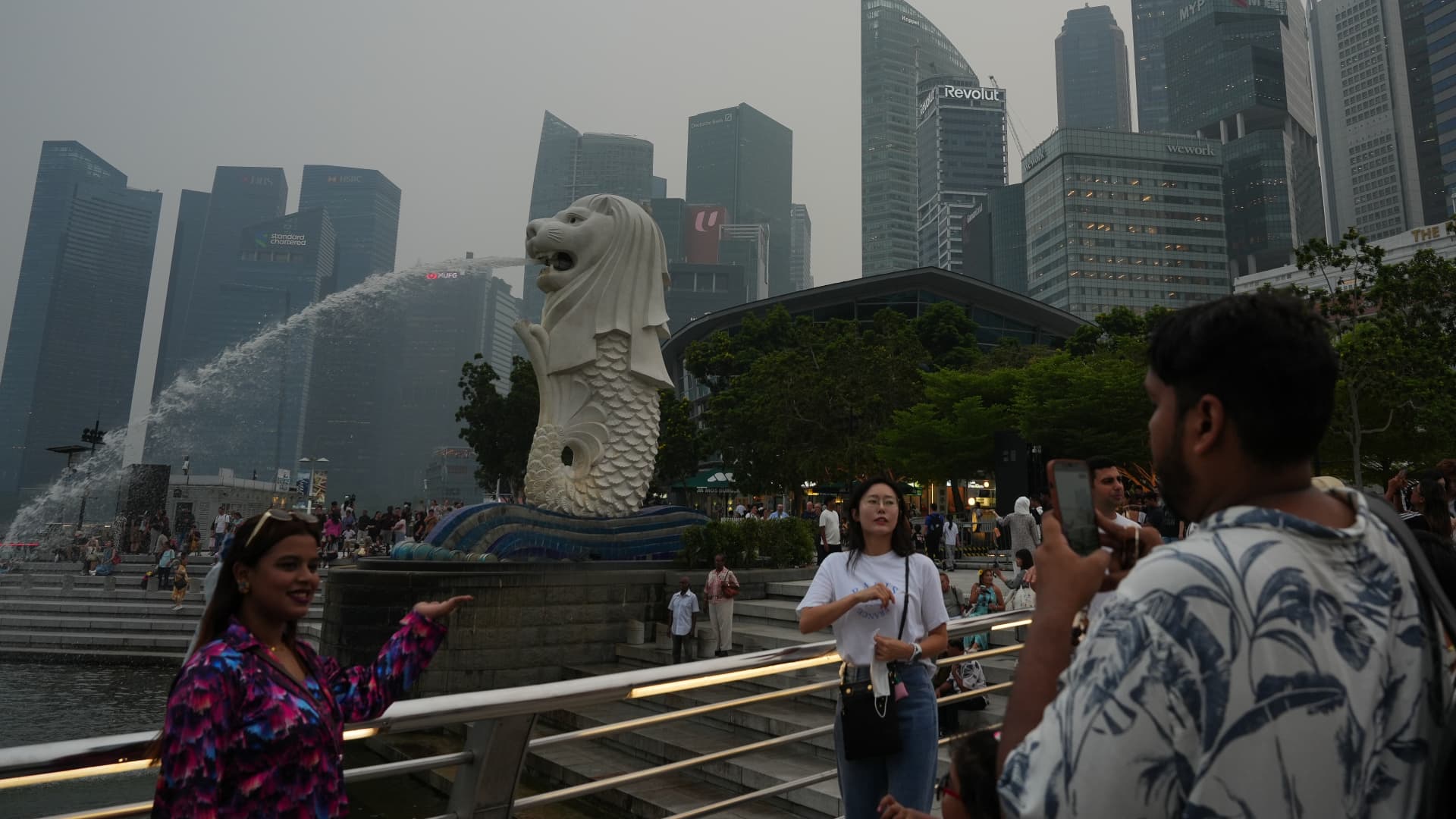
Singapore Battles Haze from Indonesian Wildfires
As Singapore continues to experience severe haze originating from wildfires in neighboring Indonesia, the government is taking measures to address the ongoing air quality crisis.
Current Air Quality Situation
On October 14, 2026, Singapore’s air quality reached unhealthy levels, with visibility severely reduced across the city. The National Environment Agency reported these deteriorating conditions as smoke from vast forest and land fires in Indonesia’s Kalimantan region swept over the city-state.
This marked the first time in nearly three years that Singapore has experienced such significant air pollution, raising concerns among residents and businesses alike.
Government Response
Prime Minister Lawrence Wong has publicly stated that the government is investigating companies possibly linked to the fires. In a statement on X, he elaborated that Singapore may take legal action against those responsible under the Transboundary Haze Pollution Act. Furthermore, Wong indicated the potential for collaborative efforts with other Southeast Asian nations to tackle the issue.
Impact on Daily Life and Businesses
The haze is affecting various sectors in Singapore. For instance:
- Seletar Airport recorded 16 flight diversions due to low visibility conditions.
- Outdoor dining venues, including certain restaurants and hawker centers, reported a decline in customers as people avoid outdoor activities.
- Marina Bay Sands has temporarily suspended certain outdoor services and is supplying masks and air purifiers to guests.
Additionally, Josephine Teo, Singapore’s Minister for Digital Development and Information, acknowledged that the haze presents challenges, particularly as Singapore hosts the International Cyber Week, attracting over 15,000 participants from more than 100 countries.
Community and Regional Responses
In light of the haze, the government has commenced the distribution of masks to vulnerable populations and is in consistent communication with Indonesian officials to facilitate support and understanding of their needs. Ride-hailing service Grab has also taken initiatives to equip its workers with masks and advisories.
The haze is not only affecting Singapore; it has extended into Malaysia as well. Malaysian officials, including Second Finance Minister Amir Hamzah Azizan, have called for a coordinated regional response, proposing the deployment of resources such as water bombers to combat the issue.