


Exploring the Sales Dynamics of ‘Gears of War: E-Day’
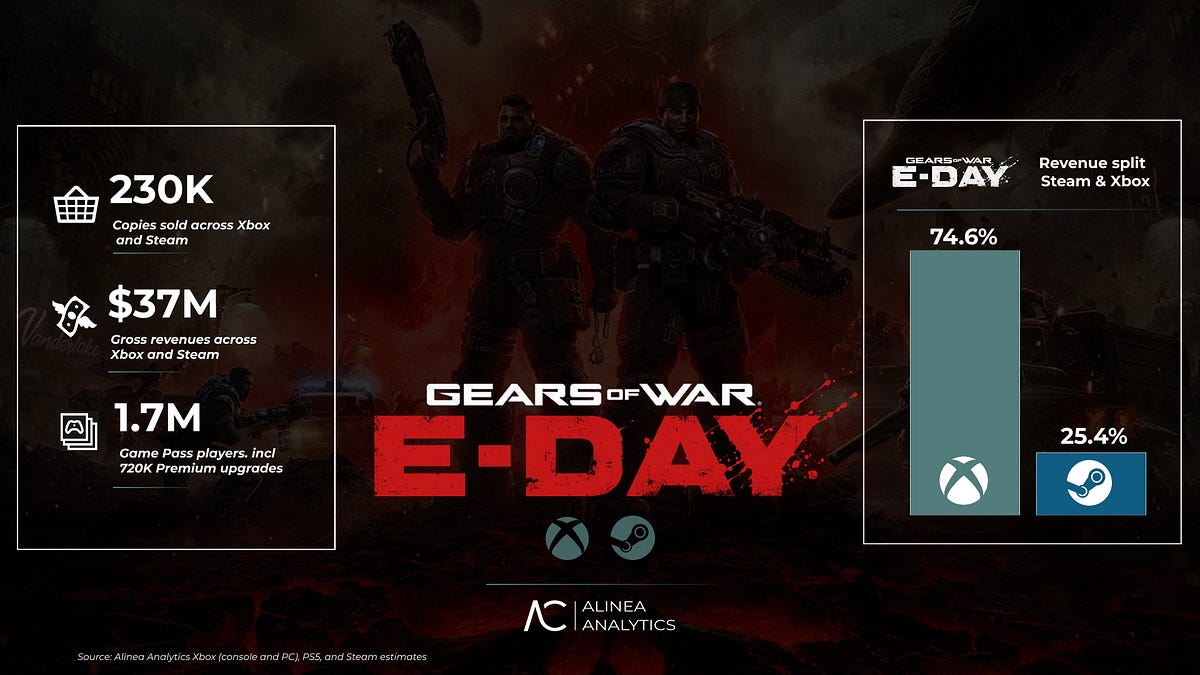
The recent release of Gears of War: E-Day has led to intriguing sales figures since its advance-access launch on October 1, followed by the full release on October 6. The game has achieved sales of approximately 230,000 copies, of which 168,000 were on Steam, while 62,000 were sold on Xbox platforms—both console and PC. However, the revenue distribution paints a more complex picture, suggesting that Xbox is driving a significant portion of the game’s earnings.
Sales Breakdown and Revenue Allocation
Despite the solid sales numbers, experts highlight a soft commercial performance primarily attributed to the game’s business model. The introduction of Xbox Game Pass has dramatically influenced revenue streams, as an estimated 1.7 million players accessed the game via subscription rather than direct purchase. More noteworthy is that of these, around 722,000 opted for the Premium Edition Game Pass upgrade, which offered early access for $30.
- Advance-access upgrades: 722,000 sold
- Additional upgrades following the review embargo: 250,000
While reporting that Xbox maintains a substantial revenue share, the figures become more pronounced when considering that the actual revenue generated from Game Pass and premium upgrades amounts to nearly $26 million versus approximately $11 million from Steam. Thus, the total paying audience approaches 950,000 when combining early access and standard purchases.
Implications of Xbox Game Pass on Premium Sales
It is crucial to consider the impact of Game Pass on traditional sales metrics. With E-Day only seeing about 62,000 direct Xbox purchases, this translates to a striking statistic: nearly 12 Premium upgrades were sold for each game purchase. The $70 premium SKU seems largely unviable on Xbox, indicating significant shifts in consumer buying patterns due to subscription services.
This situation raises questions about the long-term viability of premium releases on Xbox. Comparatively, in a hypothetical scenario where Game Pass did not exist, it is estimated that many of those 722,000 registered users, who chose to pay for the early access, would have instead opted to buy the game outright, which might have generated nearly $40 million in sales.
The Impact of Subscription Models on Game Engagement
Analyzing player engagement on different platforms also reveals interesting trends. Data shows that a majority of Xbox players (54%) engaged with E-Day for five hours or less, in contrast to 32% of Steam players, who invested more significant playtime. The disparity highlights how Game Pass attracts both casual and committed players, thereby influencing total playtime averages.
Market Trends Going Forward
As Xbox contemplates the future of its Game Pass strategy, including potential ad-supported tiers to enhance revenue, concerns about game devaluation linger. High-profile titles like Call of Duty have already seen delayed inclusion in Game Pass post-launch due to adverse effects on initial sales. Rumors suggest further adjustments may be on the horizon, including the possible removal of day-one releases from Game Pass.
Ultimately, the success and reception of E-Day might lead to important discussions within Xbox about the balance between maintaining subscription-based access and optimizing revenue from premium sales.
Conclusion
While Gears of War: E-Day has set a high standard as one of the best-reviewed entries in the franchise, its fiscal performance reveals vulnerabilities within Xbox’s business model. The question remains: will Xbox continue producing flagship titles amid these financial challenges, or will strategic shifts guide the next generation of releases?
