


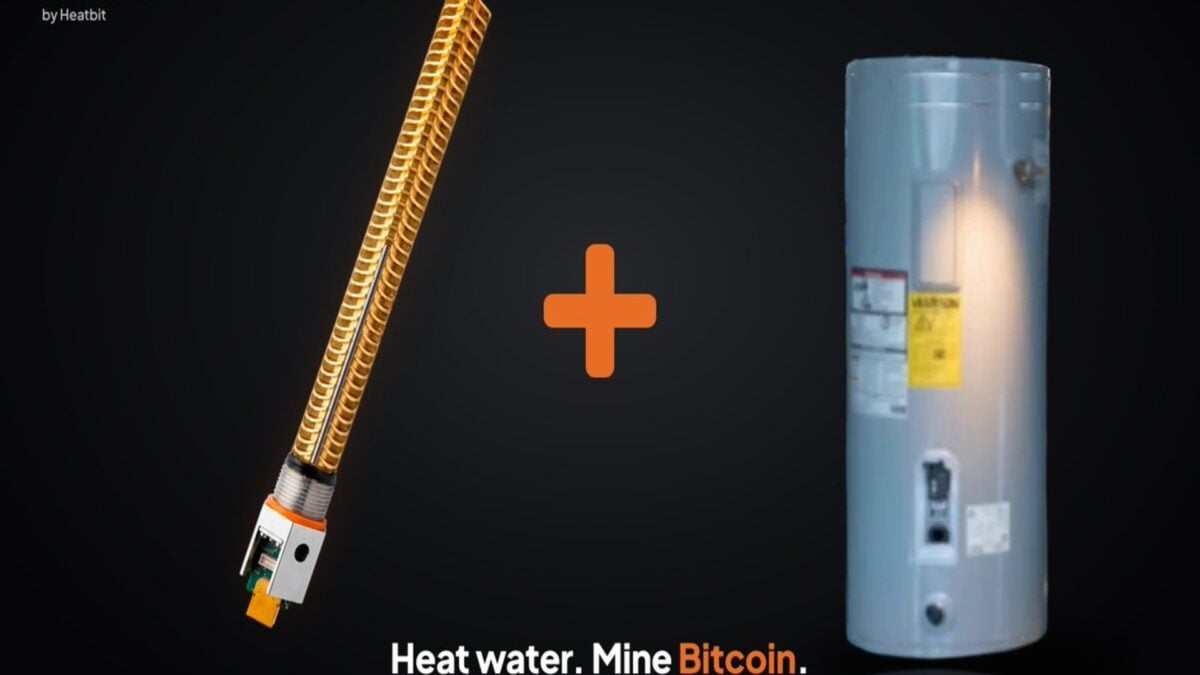
Heatbit’s Bitwater: A Dual-Purpose Water Heater That Mines Bitcoin
In a blend of technology and home utility, Heatbit has emerged as a pioneering company, combining everyday water heating with the intricacies of Bitcoin mining. Founded in 2020 by Alex Busarov, this Delaware-based firm initially gained recognition for its range of space heaters and air purifiers that double as Bitcoin mining devices. Recently, Heatbit has announced an innovative new product, Bitwater, which aims to redefine how users heat their water while engaging in cryptocurrency mining.
Introducing Bitwater: Revolutionizing Water Heating
The Bitwater system replaces the traditional heating element in standard electric water heaters with advanced technology featuring twenty Bitmain BM1370 mining chips. This new design boasts impressive specs, including:
- Mining capacity of up to 34 terahashes per second (TH/s)
- Power draw of up to 600 watts
- Mining efficiency beginning at 12 joules per terahash
One of the standout features of Bitwater is its direct cooling mechanism, where tank water cools the mining chips, eliminating the need for bulky, noisy fans. The system is compatible with most 30- to 80-gallon electric water heaters currently available, including models from reputable manufacturers like A.O. Smith, Rheem, Bradford White, Whirlpool, and GE. The product is available for pre-order at a price of $899, with shipping expected in early 2027.
Economic Considerations and Performance Insights
As revolutionary as the Bitwater concept may sound, critical economic questions arise regarding the value it brings compared to traditional water heating elements. While Heatbit claims that the costs of water heating remain unchanged when the Bitwater system is installed, they have not provided detailed test results to substantiate these claims. According to their announcement on X, the company tested Bitwater in households of four and five in New York and Florida, though specifics on the results remain elusive.
This uncertainty extends to the potential for saving on energy costs. Traditional electric water heater elements are relatively inexpensive, typically below $30, in stark contrast to Bitwater’s upfront cost. This raises the stakes for the Bitcoin mining revenue to significantly offset the additional expense of the Bitwater installation.
Mining Revenue Estimates
Heatbit has not given a comprehensive forecast of Bitcoin earnings but referenced estimates from xAI’s Grok suggesting that users could expect to earn between $1 to $1.25 per day in mining revenue, correlating to an annual gross between $292 and $365, based on an 80% uptime. However, it is crucial to recognize that these figures are highly contingent on fluctuating market conditions, miner efficiency, and Bitcoin network dynamics.
Furthermore, the longevity of conventional water heating elements averages between six to ten years. Whether Bitwater can yield a favorable return over a similar duration is still uncertain. Projections indicate that, under stable conditions, the initial $899 investment might be recouped roughly over three years—a premise heavily dependent on consistent mining returns.
Environmental Impact and Industry Context
The integration of Bitcoin mining into household heating aligns with broader discussions regarding the environmental implications of cryptocurrency operations. While Bitcoin mining has historically faced criticism for its high energy demands, innovations like Bitwater may utilize pre-existing energy consumption for heating, potentially mitigating additional strain on power grids.
Furthermore, some industry analysts argue that distributing mining operations among individual households could enhance Bitcoin’s decentralization, lessening reliance on large-scale mining companies and consequently minimizing the risk of a 51% attack. Heatbit states that U.S. households use approximately 300 terawatt-hours annually on water heating, which is comparable to the entire Bitcoin network’s current energy consumption of around 170 terawatt-hours.
The debate surrounding Bitcoin’s environmental footprint continues to evolve, and while some propose the potential for mining activities to finance renewable energy solutions, others maintain that the energy consumed by cryptocurrencies still leads to detrimental environmental impacts.
Conclusion
Ultimately, Heatbit’s Bitwater system represents a fascinating intersection of home utility and cryptocurrency innovation. While its dual-functionality holds promise, the actual impact on household expenses, as well as the broader implications for Bitcoin mining and environmental sustainability, will depend on real-world performance and adoption rates. As technology progresses, the prospect of integrating Bitcoin mining into everyday appliances may pave new paths for both energy conservation and financial innovation.
