


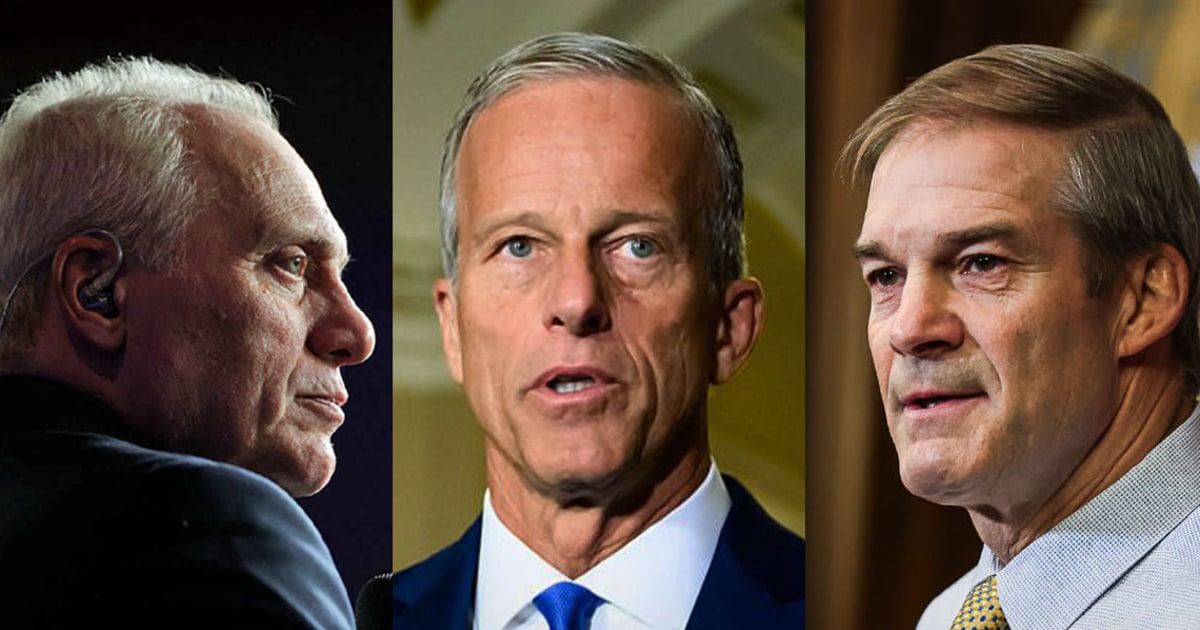
Jim Jordan Elected as House Minority Leader Following GOP Shift
WASHINGTON — In a decisive move following significant electoral losses, House Republicans have selected Jim Jordan from Ohio as their new minority leader, succeeding Mike Johnson, R-La. This election comes on the heels of a disappointing performance for the GOP in the recent elections, which saw Democrats secure approximately 260 seats, marking the largest majority in 35 years.
Election Results and Leadership Transition
Jim Jordan triumphed over Majority Leader Steve Scalise of Louisiana with a vote tally of 106-73, according to two Republican lawmakers present during the closed-door ballot. Jordan emphasized his commitment to advocating for American families, stating, “When Democrats offer more government, we’ll offer more freedom, and we will bring that fight in committee, on the floor and on the stump every single day.”
Jordan’s Political Background
As a vocal supporter of former President Donald Trump, Jordan has positioned himself as a formidable adversary to the Democratic agenda, particularly in the wake of investigations targeting the Trump administration. He argued to his colleagues that his experience as the chair of the Oversight Committee equips him to manage the potential scrutiny from the new Democratic leadership.
Shift in GOP Dynamics
Jordan’s election signifies a desire within House Republicans for a departure from the strategies associated with Johnson’s leadership. This shift underscores a broader aspiration for revitalization after the recent electoral setbacks.
Having spent two decades in Congress, Jordan has evolved from a figure known for contentious politics to one who is increasingly viewed as a cooperative leader. His journey in the political arena began during the tea party movement following the 2010 midterms, where he quickly rose through the ranks by leading conservative factions, including the Republican Study Committee and the House Freedom Caucus.
House Leadership Roles
In related leadership elections, Majority Whip Tom Emmer of Minnesota successfully defended his position against August Pfluger of Texas. Additionally, House GOP Conference Chair Lisa McClain of Michigan overcame challenges from colleagues seeking to reshape leadership dynamics.
Senate Leadership Elections
Meanwhile, the Senate Republicans held their own leadership elections, reappointing John Thune of South Dakota as the minority leader. The entirety of the Senate leadership team, which includes John Barrasso of Wyoming and Tom Cotton of Arkansas, retained their positions without opposition, although a faction within the party expressed concerns about the direction following the recent elections.
Democratic Leadership Prospects
In the aftermath of the elections, House Minority Leader Hakeem Jeffries and Senate Minority Leader Chuck Schumer are the frontrunners to lead their respective chambers. Although both leaders are expected to continue, some members of the Democratic caucus are calling for a reevaluation of leadership to better align with progressive values. Notably, Sen. Chris Van Hollen, D-Md., has indicated potential interest in challenging for the majority leader position.
Leadership elections for the Democrats are scheduled to take place in early December, focusing on how to best approach the issues at hand following the recent electoral outcomes.
Conclusion
As both parties adjust to their new roles and leadership structures, the implications of these changes will likely resonate throughout the legislative session, shaping the American political landscape for the foreseeable future.
