


Arrest of Cockroach Janta Party Founder Raises Concerns Over Civil Rights
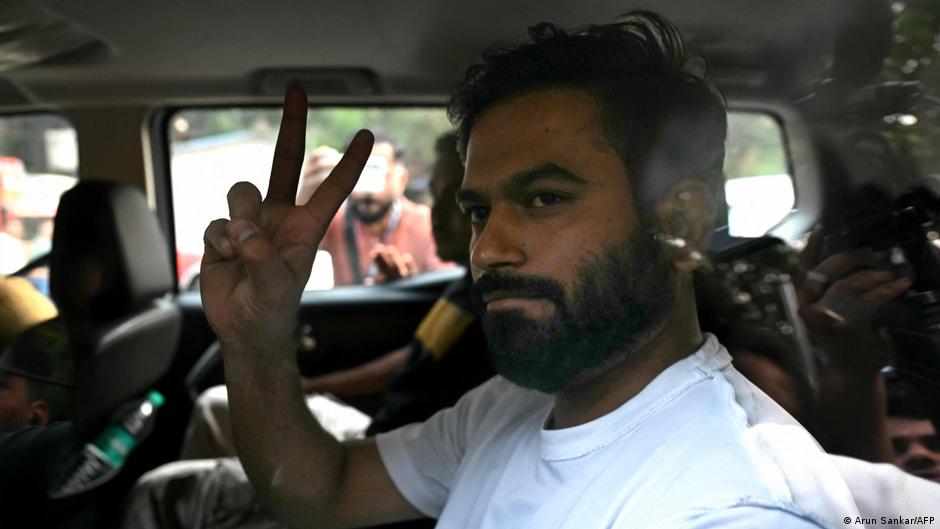
Abhijeet Dipke, the founder of the Cockroach Janta Party (CJP), was taken into custody during a rally he organized in New Delhi. This event has sparked a range of reactions, including accusations of improper detention by the CJP.
Background of the Arrest
Dipke was apprehended as he was preparing to participate in the ‘Lehra Do Tiranga’ (Wave the Tricolor) protest at Connaught Place. According to reports from news agencies ANI and PTI, authorities stated that his arrest was a measure to maintain public order.
Immediately following his detention, representatives from the CJP expressed concerns regarding the lack of information about his whereabouts, characterizing his arrest as a “kidnapping.” Ratna Singh, head of the party’s legal affairs, reported that Dipke’s legal team had been unable to contact him, intensifying fears regarding his rights.
Details of the Detention
The detention occurred shortly after police delivered a notice to Dipke, prohibiting the planned protest in the Connaught Place area, where Section 163 of India’s criminal procedure law was cited as the basis for restricting public gatherings.
Video footage captured the moment Dipke was informed by police he was entering “preventive detention,” shortly before he was escorted to a police vehicle. Witnesses reported that he was visibly displaying the Indian flag while being surrounded by media and police.
Reactions and Further Developments
Despite the heavy police presence and the arrest of Dipke, many protesters defied security measures and gathered at Connaught Place to participate in the rally. They waved the Indian national flag, asserting that it belongs to the citizens, not the police. Following Dipke’s detainment, approximately 150 protesters were also detained.
The atmosphere at the protest was charged, especially after earlier arrests of CJP co-conveners Ashutosh Ranka and Saurav Das, who faced similar charges for violating prohibitory orders regarding protests. They had previously been accused of participating in unauthorized demonstrations while displaying the Indian flag, a symbol that has become central to the CJP’s campaign for civil rights.
Concerns About Due Process
Legal representatives have raised alarms over the transparency of Dipke’s detention, questioning the adherence to due process. Singh remarked, “The manner in which he was picked up from right outside his residence, no information about his whereabouts, and the fact that even his lawyers have been unable to meet him raise serious concerns about due process and fundamental rights.”
This incident is reflective of broader tensions regarding civil liberties and the right to protest in India, particularly in the context of ongoing political disputes and the enforcement of prohibitory laws.
Conclusion
The developments surrounding Abhijeet Dipke’s arrest continue to unfold, with many observing closely as the situation impacts the ongoing dialogue regarding civil rights and political expression in the country.
