


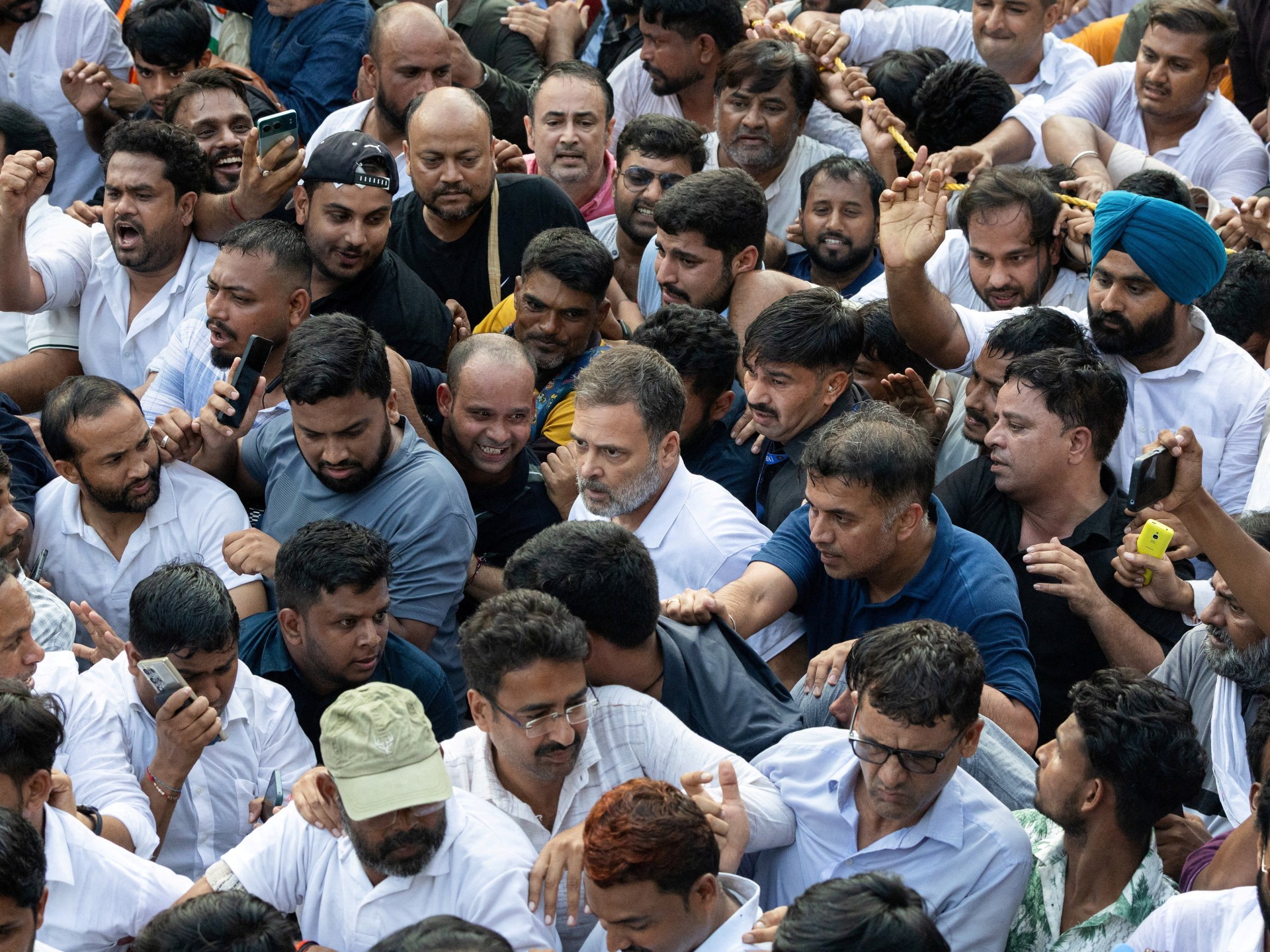
Rahul Gandhi Leads Protest Demanding Election Commission Overhaul
New Delhi, India — In a significant demonstration against India’s electoral oversight, Rahul Gandhi, the leader of the Congress Party, spearheaded a protest march involving dozens of members of Parliament and thousands of supporters, calling for the resignation of Chief Election Commissioner Gyanesh Kumar.
Confrontation with Law Enforcement
On Monday, tensions escalated as participants marched toward the Supreme Court while being closely monitored by an extensive police presence. Over 30,000 officers were deployed on the streets of New Delhi, enforcing a series of barricades designed to prevent the protestors from reaching their destination.
Despite the obstacles, some demonstrators succeeded in crossing initial barriers. However, police intervened as they approached the second line of barricades, and a standoff seemed imminent. Eventually, Congress leaders announced that their petition had been submitted to the Supreme Court, albeit without physical access.
Continuous Demands for Accountability
The protest from Gandhi and allied parties is part of a sustained campaign to challenge alleged biases within India’s Election Commission. This body has faced scrutiny amid claims that it undermines electoral integrity to benefit the ruling Bharatiya Janata Party (BJP) under Prime Minister Narendra Modi. Since June, the Commission has reportedly removed over 130 million names from voter lists, raising concerns about the disenfranchisement of minorities and vulnerable populations.
Gandhi has vehemently criticized the Commission, suggesting that Kumar should be tried for treason and asserting, “We will not spare you,” during a press briefing.
Protests Met with Force
Numerous reports indicate that protests led by opposition figures, including Gandhi, have been met with violence. Videos of recent demonstrations show instances of police brutality against participants, further igniting public outrage. Gandhi described the demonstrators as peaceful, asserting, “They came with love in their hearts, not hatred or anger.”
Despite the challenges, analysts believe that while the opposition is under pressure, it is unlikely to retreat, emphasizing the need for unity among protest leaders.
New Strategies and Resilience
In response to stringent security measures, youth leaders, such as Neha Bora from the All India Students’ Association (AISA), are adapting their approaches to organizing protests. Using social media to coordinate quickly and discreetly, they aim to stage flash protests at unexpected locations to evade police detentions.
Bora, who gained prominence for her engaging oratory during previous demonstrations, has become a central figure in this Gen Z movement against Modi’s administration. Supporters like Aditi Thakur are ready to join these spontaneous rallies, reflecting a tactical shift in the protest landscape.
The Evolving Nature of the Protests
As protest dynamics shift, observers note a transition from humor and lightheartedness to a more intense atmosphere fueled by anger and frustration. Analysts highlight the potential for this movement to grow into a more comprehensive challenge to the Modi government, especially with disruptions in key areas of New Delhi posing as significant leverage for demonstrators.
With the backdrop of historical political dissent in India, there is concern that the current climate reflects a worrying trend away from democratic norms and greater governmental intolerance of dissent.