


Intel’s Future Tech Developments: Nova Lake Set for 2027, Razor Lake-AX Launching in 2028
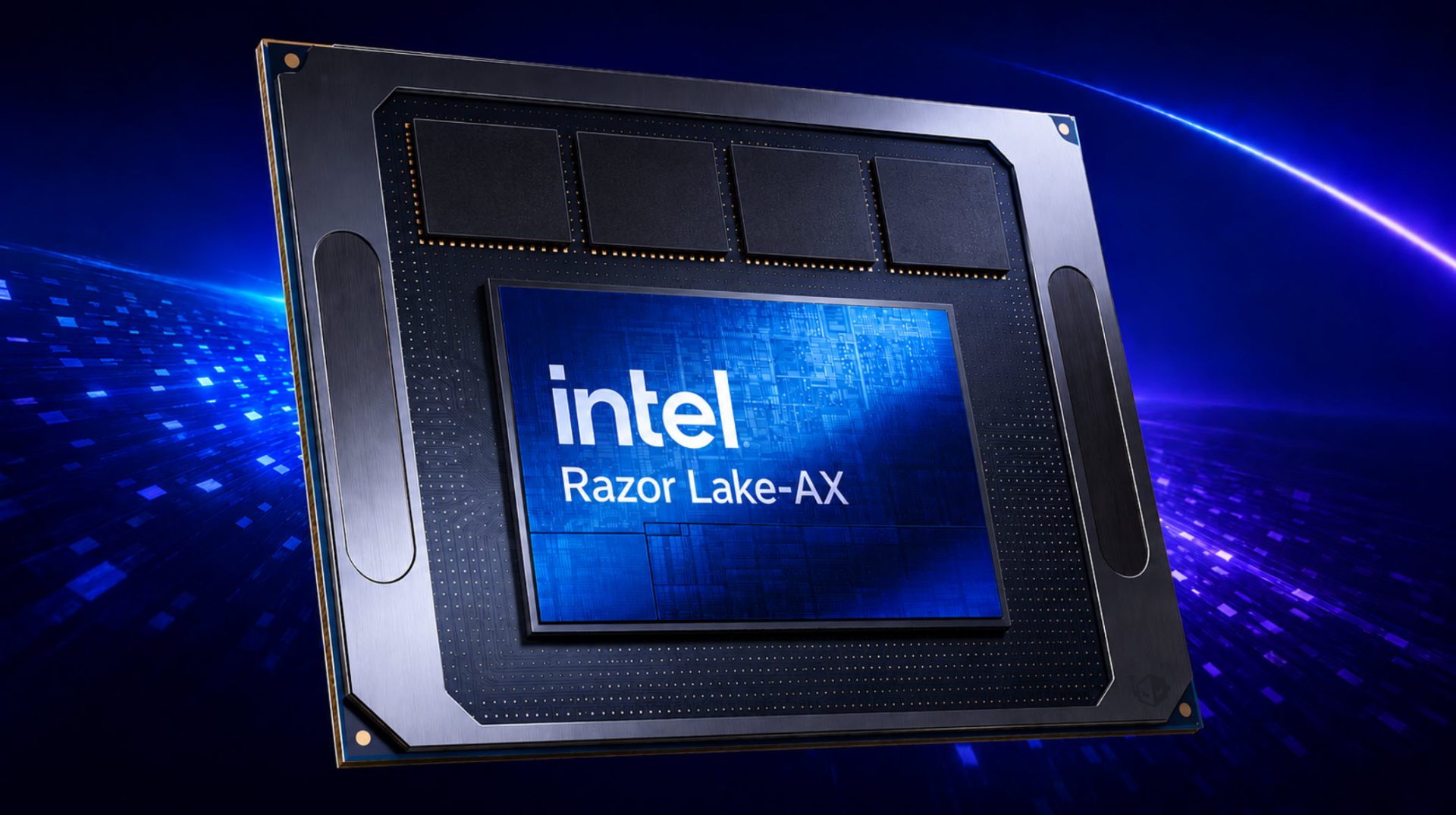
Intel has officially announced the upcoming release of its Razor Lake-AX system-on-chips (SoCs), expected to debut in 2028. This new generation of chips is designed to significantly enhance artificial intelligence (AI) capabilities.
Insights from the Seminar on AI-Driven Technologies
At a recent event titled “Semiconductors Powering Humanoids,” held in South Korea’s Samseong-dong, Intel’s Senior Vice President, Cho Min-sung, provided insights into the company’s upcoming SoCs. He confirmed that the Nova Lake and Razor Lake SoCs are slated for release in 2027 and 2028, respectively.
Performance Expectations and Innovations
While the introduction of Nova Lake has been anticipated for some time, the announcement of Razor Lake took many by surprise. Min-sung highlighted that Razor Lake-AX is expected to deliver exceptional performance with an AI compute capability of 700 TOPS. This represents a formidable increase of 3.88 times compared to the currently available Panther Lake “Core Series 3” chips, which operate at 180 TOPS.
“We plan to provide performance at the 700 TOPS level with the next-generation Nova Lake early next year and Razor Lake AX in 2028.”
Cho Min-Sung (Intel SVP) via The Elec
The Razor Lake-AX SoCs will not follow traditional computing designs. Instead, they are expected to emulate AMD’s Ryzen Halo platform, integrating multiple cores, advanced GPUs, and enhanced memory configurations. These chips will cater to high-performance devices while focusing on applications in the Physical AI sector.
Competitive Landscape and Performance Metrics
Intel claims that the 700 TOPS performance of its Razor Lake-AX chips will far surpass that of the NVIDIA Jetson AGX Orin platform, which offers 275 TOPS. This signifies a 2.5-fold improvement in AI processing power. The upgraded NVIDIA Jetson SoCs range between 160 and 275 TOPS and provide various VRAM options, from 8 GB to 64 GB. Additionally, the Jetson Thor T2000 platform achieves around 400 TFLOPS, while the T3000 can deliver up to 865 TFLOPS of FP4 AI compute at differing wattages.
Memory Architecture and AI Optimization
The implementation of a substantial memory pool is crucial for AI advancements, and Intel is likely to incorporate a unified memory setup in its Razor Lake-AX SoCs. These will reportedly feature on-package memory, a return to the modular on-package (MoP) design that was part of the earlier Lunar Lake “Core Series 2” architecture.
Growing Demand for AI-Specific Solutions
As industries increasingly pivot toward AI technologies, specialized chips designed for Physical and Agentic AI are becoming essential. NVIDIA’s entry into the PC sector with its latest RTX Spark SoCs, alongside AMD’s Ryzen AI MAX+ Halo offerings, underscores this trend. Intel’s development of the Razor Lake and Nova Lake SoCs indicates its commitment to not only participating in the AI boom but also spearheading innovation in this crucial market segment.
Follow Wccftech on Google to get more of our news coverage in your feeds.
